Wise, wonderful women quotes

Monique Wells
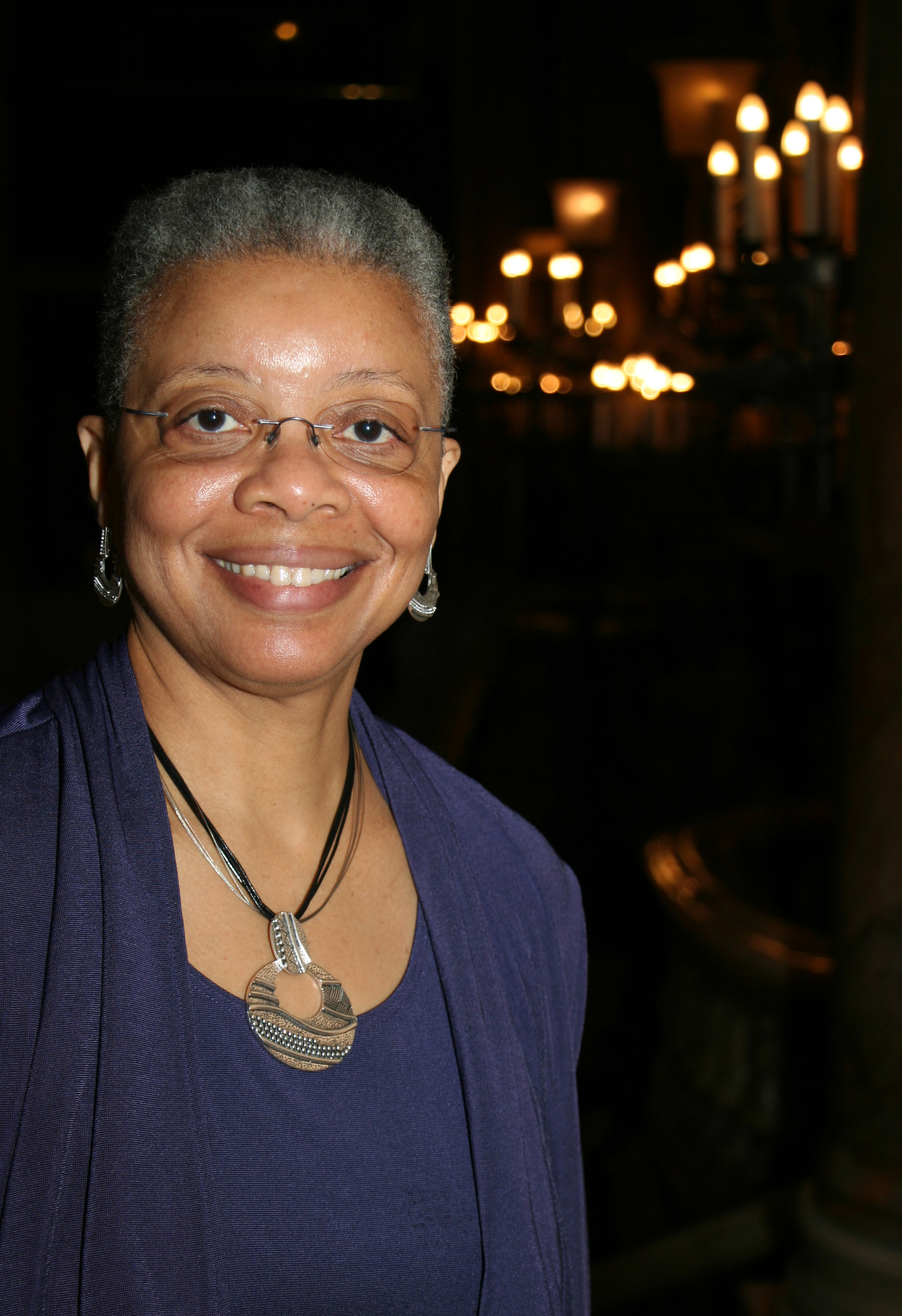
Monique Y. Wells, entrepreneur, speaker, and author.

By Monique Y. Wells,
Guest Blogger (In honor of Women’s History Month 2015)

We women are wise and wonderful! As Dr. Glenda Newell-Harris said during a recent interview in my Huffington Post UK piece Successful Women Entrepreneurs Give Back series: “Who better to uplift us than ourselves?”

Here are ten quotes by wise and wonderful women that I find to be deeply inspiring. Enjoy!

1. “God puts rainbows in the clouds so that each of us — in the dreariest and most dreaded moments — can see a possibility of hope.” ~Maya Angelou

2. “Every day you are alive is a special occasion. Every minute, every breath, is a gift from God.” ~Mary Manin Morrissey

3. “Each day comes bearing its own gifts. Untie the ribbons.” ~Ruth Ann Schabacker

4. “For fast-acting relief, try slowing down.” ~Lily Tomlin

5. “Be thankful for what you have; you’ll end up having more. If you concentrate on what you don’t have, you will never, ever have enough.” ~Oprah Winfrey

6. “It is only possible to live happily ever after on a day-to-day basis.” ~Margaret Bonnano

7. “Giving sends a message to the universe that we have all we need.” ~Arianna Huffington

8. “Courage doesn’t always roar. Sometimes courage is the quiet voice at the end of the day saying, ‘I will try again tomorrow’.” ~Mary Anne Radmacher

9. “Lift as you climb.” ~Sandra Yancey

10. “Grace is a blessing that can’t be earned, only received.” ~Michelle Wildgen

(Monique Y. Wells is an entrepreneur, productivity expert, author, speaker, and founder of Making Productivity Easy.

BLOG


Twitter: @moniqueywells)

Chinese New Years 2015

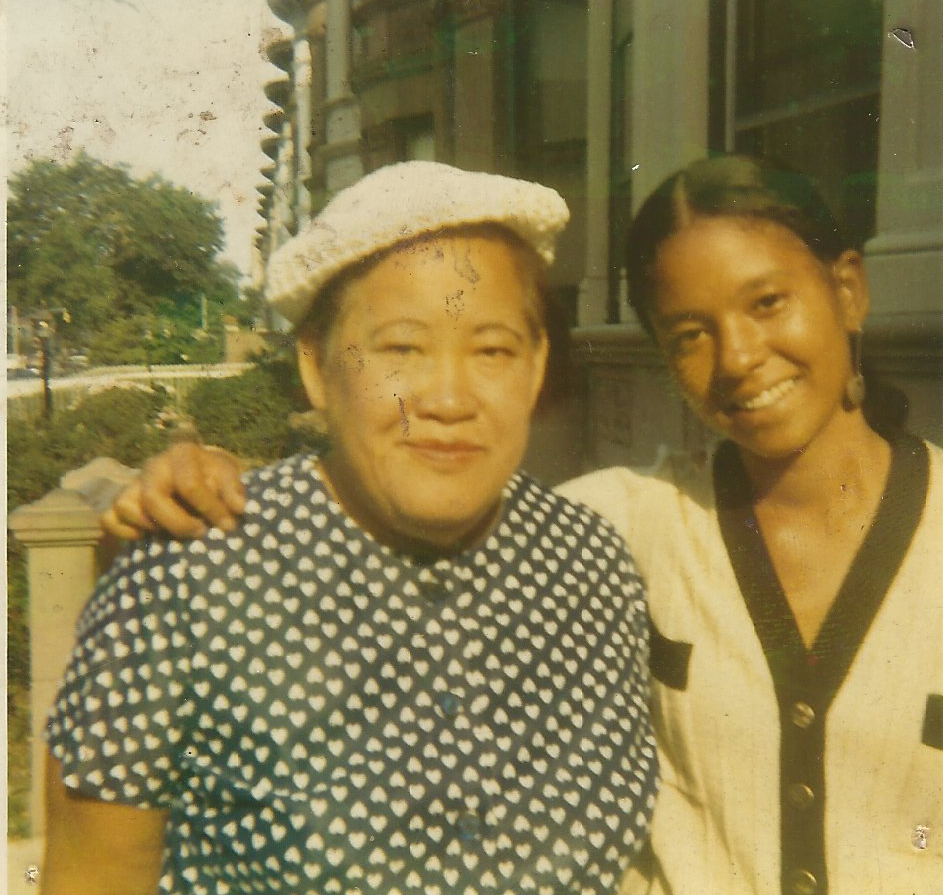
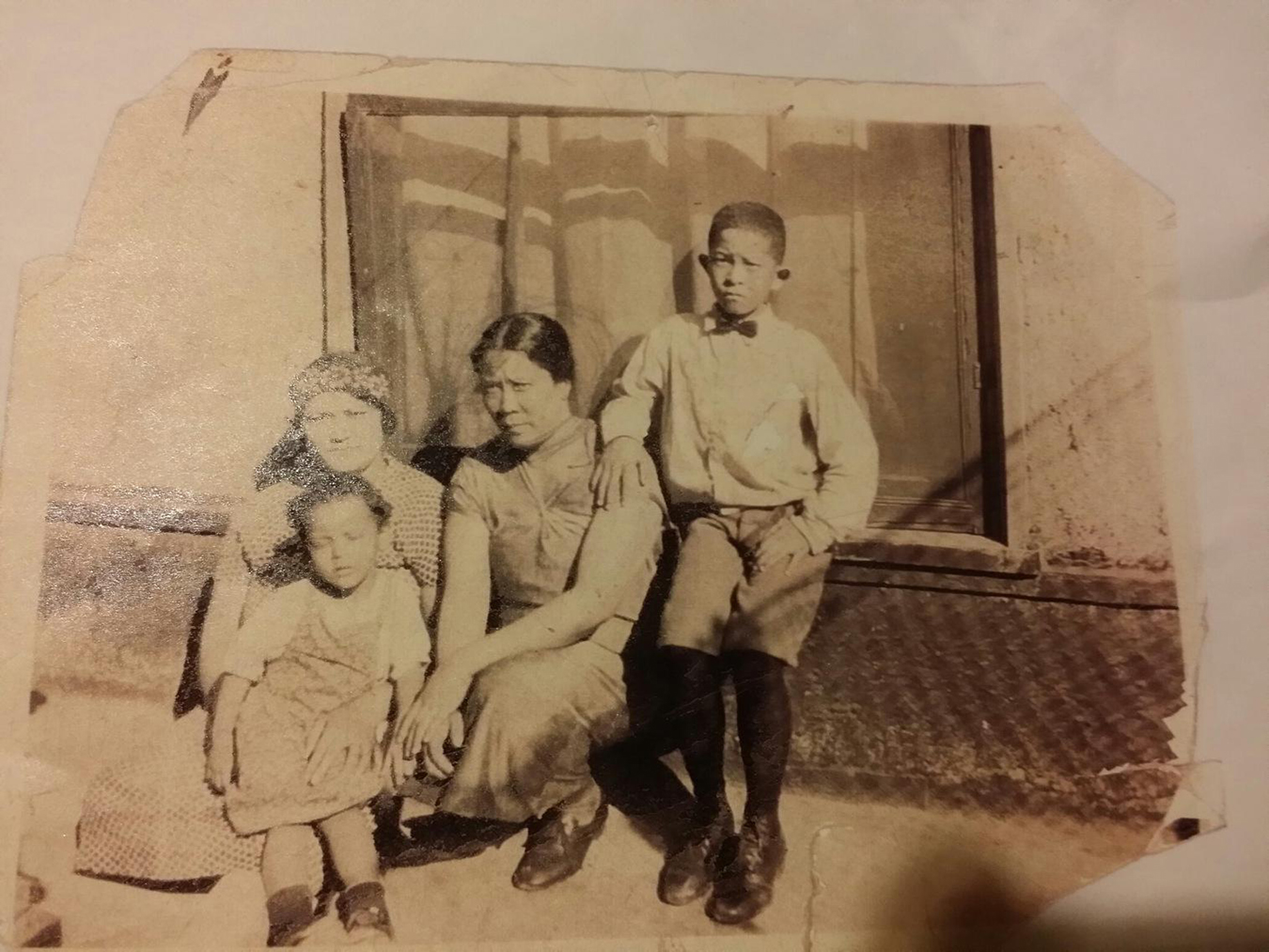
Cookie & Aunt DotMy Chinese family

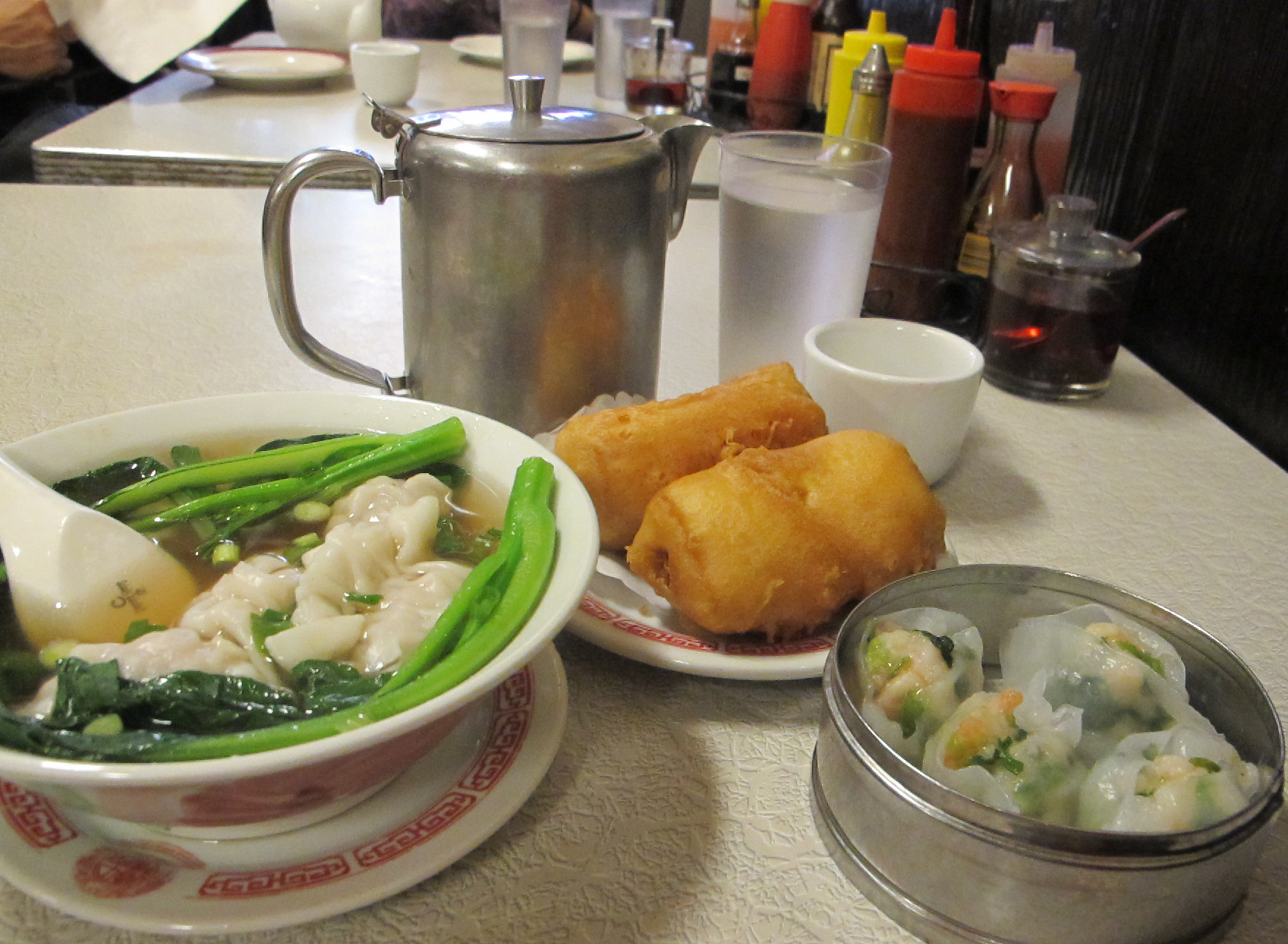
Chinatown Tea Parlor
Happy Chinese New Year 2015! I am honored to acknowledge my Chinese ancestors who migrated from China to Trinidad and Guyana in the British West Indies as indentured workers. After the abolition of the Transatlantic Slave Trade, workers from China and India were engaged to replace the enslaved Africans. To learn more about this hidden Caribbean and Asian history, I recommend two amazing texts: Indentured Labor, Caribbean Sugar: Chinese and Indian Migrants to the British West Indies, 1838-1918 by Walton Look Lai, (John Hopkins University Press, Baltimore and London, 1993); and The Coolie Speaks: Chinese Indentured Laborers and African Slaves in Cuba, by Lisa Yun, (Temple University Press,2008).

My Chinese Trinidadian maternal grandmother taught me many of her traditions — from Buddhism, cooking, gardening, palmistry, face reading also known as physiognomy to astrology. I was born in the year of the Dragon, considered the most powerful and lucky signs in the zodiac. I learned from an early age about all of the Chinese astrological animals.

This is the year of the Goat. Celebrate if your birth year is listed here: 1919, 1931, 1943, 1955, 1967, 1979, 1991, 2003, or 2015. Your lucky colors are brown, red and purple. Lucky numbers are 2 and 7. Your lucky flowers are carnations and primrose. In Chinese astrology, goats are very different from Western Capricorn goats. Chinese goats are delicate thinkers, creative and love team activities. To learn more, click here.

Although it’s not a national holiday, New Yorkers will celebrate big time with a parade in NYC Chinatown, Sunday, February 22, 1-3pm. Please join me!
Here’s link.

How do you celebrate Chinese New Years?

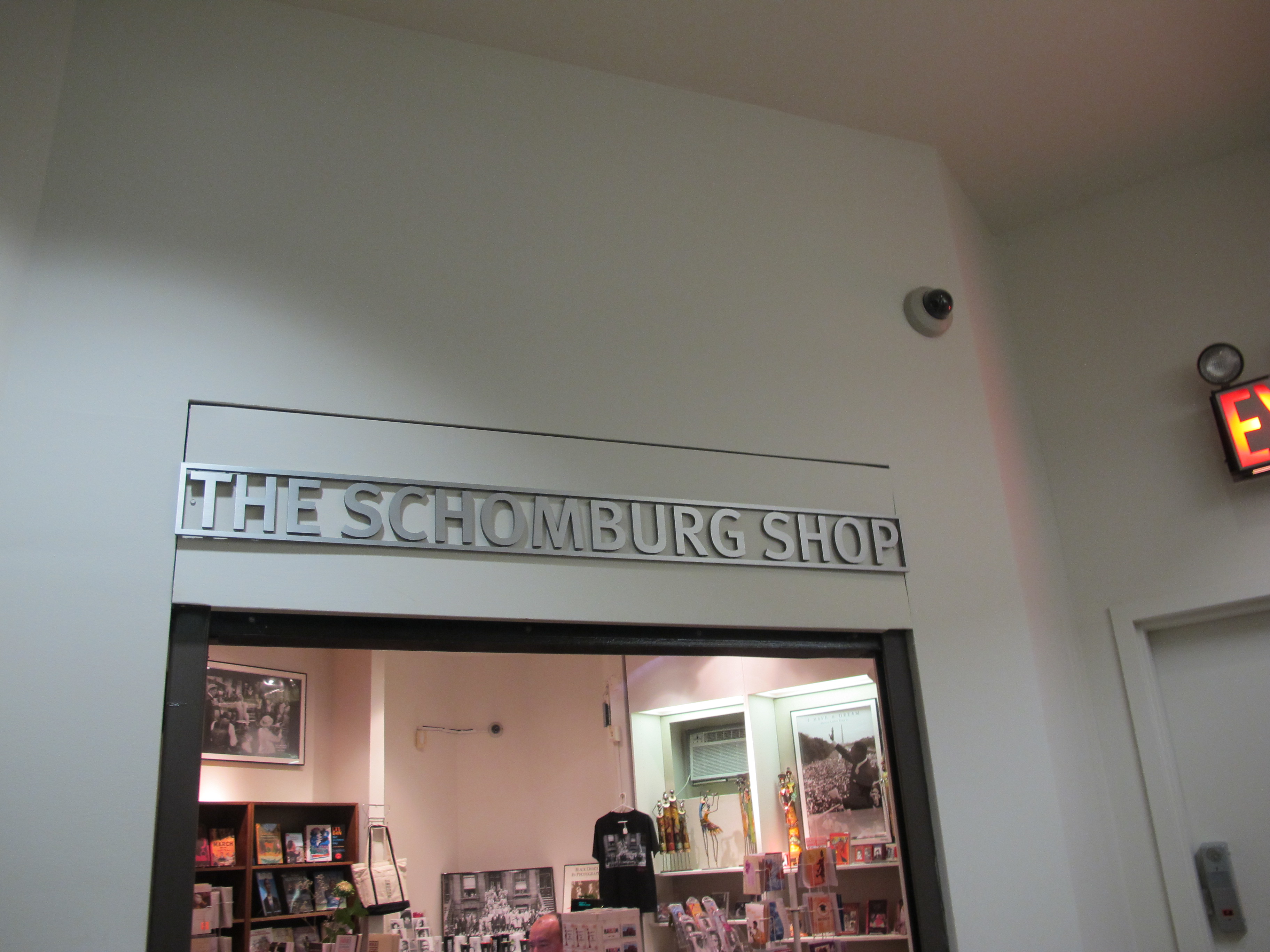
Philanthropy for Schomburg

Philanthropy for the Schomburg Center
Philanthropy that is creative is wonderful! Book collectors Ruth and Sid Lapidus donated their personal collection of slavery memorabilia (over 400 items!), $2.5 million PLUS got the New York Public Library (NYPL) to match their financial gift to maintain their collection @SchomburgCenter. This was the Schomburg’s largest gift in its history! (July 14, 1905)

Quietly, at the recent Harlem dedication ceremony featuring rock star historians Professors Annette Gordon-Reed and David Blight, NYPL Trustees and Schomburg supporters, the @SchomburgCenter became the first public library in the world to open a center for transatlantic slavery study. Thank you, Ruth and Sid Lapidus!

During remarks, Mr. Lapidus, 76, intimated with a sense of humor that his book collection ‘obsession’ was occasionally encouraged by his wife of 55 years that filled their Harrison, NY home. He also explained options for anyone collecting books and pamphlets focused on the theme of liberty during the American Revolution for 50 years: “You could sell, donate or keep it in the family. I decided to creatively give it away,” said the Brooklyn native who was raised in New Rochelle.“I looked at the Schomburg’s slavery collection and mine and realized that I had more in my personal collection than they did,” said Lapidus, whose cache includes 18th century British, French and American slavery books and documents. “Part of me is sad to let go. But the other part of me knows that this is the best home for these materials,” Lapidus said. What will he do with all of that extra shelf space? “That was only a quarter of my stash. I will continue to collect. The dealers know what I like,” said the retired partner of Warburg Pincus, a New York-based private equity firm.

Fortunately, those of us who are Schomburg lovers, we are on the receiving end of this beautiful, wonderful gift from the Lapidus family. Thank you, again Ruth and Sid Lapidus!

The other highlights of the evening, of course, were the speakers.
Annette Gordon-Reed of University of Oxford-Queens College (UK), Harvard and Radcliffe, is one of the foremost scholars of Thomas Jefferson and author of the controversial book, Thomas Jefferson and Sally Hemings: An American Controversy (University Press of Virginia, 1997).
David Blight is professor of American History and director of Yale’s Gilder Lehman Center for the Study of Slavery, Resistance, and Abolition. He is writing a new biography about Frederick Douglass, to be published in 2015.Together they shared stories and took questions from the audience on the joys and challenges of writing about the “complicated family lives” of historic figures during slavery. I posted an excerpt of their conversation on my YouTube channel. Check: “Annette Gordon-Reed & David Blight @Schomburgcenter.”

To learn more about the Lapidus Center for the Historical Analysis of Transatlantic Slavery, click here.

Blended families genealogy

Blended families are becoming more the norm these days. Over the holidays I enjoyed a visit with my brother Johnny’s son Keith, his three daughters ages 12, 9 and 3, and his new wife Lindsay, the mother of their 3 year old. Theirs is a blended family. His mother’s husband adopted Keith when he was very young. Keith’s mother gave birth to another son. I had not seen Keith since my brother’s funeral in 2010 and the divorce from his first wife. Now happily remarried, I was re-connecting with Keith’s family. What a sweet Saturday that was! In addition, brother Johnny had a family too— a wife and daughter who recently married and gave birth to a daughter. Oh, how I wish my brother Johnny could have lived to see them. Girls, girls everywhere! I am swimming in nieces! I wondered what would be the best way to add my brother’s line to the family tree.

Many kinship relationships do not fit neatly onto standard pedigree charts. Usually a genealogy family tree includes a chart with neat lines connecting parents to children. But what do you do when you have a family like mine that includes divorce, remarriage, adoptions, foster parents, and extended families?

Some of my relations mirror cultural traditions of our African and Native American tribal ancestors. For more information on traditional African family structure including polygamy, kinship and clans, click here. For information on Native American matrilineal family structures, click here. Studies have already shown that extended, blended families actually offer unique and positive ways for children to be parented and loved. It was evident that Keith has become a devoted family man, public school teacher and musician. I believe this was a result of his own hard work and having been well-raised and supported by a huge clan that included parents, grandparents, aunts, uncles, cousins and a huge loving extended family. What a blessing!

Standard genealogy pedigree charts impose outdated Euro-centric family frameworks for blended families like mine. There was no place to insert unwed parent’s children and others who are actually part of the ‘family’ but not related by blood. I had never considered children of unwed parents as illegitimate. In fact, the concept of illegitimate children does not exist in many cultures! But that’s a future post.

Maybe one day, someone will re-invent a family tree chart that can include today’s new definition of what it means to be a ‘family.’

In the meantime, click here for a link that can help with blended family genealogy, including a tutorial for adding multiple parents and single parents to your family tree.

Do you have any blended family genealogy challenges or tips?

My Year-End Reflections


My year-end reflections are all about thankfulness. I felt my light rekindled by sparks from so many people known and unknown to me. That is why I must express my gratitude to everyone for a wonderful year.

Here are two quotes about gratitude that I believe:

“Let gratitude be the pillow upon which you kneel to say your nightly prayer. And let faith be the bridge you build to overcome evil and welcome good.” – Dr. Maya Angelou, from Celebrations: Rituals of Peace and Prayer

“Feeling grateful or appreciative of someone or something in your life actually attracts more of the things that you value or appreciate into your life.” – Dr. Christiane Northrup, women’s health expert

I chose eight reflections on thankfulness in honor of my maternal Chinese grandmother, Violet Chan Keong. Eight is considered a lucky number. Eight is pronounced as ‘Ba,’ in Chinese and sounds like the word ‘Fa,’ which means to make a fortune. Included in the definition is abundance, prosperity, success and high status. Since Grandma Vi really loved this number, I continue her legacy by doing things in series of eights too!

1. Abundance. I am grateful for abundance in many areas of my life especially for my loving husband, dear family and friends. Some years ago, I lost everything. To start over, I uncluttered my life. I let go of all negative thoughts, people and broken things. I focused on gratitude, self-love, and hard work. Slowly, I found peace and a sense of gratitude about simple things like air and water. Prosperity began to return to my life. It was not easy. I rarely slept. I worked and studied day and night for many years. I never took vacations during those times. Today, I feel grateful for the light, strength and courage to have reinvented my life several times by now. And, I give daily thanks for basics like health, shelter, clean water, air, food and freedom.

2. Civil Rights Movement. I am thankful for growing up during the Civil Rights era. The timing of my birth, at the end of Jim Crow racial segregation laws and colonialism, allowed me to witness astonishing change in my family and the world. Affirmative Action laws opened doors for me. “Put on your rhino skin and be grateful you woke up this morning,” my aunt often advised me. As a child of activist parents, I did not realize that I was learning how to be a leader. I participated in boycotts and lead protest marches. I organized strategy and held fundraisers. We survived terrorism, exploitation, racism, sexism, degradation, and marginalization. I may be thankful, but I am not satisfied with today’s unfair world. There’s still so much to do.

3. Family. I am grateful for growing up with two caring parents and an extended family and community. I wish more youth grew up like me. I had responsibilities and great expectations placed upon me. Family dinners, meals at neighbor’s homes and everyone’s stories fueled my life and career. I am grateful for the memories of all elders –Jewish, Chinese, Africans etc.—as they passed down their culture, history, language, music, dance, arts and religion. Through family stories from Africa, South American, China, Caribbean, Europe, Louisiana and Mississippi, I inherited an open mind, valuable advice, and a thirst for knowledge.

4. Food. I am thankful for my family’s food legacy. Everything I learned about life was learned at my family’s kitchen table. As a child of Southern migrants and Caribbean immigrants, conversations naturally turned around on poignant observations about American life as well as knowledge about the production and consumption of food from the South, Caribbean islands and beyond. My parents kept a garden and a large pot of beans and rice and some baked treats ready for visitors. It was considered good luck to save the last drop for unexpected guests! We never knew who was coming although we had some regulars. But if a spoon dropped, it meant that a woman and child were coming; if a fork dropped, our surprise guest would be male. These superstitions and spirit stories over meals with friends and strangers were part of a daily routine.

5. Creativity. I am thankful for my left-handedness that developed creative abilities like playing musical instruments, writing, and ‘thinking outside of the box.’ You really do need creativity to re-imagine and re-invent yourself. Thinking the unthinkable to transform your business or life is hailed today as ‘disruption’ or creative business strategy. Our ancestors who made a way out of no way were creative. Creative people possess improvisational, ingenious, and adaptability skills. How many of our mothers ‘improvised’ in the kitchen to create feasts out of leftovers?

6. Soul. I am grateful for my soul. I am thankful for soul as it relates to music and Black people as well as it relates to our spirit. In order to create and improvise anything you need to be in touch with your soul. You must look deep, beyond your physical self to find your soul, heart, faith and perhaps religion. Although I am not a church member, I am very spiritual and find myself at altars often in churches and temples. I am thankful for my family exposing me to many faiths. I grew up as a Buddhist, Catholic, Candomblé, Pentecostal/Holiness, Baptist, and Methodist in a Jewish-Hasidic neighborhood in Crown Heights, Brooklyn. I was born in Harlem.

7. Gardens. I am thankful for the herb garden on my kitchen counter, a sleeping winter garden on my roof, and gardens everywhere. I love gardens for flowers, bees, butterflies, flavor, fragrance, spices, seasons, nourishment, empowerment, and beauty. Mostly, I am thankful for everyday life lessons to be learned from gardens.

8. You, the reader, current and future clients. I am thankful that you paused here to read and look at my pages. I started the year of 2014 with plans to simply collaborate and post more. I am proud that we produced stunning results and received global recognition for our projects in NYC, Brooklyn, Ohio, the UK and Japan. Because of you I have work and purpose. I hope you continue to find joy and reasons to stop by. Happy Holidays!