Military Monday: Memorial Day – African American Origins

WWll veterans: My father, Alfred Burton Smith (r) and his brothers, Joseph (l) and John Baptiste (center). May they rest in peace on Memorial Day.

The first Memorial Day or Decoration Day (decorating soldiers’ graves with flowers) has its origins with African American former slaves in Low Country, South Carolina. Thank you South Carolina Sisters and Brothers! Like most Civil War topics, this holiday has a lot to do with memories lost and whitewashed. Even on mainstream websites, false credit is given to women’s history—that Memorial Day was somehow an idea created by a military officer’s wife.

But thanks to Yale professor David W. Blight who authored American Oracle: Civil War in the Civil Rights Era, and NY Times article, we are able to verify what genealogists and African American oral historians have been whispering for eons about the true origins of Memorial Day.

Memorial Day (originally called Decoration Day) is a day of remembrance for those who have died in service to the United States.

Learn about the African American origins of this American holiday according to a New York Times article excerpt by Professor David W. Blight:

Military graves decorated with American flags in honor of Memorial day.

“The procession was led by 3,000 black schoolchildren carrying armloads of roses and singing the Union marching song “John Brown’s Body.” Several hundred black women followed with baskets of flowers, wreaths and crosses. Then came black men marching in cadence, followed by contingents of Union infantrymen. Within the cemetery enclosure a black children’s choir sang “We’ll Rally Around the Flag,” the “Star-Spangled Banner” and spirituals before a series of black ministers read from the Bible.

After the dedication the crowd dispersed into the infield and did what many of us do on Memorial Day: enjoyed picnics, listened to speeches and watched soldiers drill. Among the full brigade of Union infantrymen participating were the famous 54th Massachusetts and the 34th and 104th United States Colored Troops, who performed a special double-columned march around the gravesite.

The war was over, and Memorial Day had been founded by African-Americans in a ritual of remembrance and consecration. The war, they had boldly announced, had been about the triumph of their emancipation over a slaveholders’ republic. They were themselves the true patriots.

Despite the size and some newspaper coverage of the event, its memory was suppressed by white Charlestonians in favor of their own version of the day. From 1876 on, after white Democrats took back control of South Carolina politics and the Lost Cause defined public memory and race relations, the day’s racecourse origin vanished.

Indeed, 51 years later, the president of the Ladies’ Memorial Association of Charleston received an inquiry from a United Daughters of the Confederacy official in New Orleans asking if it was true that blacks had engaged in such a burial rite in 1865; the story had apparently migrated westward in community memory. Mrs. S. C. Beckwith, leader of the association, responded tersely, “I regret that I was unable to gather any official information in answer to this.”

Here is the link of the full story:

. Forgetting Why We Remember – NYTimes.com

www.nytimes.com/2011/05/30/opinion/30blight.html?pagewanted=all
Funny Friday: Harlem Elvis Ladies

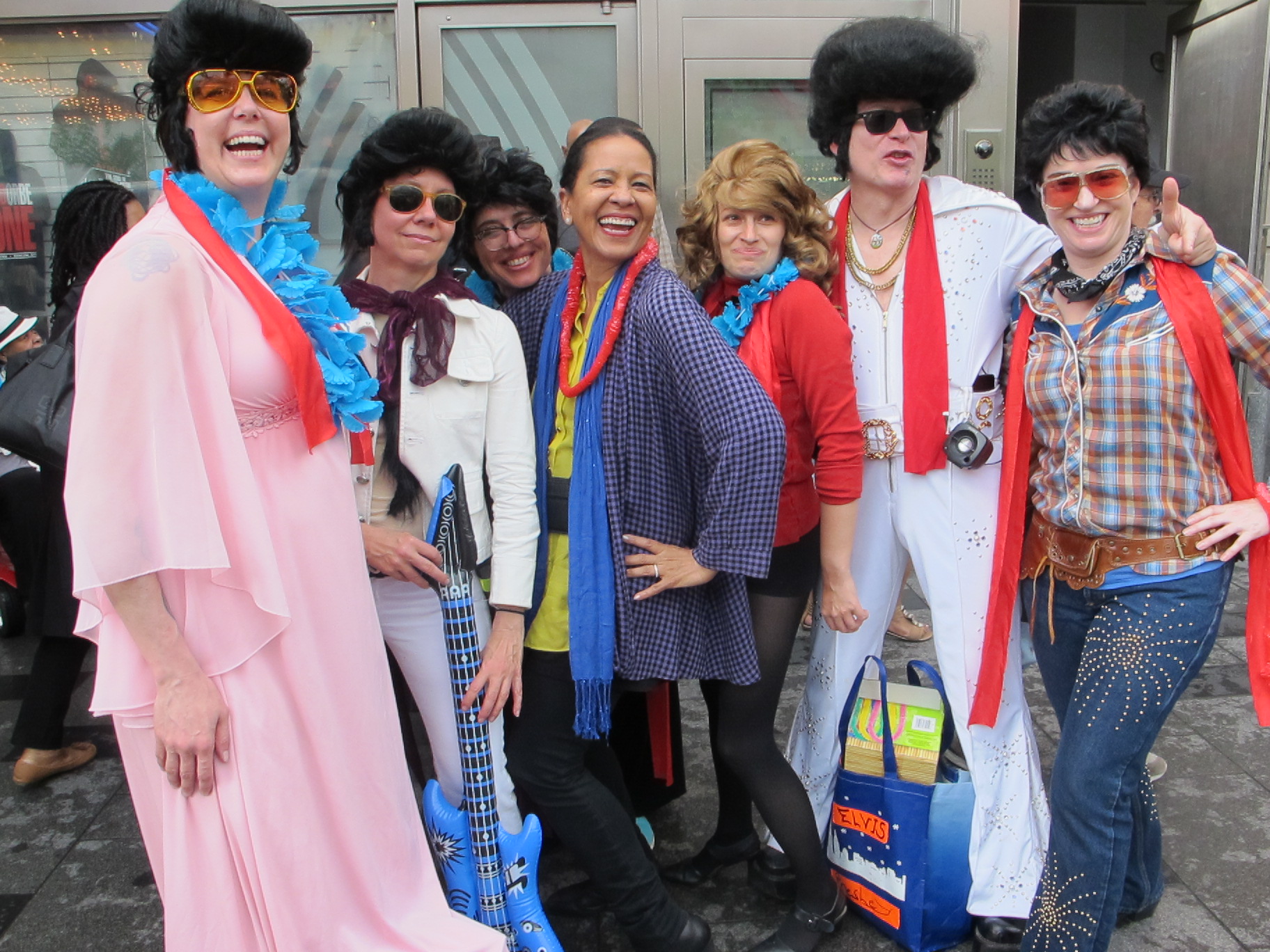
Elvis ladies outside Harlem’s Apollo’s Theater

Funny Friday. I really don’t know why they were there. And, I didn’t ask. But, there they were.  I could not resist. I struck a pose with them. Elvis look-alikes come in all sizes, ages, nationalities and genders.

Some Elvis tribute artists—most Elvis fans hate the word “impersonator”– were gathered outside of Harlem’s Apollo Theater recently one fine afternoon.

Maybe they knew that Geri Allen & Friends had just finished their show “Celebrate the Great Jazz Women of the Apollo” show that I had just attendees with friends and family.

Maybe they were there because it was the day before Mother’s Day. Or, maybe it’s getting near summer when everything Elvis pops out, even in Harlem. August will mark the 36th year of his transition.  So stay tuned for more pelvis-swiveling, jump-suited Elvis look-alikes coming to your neighborhood too.

Do you have a Funny Friday story?


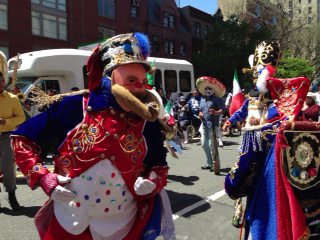
Cinco de Mayo, New York, 2013

Soldiers reenact battle against French occupation of Mexico.

It seems like a big fiesta, but the history of Cinco de Mayo is covered in bloodshed and remembrance. Contrary to popular belief, Cinco de Mayo is not Mexico’s independence day. El Grito de la Indepedencia (The Cry of Independence) is held annually on September 16 in honor of Mexico’s independence from Spanish rule in 1810.

Mexican American youths posed in traditional attire at parade on Central Park West.

Cinco de Mayo celebrates the country’s freedom from France’s occupation after the Mexican-American War of 1846-48. Recognized mostly in the United States with parties and parades, the holiday was invented in California in 1863. Ignored in Mexico except for a few states, especially Puebla, Cinco de Mayo is a day for Mexican-Americans to celebrate pride for their homeland, people and history.

According to Fox News Latino: “Latinos are helping fuel New York City’s population growth, but the composition of the Hispanic community is changing, according to an analysis of 2010 Census data released by the Department of City Planning.

The Mexican-origin population of New York City skyrocketed from 2000 to 2010, while the Puerto Ricans that helped fuel the city’s growth in the 1930s and 1940s abandoned the city in large numbers. The Mexican share of New York City’s population jumped 73.7 percent to 319,263, with immigrants accounting for more than half of them.

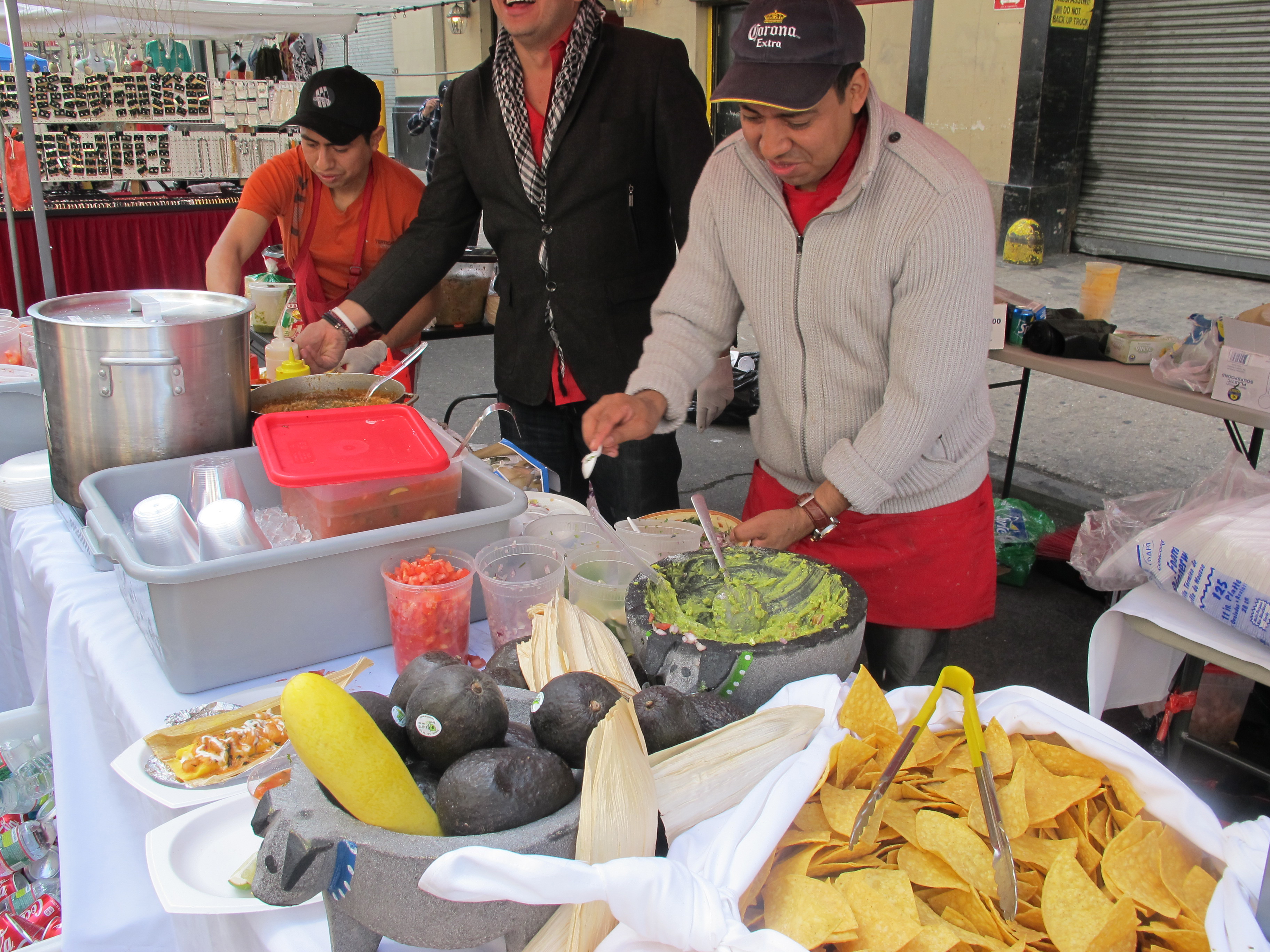
Authentic tortillas and fresh guacamole at Cinco de Mayo street fair.

The Puerto Rican population, meanwhile, dropped 11.2 percent. Notwithstanding the decline, Puerto Ricans remain the largest Latino group in the city, with 723,621. Dominicans, the second-largest group by country of origin, also experienced strong growth, with an 8.2 percent jump, to 576,701.

Latinos are New York City’s second-largest ethnic group, with 28 percent of the total. The city’s Hispanic population as a whole rose 8.1 percent, to 2.34 million—making well over one in four New Yorkers a Latino. The Latino population increased in all of the five boroughs, except Manhattan.

The largest growth in Latino populations across the board occurred in the outer boroughs of the Bronx and Staten Island. Only two other ethnic groups grew as a portion of the city’s total population—Asians (31.8 percent) and Native Americans (0.6 percent).


Mayan traditions celebrated at Cinco de Mayo parade.

White non-Hispanics remain New York’s largest ethnic group, at 2.72 million—about one-third of the total population. That figure marks a 2.8 drop since 2000. New York City is the country’s largest city by far, with a population of over 8 million.”
Read more: http://latino.foxnews.com/latino/news/2012/05/10/new-york-changing-latino-population/#ixzz2TUZZJp2g

Obama’s Visit

President Barack Obama visited my next door neighbor’s apartment for a party recently. How would I write about that?

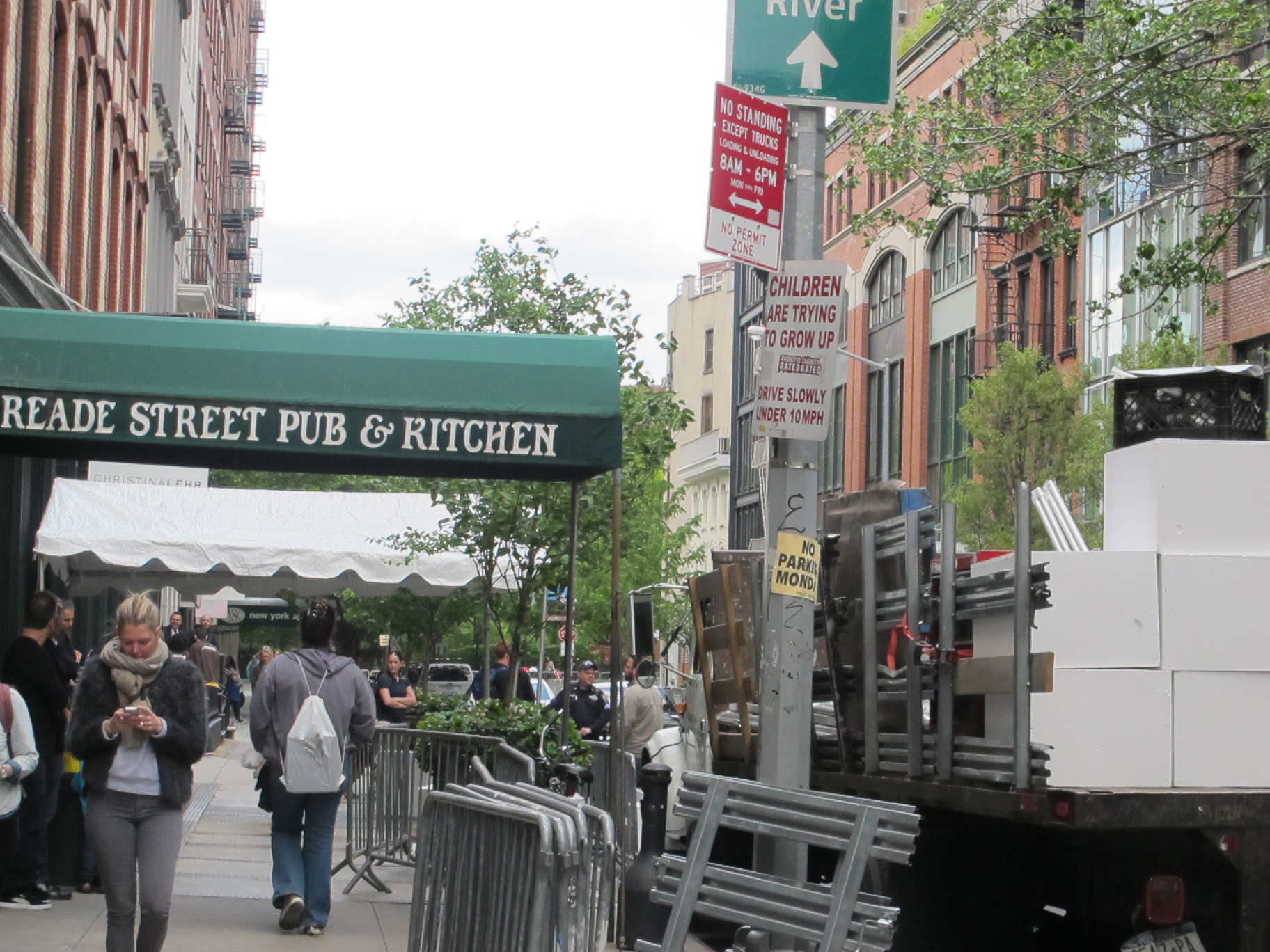
Setting up barriers ahead of Obama’s visit.

I consulted my genealogy group. They suggested that the president’s visit would make a good feature for a ‘Wordless Wednesday’ report, as it happened on a Wednesday. Usually a variety of prompts are used by genealogy bloggers to create content. For example—Military Monday, Thankful Tuesday etc.

Wordless Wednesday

But in order for this to be a real ‘Wordless Wednesday’ post, there should be only photographs here.  The rules can be strict where elaborate story captions are not allowed. But some attribution information can be used. Of course, I broke all the rules because I’m sharing my highlights here. But, we were speechless, or wordless when he finally got here. So there.

Preparing for the President’s visit

When word came from the doorman that President Barack Obama would be visiting our next-door neighbor, we became very excited. Everyone in the building was excited too! VIP guests were set to attend a $35,000 per person fundraiser, we had heard on the news. I did spot the NY Governor and a few elected local officials on the day of his visit. But excited neighbors were already buzzing about it for weeks. We knew he was coming but we did not know when. After awhile, for about two weeks, we noticed security activities–lots of black cars and men in black with dark glasses. Two whole days before his actual arrival, things became even more intense as we watched officials and workers preparing and waiting on our street.

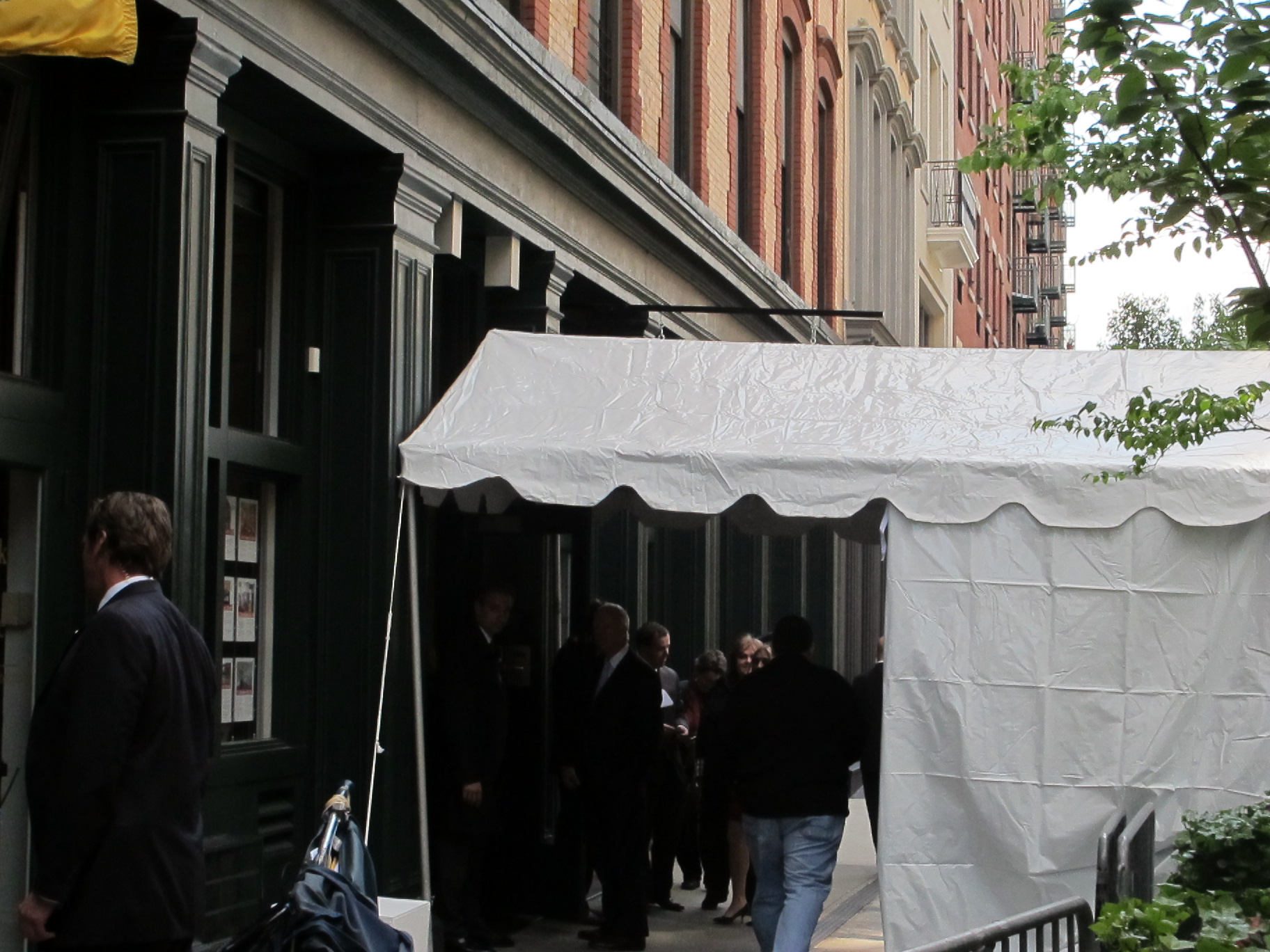
A flatbed truck pulled up with lots of construction materials. Finally, a tent was erected on the block so that guest cars could drive through. It was zipped closed and open by a team of security every time a car entered. Guests were shielded so you could not tell who was who. Noisy helicopters hovered above the area as the moment drew near. We even had security guards on our roof patio deck and on every roof within eyesight. We were not allowed to open our windows or stand by the windows. So, most of use were hanging out in the lobby. Streets were blocked for a radius of at least five blocks.  Can you imagine driving into a tent? I took photos as much as they would allow. There were security dogs on the block too. Everyone needed ID to enter the block. As President Obama’s entourage drew closer to our street, we were ordered inside and away from our windows. Alas, only a few of us actually saw him. When fancy limos pulled up we were speechless. Is that him? When a limo left, we were speechless again. No one knew really knew which car he was traveling in, a policewoman told me.

Roof security on every roof ahead of Obama’s visit.


Bomb-sniffing dogs walked through neighborhood ahead of Obama’s visit.


Heavily armed military sharp-shooters were visible.


Telly Award

Telly Award, Bronze Trophy 

Telly again proudly honors the very best commercials, videos, films and Internet work

www.tellyawards.com

New York, NY – (May 5, 2013) Narrative Network won a Bronze award in the 34th Annual Telly Awards for producing “From Shanghai to Harlem.” The documentary trailer won in the category: Film/Video – Non-Broadcast Productions – Low Budget (under $700 per minute)

“The Telly Awards has a mission to honor the very best in film and video,” said Linda Day, Executive Director of the Telly Awards.  Narrative Network’s accomplishment illustrates their creativity, skill, and dedication to their craft and serves as a testament to great film and video production.”

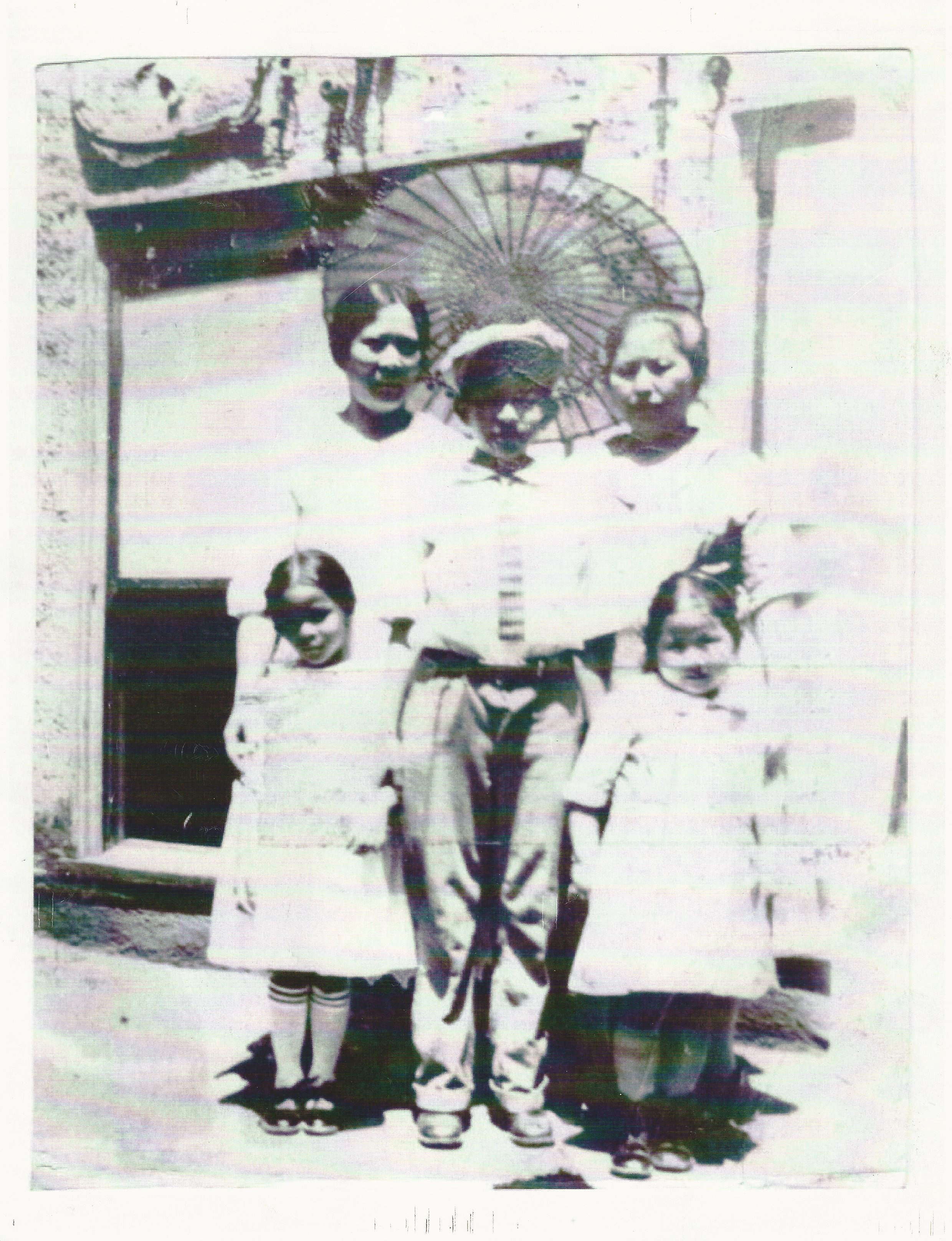
Family members migrating from China, via Caribbean to Harlem, New York.

The Telly Awards receives over 13,000 entries from the finest ad agencies, production companies, TV stations, cable companies, interactive agencies, and corporations in the world, the official announcement stated.

The Telly Awards joined forces with YouTube for the second year in a row to give the public the power to view and rate videos submitted as part of the People’s Telly Awards.  In addition to recognition from the Silver Telly Council, the judging panel that selects the Telly Awards winners, the Internet community also helps decide the People’s Telly Awards winners.

A prestigious judging panel of over 500 accomplished industry professionals, each a past winner of a Silver Telly and a member of The Silver Telly Council, judged the competition, upholding the historical standard of excellence that Telly represents.

Narrative Network is a boutique public relations company specializing in multicultural outreach and innovative storytelling. Contact: Sylvia Wong Lewis, CEO, info@narrativenetwork.net.