Sisters on a Mickalene Thomas art field trip

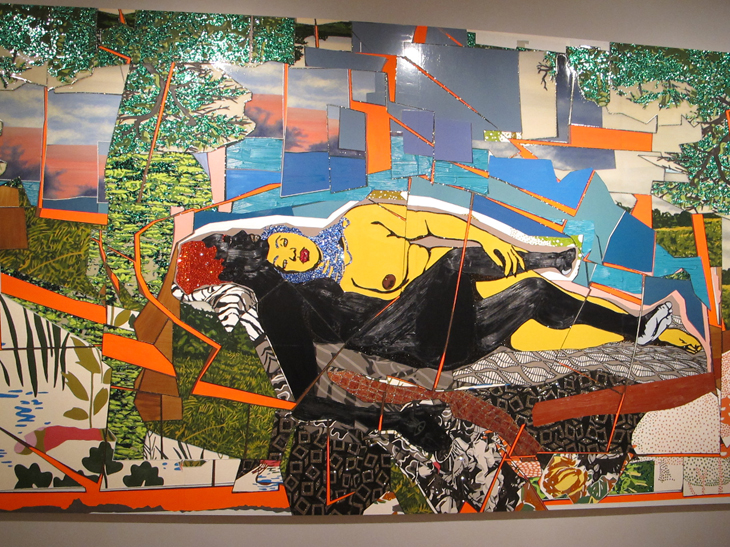
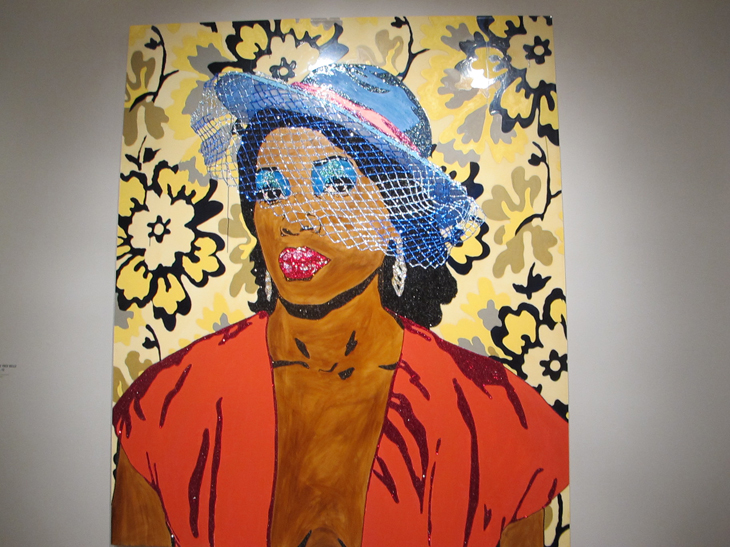
Sleep: Deur Femmes Noires, 2012, Rhinestones, acrylic, oil, enamel on wood panel, Mickalene Thomas.

Brooklyn artist Mickalene Thomas depicts black female beauty and sexual identity with images of power and femininity in a 1970’s setting.  Known for her rhinestone encrusted works, Thomas takes cues from Romare Bearden, Gustave Courbert, Edouard Manet and others with her portraiture, landscapes, still lifes, installations, and female nudes.

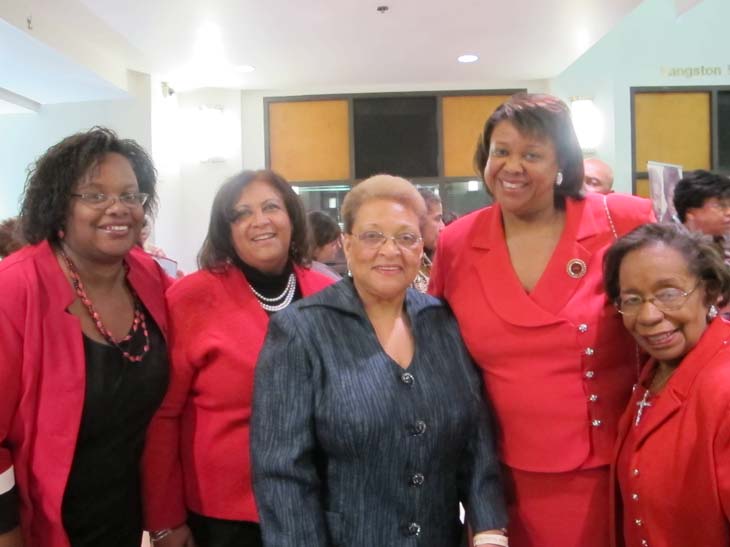
I experienced her first solo New York show recently at the Brooklyn Museum. “Mickalene Thomas: Origins of the Universe” was dazzling and huge. As you moved deeper into the exhibit you could hear Nina Simone and Prince among 25 others on a soundtrack. It was such fun to enjoy this show with a group of Black women! Mind you, this all-Black women’s group was serendipitous. We actually met on a ‘field trip’ as part of our digital networking group.

Rhinestones, acrylics, oil, enamel on wood panel by Mickalene Thomas at Brooklyn Museum.

The 90 featured works on display included an entrance mural on the ground floor and the fourth floor’s Contemporary Art Gallery where a film about her mother and installations of furnished domestic interiors were explored.

Mickalene’s Mom: The film about Mickalene’s mother, Sandra Bush, a former fashion model, was very emotional. Thomas’ mother has been her muse for many years— since the artist’s days as a BFA student at Pratt Institute and an MFA student at Yale.  Dressed in her Sunday best, glorious make-up with deep plum lipstick, Mama Bush, as she is known, was rail thin (compared to earlier art works that featured her) with perfect posture. Her jaundiced eyes looked directly at you with optimism as she prepared for her last dialysis treatment. Mickalene, who is married to artist Carmen McLeod, engaged her mother in a deeply personal conversation about dying, her past drug use, and rocky relationship with her husband.

Soul on Ice: The museum’s fourth floor gallery, including two venues with a connecting hallway, was decked out with many large and small paintings. A lady wearing a blue veiled hat is seen as a photo on one wall and as a painting on another (in photo after below). One of several staged apartments featured books like Soul on Ice and Roots (below photo), a record player playing a real record, 8-track tape deck playing real music, mixed-matched furnishings, and old-timey wood wall paneling. We loved those apartments. What a fun and original show! The exhibit runs through January 20.

staged interior, art installation, Mickalene Thomas

What did the sisters say about Mickalene’s art?
“I thought Mickalene Thomas’ work was amazing. I am a huge fan. Thomas’ work celebrates my seventies childhood.  It also reminded me of the beautiful images of Black women I saw growing up, reading Essence magazine and watching my mother and her friends who wore Afros and 70s clothing. The patchwork quilt technique that Thomas used celebrates my grandmother’s quilting and reminded me of my own artwork. I love collage and quilts,” said Ananda Leeke, Digital Sisterhood Network founder, who organized our diverse women’s group.

“Thomas’ work was soul food for my creative spirit. I also enjoyed watching the film about her ill mother. It helped me appreciate her work even more. The installation art was incredible too. I loved seeing the living rooms and hearing Diana Ross on the record player. It brought me back to my childhood,” said Ananda.
Qusuquzah, une tres belle negresse #2, mixed media by Mickalene Thomas

What else did the sisters say?

One sister remarked about the show’s “edge and attitude.” Another pointed out Black women’s “luscious sensuality.”

 “These women are familiar to me. It’s great to see art where we can see our identity reflected.”

“Look at that sister’s gaze and her skin, so brown and firm.”

“Oh, wait. Is that a gigantic brown-skin “x#&!x#*&c” with rhinestones all around it?”  asked another, referring to a glittering dark-skinned female genitalia  encrusted in Rhinestones inside a large painting.

One of the women in the group lectured about the use of sparkles, rhinestones and glitter as affirming a poor person’s bold statement about being “rich in spirit.”

There was a genuine consensus among us about soul glitter and quilting too.  “That’s our tradition. We will put glitter on everything to dress it up. We take scraps to create beautiful quilts. We invented re-purposing! There is a dignity and beauty in those kinds of efforts. Look at the mix-matching wall paper and floor tiles—that’s part of our culture to make something from nothing…to make us feel beautiful and rich,” said another.

Another person remarked about the historical distance Black women’s imagery had moved “from slavery to this high-level artful, multi-dimensional, powerful and stylized place.”

The playlist to accompany the exhibit includes 27 songs ranging from Nina Simone’s “Go the Hell,” Man Man’s “English Bwudd” to Prince’s “Kiss,” was created by Thomas. Check it out.

Art admirers at Mickalene Thomas exhibit at Brooklyn Museum through Jan. 20.

Creole & Caribbean Red Beans and Rice

My father’s Creole New Orleans and mother’s Caribbean food ways were based on rice and beans. Here are two of my favorite rice and beans recipes. Both styles have roots in Spanish, French and African traditions.

Creole-Cajun style red beans and rice with andouille sausage.

Only on Mondays: Louisiana Creole red beans and rice was a Monday tradition in our New York home. Ham, bacon and andouille sausage were major ingredients. Only recently did I learned why we ate these beans on Mondays. Turns out, it was all about multitasking. Apparently, Mondays was traditionally laundry day in many Southern homes. My father’s southern relatives taught my mother to keep up this food tradition. For the record, mother did laundry everyday because she ran a home-based daycare center. But, that’s another story. Beans ‘cooked down’ with Sunday’s leftover ham bone does not require much fuss.  Thus, you can wash, iron, fold laundry and cook all at the same time! But the secret to this delicious dish is to get started right after Monday’s breakfast so that the flavors have enough time to deepen in time for dinner. And these beans become tastier as each day passes. Another flavor consideration is how to bake the ham the night before. Did you baste it with a mixture of brown sugar, mustard, pineapple slices and clove? I would. I use whatever is on hand. Substitute ham bone with a ham hock. I only eat brown rice. This dish is traditionally served with white rice. Sometimes we ate these beans in a bowl with a side of cornbread!

Creole Red Beans and Rice

Ingredients:  kidney beans 1 lb., 1 Sunday leftover ham bone or 1 medium smoked ham hock; 1 andouille sausage or 4 slices bacon; 1 tbsp. vegetable oil; trinity—1 chopped medium onion, 3 celery stalks, chopped w/leaves, 1 medium chopped bell pepper; 4 chopped cloves of garlic, 4 whole cloves, 2 Bay leaves, 1 tsp. each parsley, sage, thyme or 4 sprigs of each fresh herb; hot sauce to taste; black pepper to taste, ¼ tsp. cayenne pepper; 1 quart water; reserved bean water; 6 cups cooked brown rice.

Directions: wash, sort, and soak beans overnight in 1 quart of water. Reserve the maroon-colored bean water.

In deep heavy skillet or Dutch oven, sauté on medium heat, sausage or bacon slices, trinity, garlic in vegetable oil until translucent. Render fat, oil. Add water, press cloves into meat on hambone or hock; add the drained, soaked beans, herbs, and seasonings. Bring all to boil, half-cover with lid, simmer 4-5 hours. Add bean water sparingly throughout cooking; stir and mash some of the beans to create a thickened, creamy bean broth. Serve over cooked rice.

Note: To shorten the cooking time to 30 minutes, use canned beans, add ‘Cajun’ seasoning to water stock. Keep rest of ingredients.

Caribbean Red Beans and Rice

Although Trinidadian, my mother served Jamaican ‘peas and rice’ often. It is not really ‘peas’ but kidney beans. We ate this sometimes everyday with stir-fried veggies, meats or fish. It is a mild, vegetarian, gluten-free one-pot rice dish that pairs well with all Caribbean and Creole foods.

Caribbean beans and rice.

Ingredients: red beans, 1 lb. cooked; 1 can (13.5oz.) of coconut milk-Goya, Coco Lopez brand, Indian or Thai variety is good; 2 ¼ cups maroon-colored bean water; 2 cups rice; ¼ cup fresh grated coconut (optional) (Do not use bagged grated coconut from bakery aisle!), 1 tsp. vegetable or coconut oil, ½ cup chopped medium onion, 1 chopped scallion, 2 sprigs thyme, 1 whole Scotch Bonnet hot pepper. Do not cut or chop Scotch bonnet pepper. Just leave in pot!

Note: Cooking the beans together with rice in the same pot is an art form. Too much liquid makes mush. Not enough liquid with rice makes a dried out mess. Remember, the beans must be cooked, as above, or use canned beans. I found Basmati or Uncle Ben’s rice is the easiest to cook. Basmati brown rice works very well. Use 1 cup of rice to 2 cups of liquid. Remember that brown rice requires at least ½ cup extra liquid and extra time cooking. You can substitute with pigeon peas, black beans, and black-eye peas.

Directions: Heat oil on medium heat, sauté scallion, onion, garlic, thyme. Add rice, beans, coconut, and liquid. Bring to boil uncovered. Stir in Scotch bonnet pepper, cover and simmer, about 30 minutes or until done.

Where’s Bearden’s Room?

Writer's tribute to Romare Bearden
“Odyssey Series” by Romare Bearden

“Where is Bearden’s room at a major art institution? Is there any better artist who speaks so eloquently and with such originality about America?” asked Russell Goings, poet, art collector, Bearden caretaker and chief organizer of a month-long tribute to Romare Bearden at the 92nd Street Y.

Writer's tribute to Romare Bearden
“Historic Figures,” by Romare Bearden

“The art of Romare Bearden was the art of a large and generous spirit that defined not only the character of Black American life, but also its conscience. I was looking at myself in ways I hadn’t thought of before and have never ceased to think of since,” said playwright August Wilson. Poet Kwame Dawes quoted the playwright’s words in a preface to his three-movement poem.

Wilson’s play, “The Piano Lesson,” was deeply influenced by Bearden’s work of the same name. So was Dawes’s poetry.  The famous painting was featured prominently on the giant screen display as Dawes opened with these lines: ”Bernice…I don’t play that piano cause I don’t want to wake them spirits. They never be walking around this house.”  Each movement was a collage of feeling, color and action: “Avoiding the Spirits,” “To Tame the Savage Beast,” and “The Lesson.”

writer's tribute to Romare Bearden
“Historic Figures” by Romare Bearden

Dawes is currently editing an anthology of poems with poet Matthew Shenoda about Bearden’s “Odyssey Series,” some of which were on display at the 92Y art gallery during the tribute.

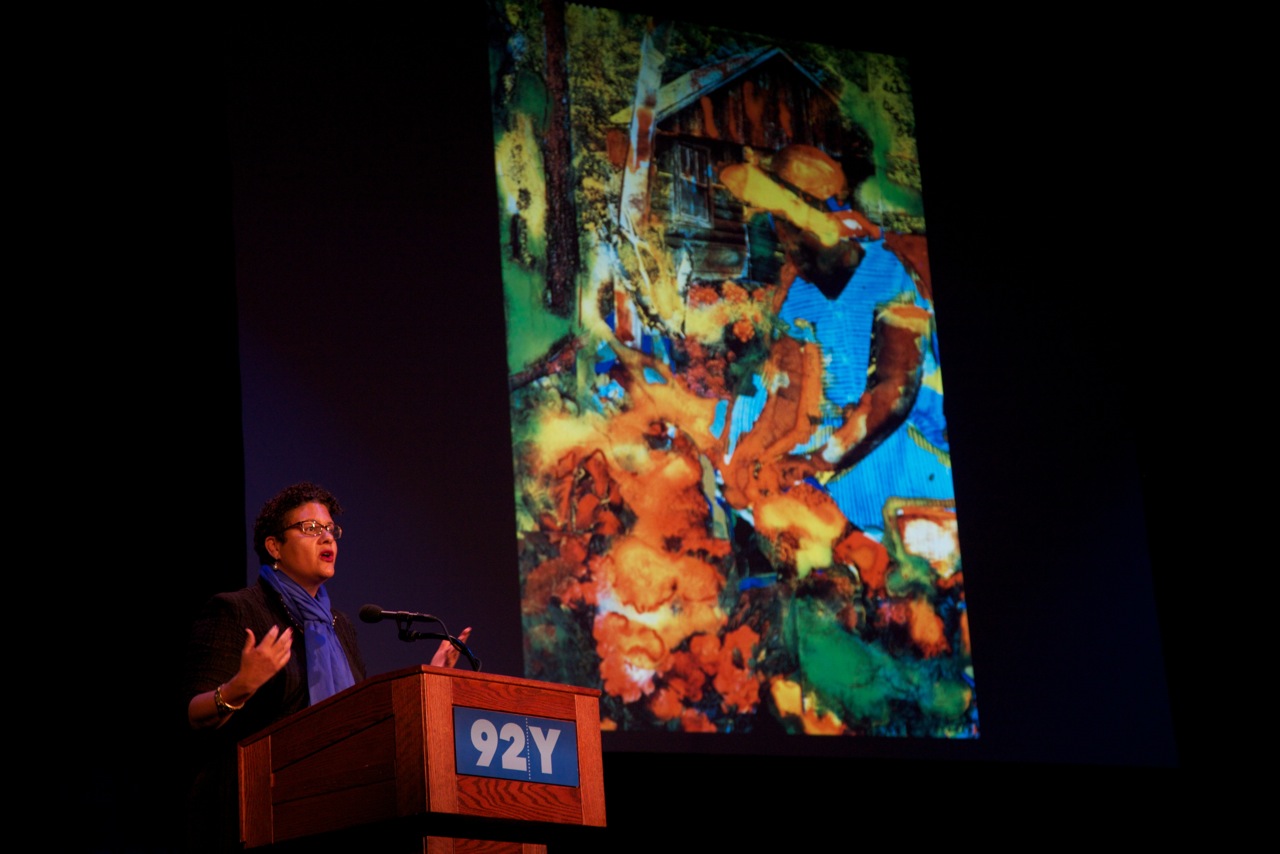
Ex-slave and abolitionist Frederick Douglass’ speech “Pictures and Progress,” was referenced by curator, author, and Yale professor Sarah Lewis in her presentation. As she spoke, several collage paintings were displayed on the stage’s screen.  Bearden’s primary medium was collage— a fusing of old magazine and newspaper photographic clippings, painting and fabric. She discussed the 19th century emergence of photography that had changed the social landscape. Photographs could counter but not always, the caricatured and exaggerated negative Negro images. She mentioned Douglass’ observation that “the sudden abundance of visual sources created a paradox in the new culture of visual awareness.”

“The picture and ballad are alike, if not equally social forces — the one reaching and swaying the heart by the eye, and the other by the ear’…In our country, the picture plays an important part in our politics’…In the making of our presidents, the political gatherings begins the operation, and the picture gallery ends it. The winner, in order to outvote, must out laugh his adversary,” Douglass said in his speech.

writer's tribute to Romare Bearden
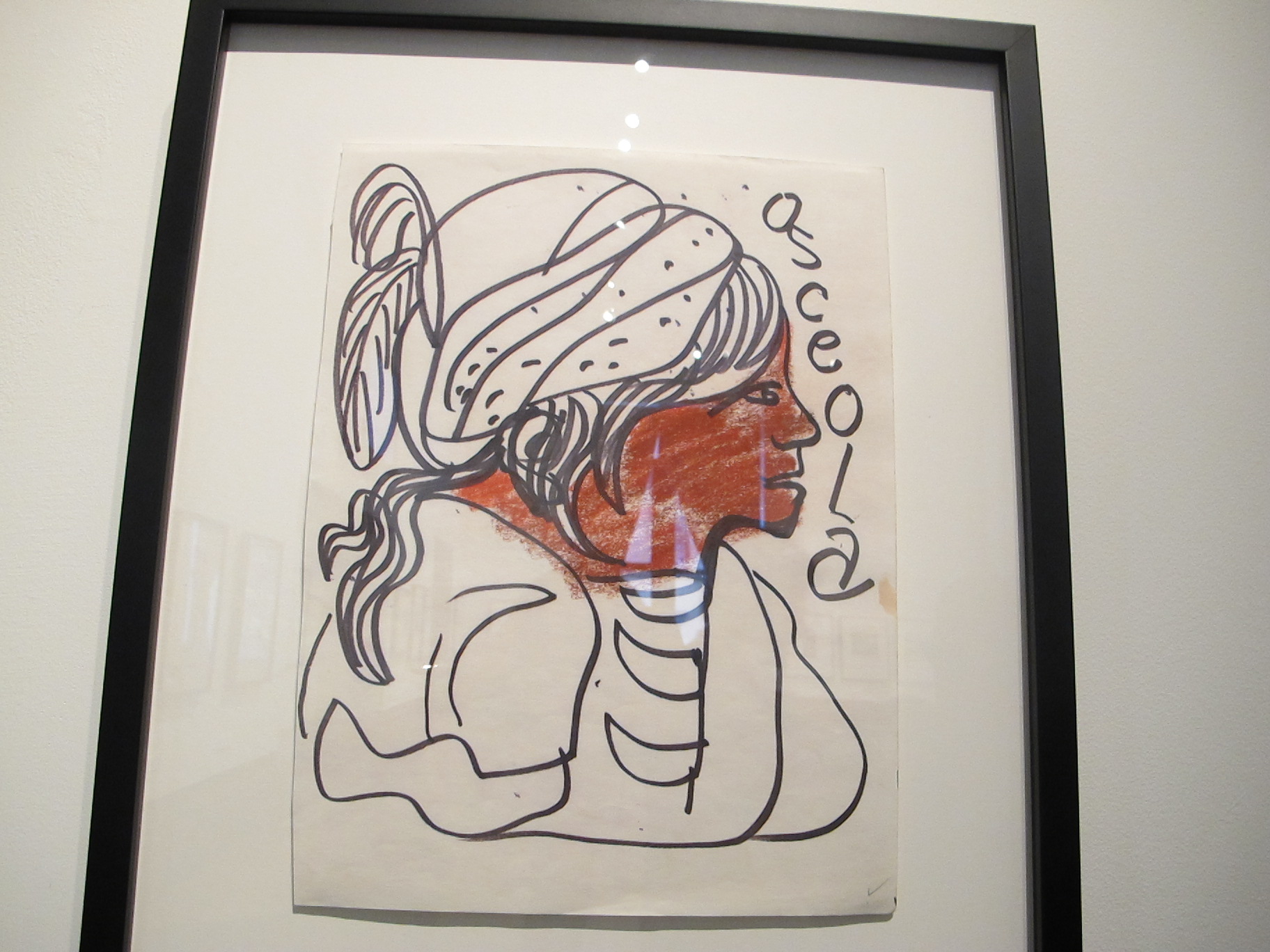
“Osceola” by Romare Bearden

Lewis also referenced Bearden’s association with and study of artists, jazz musicians and writers and specially mentioned novelist Ralph Ellison’s friendship with the artist. Displaying Bearden’s “Card Players” next to Cezanne’s “Card Players” series on the stage screen showed Bearden’s magnificent jazzy variation on a theme. The pairing also demonstrated an artist who was always inspired and processing information.

Poet, scholar, teacher, Elizabeth Alexander, who composed and delivered “Praise Song for a Day” for the 2008 President Barack Obama inauguration, spoke of art-making in the Diaspora. She emphasized: “Bearden is America’s preeminent artist—not its best Black artist! And anyone who disagrees, I’m ready to fight them.” To her, art is poetry. She also shared her family connection to Bearden that “goes back for decades.” She described a Christmas gift of a crucifix painting that a young 8-year-old Romare presented to her mother. Her grandfather was the famous artist Charles Alston. Alexander said that they all visited with each other through the years.

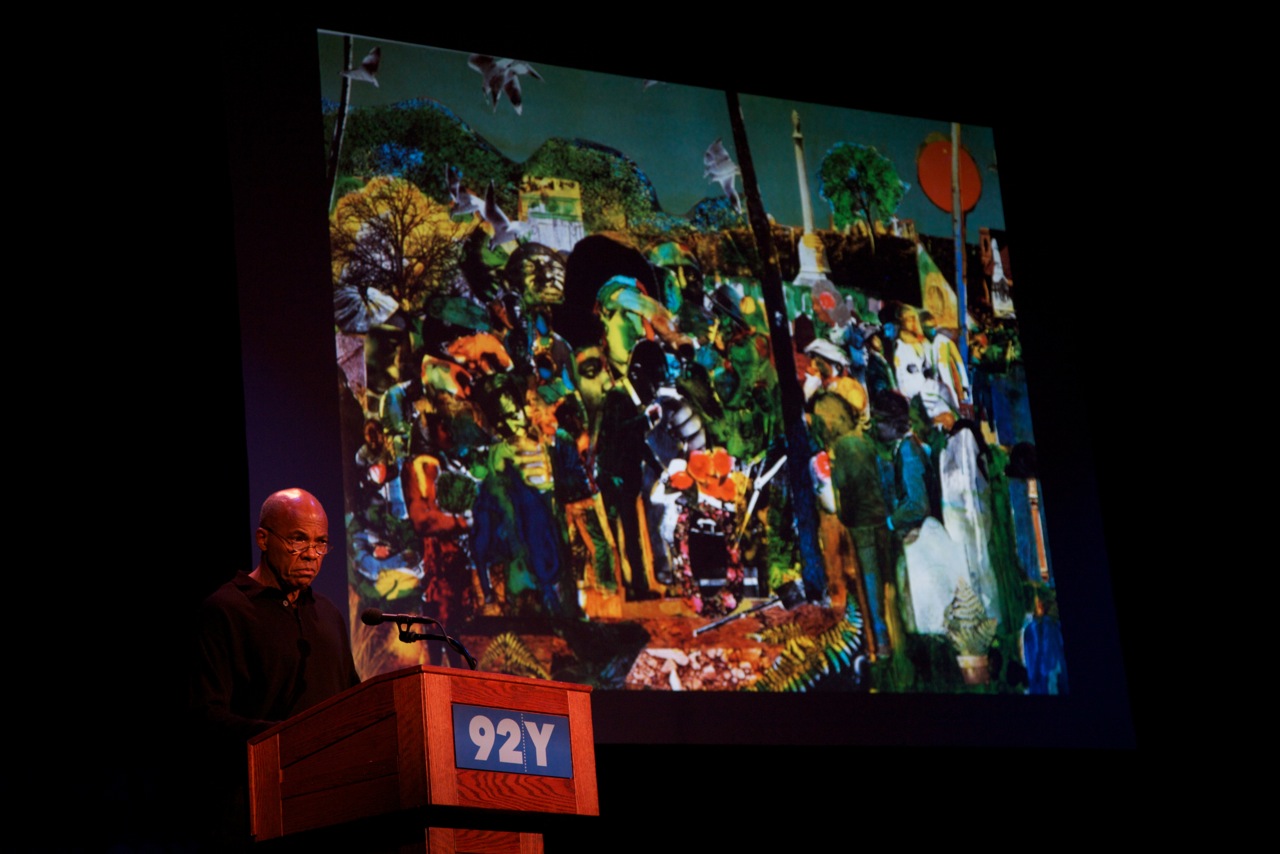
John Edgar Wideman, author of several novels and winner of numerous awards including PEN/Faulkner Award and the American Book Award, described Bearden’s work “Farewell to Eugene,” a funeral for his childhood friend. “The genius comes from how and why Bearden worked with what looked like too many pieces to fit into one painting,” Wideman said. Considered his most dense collage, Wideman explained that “Farewell” was Bearden’s way to pay homage, though 50 years later, to his childhood friend who was part of his formative art experience. The crippled White boy lived with his mother above a brothel. The boys used to peek through a hole in the floor and draw “nasty” pictures of what they witnessed below on butcher paper. Bearden’s grandmother discovered them and brought the boy home to live with them. The boy became Bearden’s best friend. Sadly, the boy died a year later. A study of the art shows a dense portrait that brings the whole town of Pittsburgh together to pay their respects at Eugene’s funeral.

Stanley Crouch, author of several books and writings especially about jazz said that “all visual art is about freeing the line.” He discussed influences of Picasso and Flaubert and saw in Bearden’s work “the creation of emotional epics by re-imagining the vitality of his people through the influences of music from Louis Armstrong to other jazz greats.”

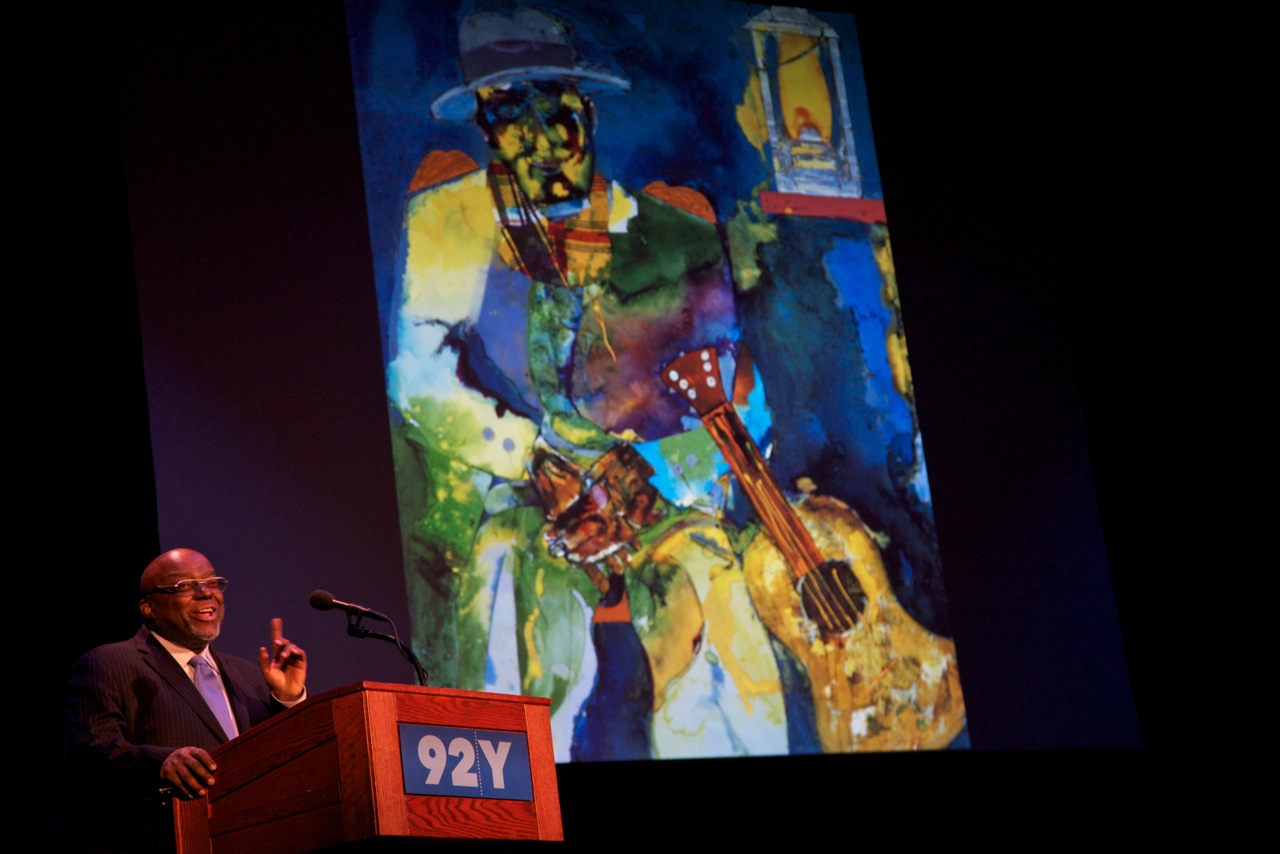
Khalil Gibran Muhammad, professor and author, spoke of his mission as Black history caretaker in his role as executive director of Harlem’s famed Schomburg Center for Research in Black Culture Center. He promised to stay true to his cause by celebrating African American art. He shared a personal story about his first Bearden art purchase, a poster of “The Lamp.” It shined brightly on the stage screen. He chronicled purchasing it with his then partner, who later became his wife. He said that “together we hung the painting in our children’s bedroom and we only moved it once — when I took office at the Schomburg.”

Ton Morrison sent a note: “Romare Bearden was among the first African American visual artists to move painting away from the nostalgic and sentimental work that preceded him. His use of high modern technique and sensibility in order to re-imagine Black history produced amazing work still unsurpassed. Two of his paintings hang on my walls: one, a large watercolor of jazz musicians; the second, a dedicated print of a character in Song of Solomon. Each is profoundly different from the other; both reveal the depth of his talent and intelligence. All of which was vividly on display the last time I visited him in his studio. His body of work is for the ages.”

Co-sponsors were the Romare Bearden Foundation, the Schomburg Center and the West Chester Poetry Center—and in particular to Johanne Bryant-Reid and especially to Russell Goings.

Photos below by Nancy Crampton.

writer's tribute to Bearden
Stanley Crouch speaking at Writer’s Tribute to Bearden at 92Y.


writer's tribute to Bearden
Sarah Lewis discussed Frederick Douglass in her talk about Bearden’s art.


writer's tribute to Bearden
Sarah Lewis showed ‘Card Players’ series by Bearden and Cezanne.


writer's tribute to Bearden
Elizabeth Alexander speaks about Bearden at 92Y.


writer's tribute to Bearden
John Edgar Wideman discussed Bearden’s ‘Farewell to Eugene’ at 92Y.


writer's tribute to Bearden
Russell Goings speaking about Bearden at 92Y.


Ruby Dee’s 90th birthday party


Ruby Dee's 90th birthday party
Ruby’s Delta sisters: (L-R) Rosia Blackwell-Lawrence, Margaret Bing-Wade, Mary Redd, Cynthia M.A. Butler- McIntyre, Dr. Marcella Maxwell

Do you have a Ruby Dee story? Ruby’s Delta sorority sisters shared their love at her 90th birthday party: “It was such an honor to witness and be a part of such a befitting artistic display of Ruby Dee’s life and career, as captured on the big screen and documented by her grandson, Mr. Muta’ Ali,” said Cynthia Butler-McIntyre, National President of Delta Sigma Theta Sorority, Inc. There is no doubt that Ruby Dee’s countless television, Broadway stage, and film roles are entwined with over half a century of the entertainment industry’s history,” said Butler-McIntyre.  “But, what has kept Ruby Dee near and dear to our hearts and why we (Delta Sigma Theta) saw it necessary for Soror Ruby Dee to grace us with her elegance, wisdom, tenacity, and audacity as a member, is the mere fact that she and Mr. Ossie Davis believed that ‘any form of art is a form of power.’ ”

“Soror Dee was instrumental in helping Delta Sigma Theta realize its dream of controlling the images of African-Americans and how we were portrayed on film.  She assisted us in producing and played a leading role in ‘Countdown to Kusini’ – a Black film, which was filmed in Nigeria,” said Butler-McIntyre.
“Ruby Dee is a shining example of how one’s artistic talents and abilities can be used to dispel stereotypes and fight against racial injustice,” said Rosia Blackwell Lawrence, New York Metro State Coordinator.
Ruby Dee's 90th birthday party
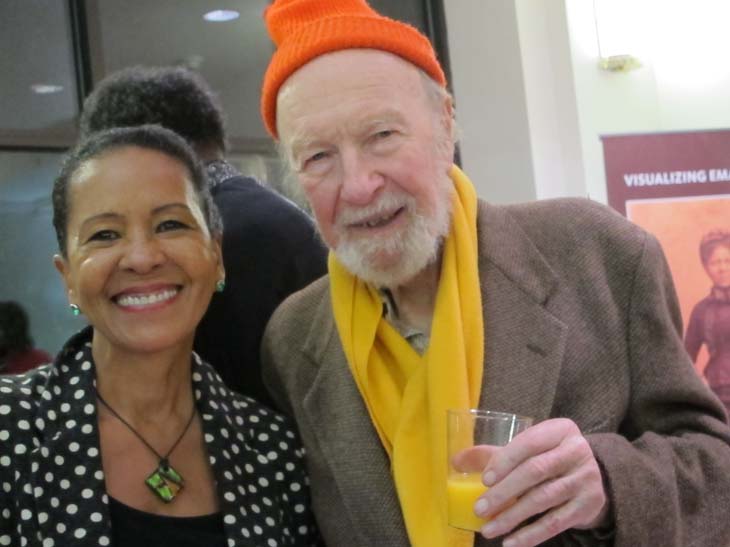
Sylvia Wong Lewis with Pete Seeger, iconic folk singer at Ruby Dee’s party.

Actor Rosie O’Donnell said that she worked with Ruby on a film about foster care recently. “Working with Ruby was tremendous!”  Folk singer Pete Seeger said that he could not remember all the things that he did with Ossie Davis and Ruby Dee over the past 70 years but that it was “fun and about art and activism.”

Personally, I remember when Ruby Dee came to my high school, George W. Wingate in Brooklyn, in 1970 to talk to Black students who had been accepted to college. Ruby was brought there by a forceful Black guidance counselor named Mrs. Mc Caddy, who had organized the gathering. She said that her famous movie star friend Ruby Dee was coming to give us a pep talk. We were so excited. Ruby spoke about her college days and reminded us about the Civil Rights movement. She said that her husband Ossie and many in her generation fought for us to have access to education. She reminded us that it was our obligation to reach back to mentor those coming behind us.

Ruby Dee's 90th birthday party
Sylvia Wong Lewis with Rosie O’Donnell at Ruby Dee’s party.

A Harlem dance school owner shared a story. She said that Ruby registered her own daughters in the school to help drum up business for the fledgling dance school. “Ruby was so supportive to me and I was a complete stranger to her. Ruby and Ossie were like that. If they heard that you were doing something positive, they were there for you. We used to be a ‘real community’ back then.’ Everyone in Harlem signed up just because Ruby’s kids were my students!” the Harlem resident said, who didn’t want to give her name.

The point about being a complete ‘stranger’ is important and why Ruby and Ossie are so beloved. To Ossie and Ruby, there were no strangers, they were always approachable. They are probably the last of their kind, with a few exceptions. Ossie  and Ruby would indeed show up for your gathering or any community event. We could always count on them to narrate a documentary or MC a benefit for free if they felt  that it was a good cause. Today’s ‘stars’ are not as approachable. Happily, the stars were aligned and many said said yes! when asked to come out for Ruby’s birthday!

Ruby Dee's 90th birthday party
Champagne toast for Ruby Dee’s 90th

Dressed in hot pink, Ruby Dee celebrated her 90th birthday in grand style. It was a film tribute to her life at Harlem’s Schomburg Center for Research in Black Culture on November 14, 2012. Ironically, it was in the Schomburg’s basement theater where it all began. Ruby met husband-to-be Ossie Davis and co-stars Harry Belafonte, Sidney Poitier there and the rest, as they say, was history.

Now, nearly 70 years later, family and contemporaries like Pete Seeger, 93; Harry Belafonte, 85; and David Dinkins, 85, flanked the grande dame of stage, screen and picket lines. She was feted with film clips from a documentary-in-the-works entitled Life’s Essentials with Ruby Dee, directed by one of her seven grandchildren, Muta’Ali Muhammad.

Testimonials also came from the First Couple, President Barack Obama and First Lady Michele Obama in the form of a proclamation. Video greetings from Alan Alda, Glynn Turnman, Jeffrey Wright and others highlighted the evening.

Ruby Dee's 90th birthday party
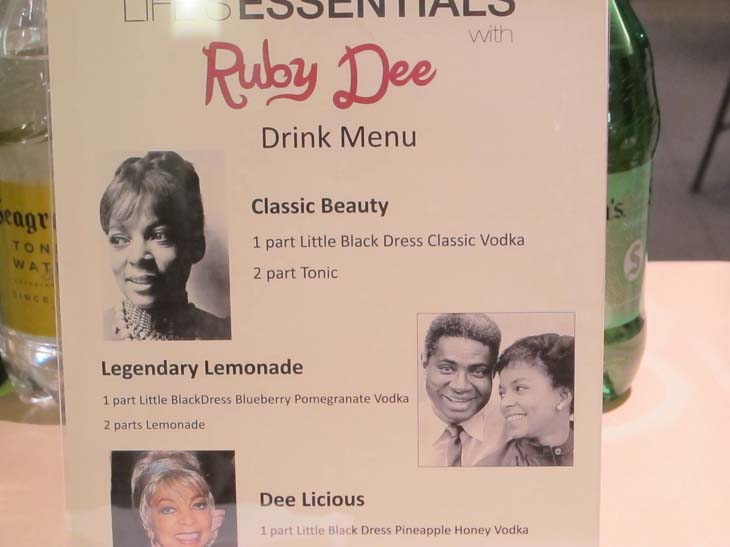
Ruby Dee’s party bar card.

For a certain generation though, Ruby Dee and Ossie Davis were America’s first favorite couple. Their lives seamlessly intersected politics, the arts, media and activism. The auspicious occasion was hosted by two other famous couples— actors Angela Bassett with husband Courtney Vance and Susan L. Taylor (Essence Magazine) and author-husband Khephra Burns, who performed an original poem together.

Some of the other luminaries in attendance were Jesse Jackson, Rosie O’Donnell, Danny Glover, Charles S. Dutton, Melvin Van Peebles, Rev. James A. Forbes, Micki Grant, Malik Yoba, Woodie King, Barbara Montgomery, Khalil Gibran Muhammad, among others. The party music featured Stevie Wonder’s My Cherie Amor and Happy Birthday with delicious food catered by Norma Darden’s  Spoonbread.

Life’s Essentials with Ruby Dee reached lovingly deep into the family’s archives. One scene took place inside their huge storage barn packed to the rafters with awards, plaques, playbills, poster, costumes, and stage props. Witnessing that scene along with rare film footage portrayed a glimpse of lives well lived. But most of all, we were all grateful for the memories, especially to see the late Ossie Davis, again, who died in 2005.

Funny and sad reflections from the children and grandchildren gave the viewer a hint of what it was like to live inside this amazing family. Working with producer Jevon NJ Frank, it took Muta’Ali 300 people over 40 days to raise $50,000 on Kickstarter to pay for the 30-minute excerpt.  The final film is expected in 2013.

After a champagne toast, Ruby Dee said: “I am totally surprised and overwhelmed. It would be too easy for me to cry. Let’s remember that we are all miracles. Time to get busy!”

The screening was made possible by sponsors Delta Sigma Theta Sorority Incorporated, Camille and Bill Cosby, Carol Sutton Lewis and William M. Lewis, Jr. Charitable Foundation, AARP, Billye and Hank Aaron, and 1199 SEIU.

Rockaway Rebounding

Army comes to the rescue in Rockaway with water to Head Start’s pop-up disaster relief center.

Rockaway Headstart is rebounding. It has been a rough month-plus. Halloween pumpkin decorations are still taped to some of the walls as a reminder of when the storm hit. Like most of Rockaway, Hurricane Sandy flooded out the Head Start Program at 41-05 Beach Channel Drive serving 111 children. Everything on the first floor was under four feet of water. Heating, electrical system, Wall boards, a commercial kitchen, two classrooms and office furniture, computers, two copy machines and supplies have to be replaced.

But a fresh start for Community and Family Head Start is underway. For starters, they received a clean bill of health from the Department of Health to open the second floor level to the children after the hurricane had shut them down. ”We opened our doors to the special needs children first on Wednesday, December 5th” said Cynthia Cummings, Executive Director. Then, the rest of the children will be phased in by the end of the week. We are all so excited. We missed each other and worked hard for this day to come,” Cummings said.

Right now, however, the school’s outdoor area and first floor continues to be a pop-up Disaster Relief Center for the local residents. The area has been cleaned up to serve that purpose. The classrooms and former parent room hold racks with donated clothing and desks are laden with donated  goods and occasional hot food delivery. The entry can now serve as a reception area and passageway to the upper floors. There was a lot activity during a recent visit as contractors busily prepared for the partial-re-opening of the pre-school program.

Hurricane Sandy hit Rockaway Head Start program hard.

“You can’t move from a disaster of this magnitude to a turnkey operation. It takes several stages: disaster, relief and recovery,” Cummings said.

“Each step is complicated. This flood disaster was and is still very traumatic. Everyone is suffering from post-traumatic stress syndrome. We are all too busy to deal with personal traumas. We know that the children need counseling too as do most of the entire residents of this area.”

“People assumed that if we have light and some heaters, that we could open the school. No, it does not happen like that. We must do it in a way that makes sense.

When they told me that we couldn’t pay for the electrical panels, I said well I’m paying for it. We used $16,000 from emergency funds to do it. This is a business. That was a business decision. If we did not move quickly, things would be worse. Salt water in electrical panels, within a week, we would be worse off.  Then we ran out of gas for the generators during the clean-up. Things happen.”

“We have to keep moving forward. We will probably need $1.5 million for our third floor, where we hope to move up to.  Then, we will be able to have VNS serve infants and toddlers on the first floor. That has always been our goal.”

Head Start parent receives donated food at disaster relief center set-up at school.

“People have been so kind to us. Actually, managing all the volunteers and donations has been a challenge. But my staff is extraordinary. Everyone pitches in wherever needed. So many kind-hearted people have stepped up to help. Many of them are just ordinary people. Even people we terminated are returning to help!”

Framed by rows of brand new homes, the Head Start program had undergone a total renovation in recent years.  Their building sits like a jewel in the area. When asked if she feared looters, she scoffed. ”Are you kidding? No way, if anything the thugs, would protect us because they know we are here for them.”

“A Long Island East End group has been bringing hot meals everyday for area residents. We can’t cook yet. Our kitchen needs to be totally overhauled. We need microwaves and probably caterers to feed the children. That’s in the works now.”

“People in Rockaway are still living in the worse conditions that you can imagine, she explained. “Doubling up in already stressed, crowded conditions. Most families are living with molded furniture with others in overcrowded apartments. People have to wait for contractors to be assigned to fix and repair their apartments. That’s what it’s like being disadvantaged and living in public housing,  always waiting.”

“Our teachers have made home visits throughout this crisis. Some of the parents prefer to meet at the school since their home conditions are horrible. The children are begging to return to school where life is stable, safe, there’s love, hugs, food, smiles and cleanliness. An area of the room where the disaster relief center was set up next to the clothing racks, a toddler was restless and the mother sat in quiet thought. Sometimes families need to be here rather than home, Cummings explained.

When asked what is needed, Cummings said that she defers to the people themselves. “In the beginning, they needed dry clothing. Now, they need inflatable beds, towels, toiletries, diapers, space heaters, and detergent to wash clothing. They still need a hot meal everyday.” On a recent visit, residents were treated to hot soup and sandwiches for lunch provided by a local husband and wife team.

Rockaway resident thanks volunteers for food at Head Start’s pop-up relief center.

Head Start programs are premiere providers of developmental and educational services to infants, toddlers, preschoolers and their families who live within poverty and struggle to meet basic needs of life. Local programs, like Rockaway’s Community and Family Head Start program, are vital because they are rooted in the community and reflect the cultural and social fabric, in every state across the US, the US territories like Puerto Rico and US Virgin Islands and on Native American reservations.