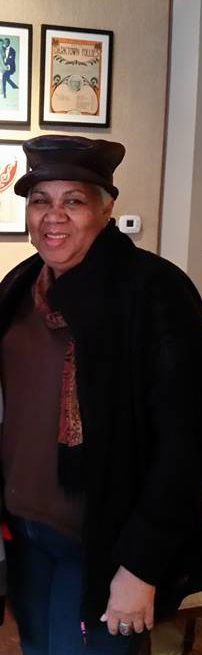
Boomer pride

Victoria Grant
Victoria Grant, Harlem-based, Brooklyn-born writer

 
Boomer pride
By Victoria Grant, Guest writer

(In honor of Women’s History Month.)

I am a Baby Boomer, born nine months after the end of World War II; raised within the social confines of the Betty Crocker fifties; broke those chains in the Age of Aquarius freedom of the sixties; matured under the fragile shelter of the not-quite-fulfilled female empowerment and racial equality promise of the seventies; starved during the It’s-All-About-Me eighties while I taught myself computing, and thus thrived in the tech-boom nineties when my computing skills paid off.

Believing in my invincibility, in 1973 I became a Single Mother By Choice. I’d say successfully so – when I’m not ticked off at my one-and-only. (I swear I should have had five more.) A native-born New Yorker born to native-born New Yorkers – the Brownsville section of Brooklyn, in fact – I’ve lived my adult life in the Northeast, Southeast, Southwest, on a Caribbean island, and now the island of Manhattan.

At 55, I returned to college in an attempt to ensure that some brain cells survived during my years working for a pseudo-government organization while raising a man-child to be a college graduate. I graduated magna cum laude, but, more than this esteemed signature of accomplishment, I cherish most during that tenure my entrée into creative writing. In my enthrallment with creative writing classes, I almost forgot to take the mandatory courses for graduation.
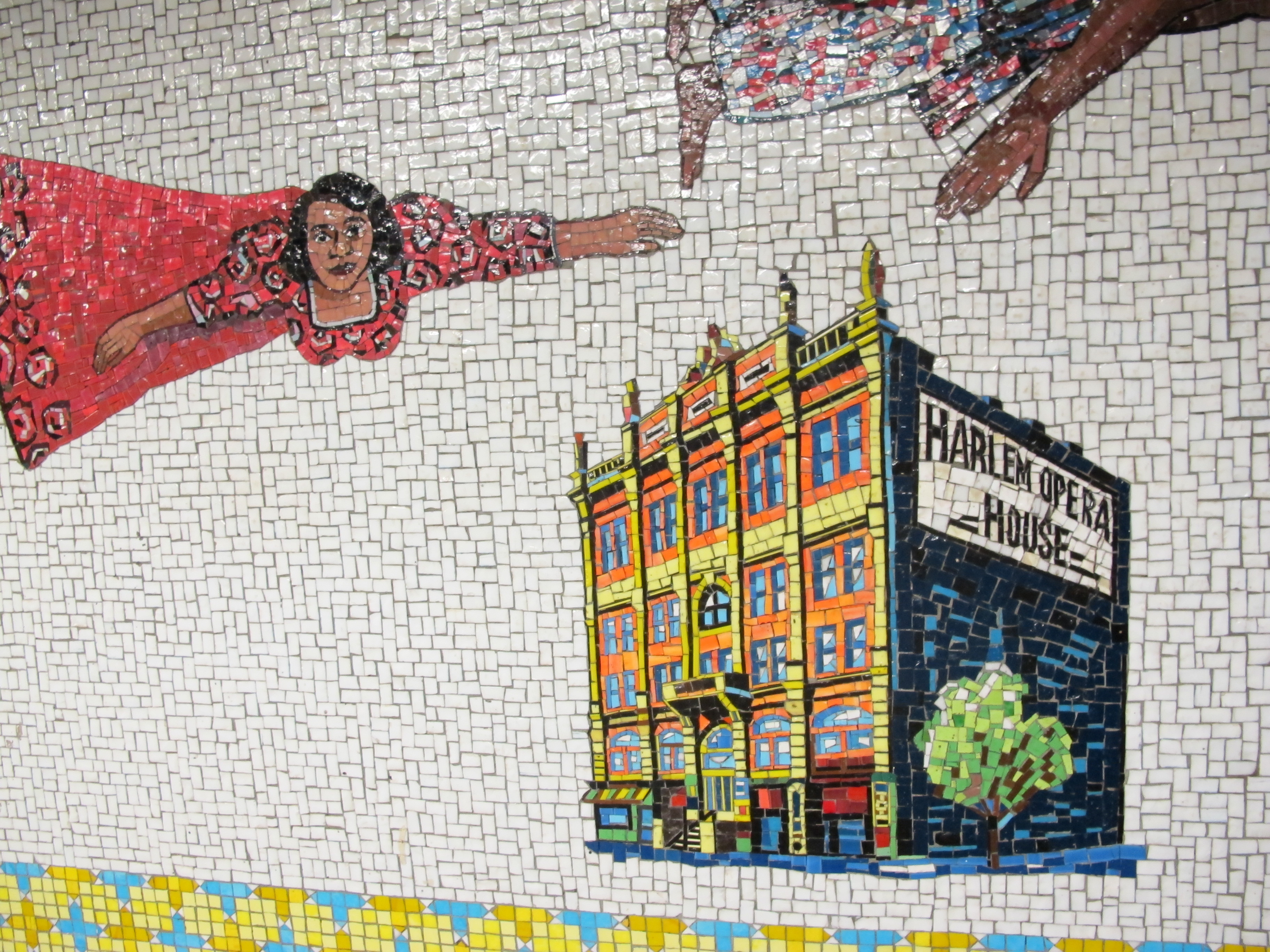
NYC Subway tile art

For one of my class assignments, I wrote a brief ethnological study on MTA New York City Transit and its employees. Notwithstanding the fact that I may have been the only submitter to the English Department’s Ethnological Studies competition, I was pleased that the report earned me a City College of New York writing award.

I always thought my knowledge of what goes on with the workers and inner workings of a system that transports seven million people daily could produce interesting stories. While at Stanford I wrote the first draft of my novel of an out-of-town “innocent” coming to New York to make it big, and who winds up working for Transit. New York by itself can be a mindbender, but the microcosm of New York City Transit can be a mind shifter into an alternate universe. I know, I retired from there adding to my family’s aggregate 100 years of Transit employment. I want to offer readers revealing and entertaining tales. No one else is telling my story. It’s the 21st century, and about time I tell it.

(Victoria Grant is a Brooklyn-born, Harlem-based writer. A 2013 graduate of Stanford University’s Creative Writing Program, Victoria is completing her debut novel. Go to @TransitWriter1 on Twitter or https://www.facebook.com/TransitWriter)

(Cover art photographed by Sylvia Wong Lewis, is one of a 5-panel glass mosaic mural at the MTA NYC Transit’s 125th street station called ‘Flying Home” by Faith Ringgold, an internationally noted African American, Harlem-based artist. It illustrates Harlem notables and makes them fly. Go to MTA.info for details.)
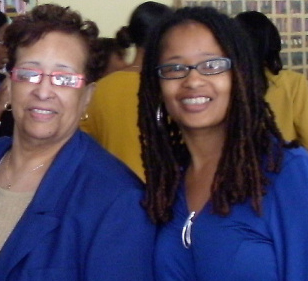
Mom, my shero

mother and daughter
Mother and daughter, media mavens, Theresa B. Leeke and Ananda Leeke.

Mom, my shero
By Ananda Leeke, Guest Writer
(In honor of Women’s History Month)

Musician. Feminist. Sorority Leader. Educator. Traveler. A former paper girl with a newspaper route and dreams of working as a radio DJ in Indianapolis, Indiana. These are just a few words that describe my mother, Theresa B. Leeke. She is my Women’s History Month shero because of her passion for information, media, and technology. She decorated the landscape of my childhood. It started with her listening to an early morning radio show, WTOP-AM. The show provided updates on local news, politics, traffic, weather, and school closings. My mother was in the know 24/7/365.

Her passion embraced the headlines of the Washington Post newspaper and the evening news on television. It also greeted me each week when JET Magazine, the Indianapolis Recorder newspaper, and the Catholic Standard newspaper arrived in the mailbox. Each month her favorite magazines, Ebony, Essence, and Ms. appeared on my family’s kitchen table. Because of her voracious media appetite, my brain inhaled it all!

When I turned 13, I developed a healthy appetite for lipstick, fashion, entertainment, and women’s issues as a result of reading my mother’s Essence and Ms. magazines. I also discovered my own favorites– Mademoiselle, Glamour, Right On!, and Vogue. All of the articles I read inspired me to expand my wardrobe while I was a seventh grader. I begged my parents for money to purchase outfits, shoes, and accessories. But my mother told me I would have to make do with what my parents already purchased unless I found a job. She suggested I become a paper girl like she was when she was a girl. This would allow me to earn my own money and spend it the way I liked. The power of being able to earn and spend my own money was exciting. So I took the leap into the paper girl world.
Nowadays, my mother’s passion for information, media, and technology is still going strong. Her favorite news sources have expanded to include CNN and MSNBC; the Washington Post, Washington Afro-American, Washington Informer, Prince George’s Journal, Catholic Standard, and Indianapolis Recorder newspapers; and WHUR-FM and WTOP-AM radio stations. Her magazine collection includes Prevention, Real Simple, and The Oprah Magazine.

She has one laptop for her music and work as the director of liturgical music and gospel choir director for her Catholic church. Her second laptop is used to access the Internet, email, online banking, Amazon.com, and her work with Sigma Gamma Rho Sorority, Inc. and the Phyllis Wheatley YWCA. YouTube is one of her favorite places to visit online. She enjoys watching videos featuring gospel music singers and musicians. They help her prepare and select music for her church’s weekly Masses and concerts. Facebook is her online community du jour. She uses it to stay in touch with family, friends, former students, sorority members, and colleagues. Her Facebook status updates give voice to her spiritual inspirations, feminist perspective, support of President Barack Obama and First Lady Michelle Obama, and sense of humor.

(Based on an excerpt from Digital Sisterhood: A Memoir of Fierce Living Online.
Ananda Leeke is CEO of Ananda Leeke Media l Author l Artist l Creativity Coach l Yoga Teacher Go to: www.anandaleeke.com.)

Philanthropy for Schomburg

Philanthropy for the Schomburg Center
Philanthropy that is creative is wonderful! Book collectors Ruth and Sid Lapidus donated their personal collection of slavery memorabilia (over 400 items!), $2.5 million PLUS got the New York Public Library (NYPL) to match their financial gift to maintain their collection @SchomburgCenter. This was the Schomburg’s largest gift in its history! (July 14, 1905)

Quietly, at the recent Harlem dedication ceremony featuring rock star historians Professors Annette Gordon-Reed and David Blight, NYPL Trustees and Schomburg supporters, the @SchomburgCenter became the first public library in the world to open a center for transatlantic slavery study. Thank you, Ruth and Sid Lapidus!

During remarks, Mr. Lapidus, 76, intimated with a sense of humor that his book collection ‘obsession’ was occasionally encouraged by his wife of 55 years that filled their Harrison, NY home. He also explained options for anyone collecting books and pamphlets focused on the theme of liberty during the American Revolution for 50 years: “You could sell, donate or keep it in the family. I decided to creatively give it away,” said the Brooklyn native who was raised in New Rochelle.“I looked at the Schomburg’s slavery collection and mine and realized that I had more in my personal collection than they did,” said Lapidus, whose cache includes 18th century British, French and American slavery books and documents. “Part of me is sad to let go. But the other part of me knows that this is the best home for these materials,” Lapidus said. What will he do with all of that extra shelf space? “That was only a quarter of my stash. I will continue to collect. The dealers know what I like,” said the retired partner of Warburg Pincus, a New York-based private equity firm.

Fortunately, those of us who are Schomburg lovers, we are on the receiving end of this beautiful, wonderful gift from the Lapidus family. Thank you, again Ruth and Sid Lapidus!

The other highlights of the evening, of course, were the speakers.
Annette Gordon-Reed of University of Oxford-Queens College (UK), Harvard and Radcliffe, is one of the foremost scholars of Thomas Jefferson and author of the controversial book, Thomas Jefferson and Sally Hemings: An American Controversy (University Press of Virginia, 1997).
David Blight is professor of American History and director of Yale’s Gilder Lehman Center for the Study of Slavery, Resistance, and Abolition. He is writing a new biography about Frederick Douglass, to be published in 2015.Together they shared stories and took questions from the audience on the joys and challenges of writing about the “complicated family lives” of historic figures during slavery. I posted an excerpt of their conversation on my YouTube channel. Check: “Annette Gordon-Reed & David Blight @Schomburgcenter.”

To learn more about the Lapidus Center for the Historical Analysis of Transatlantic Slavery, click here.

8 tips on recruiting at college fairs

 Recruiting millennials
I was invited to participate at a Seven Sisters College career fair. The timing couldn’t have been better. Exciting new projects are shaping up. Extra hands are needed for summer internships and part-time work. However, recruiting college students and millennials (Gen Y, Gen Z, Hipsters) require a different approach than prospecting for seasoned professionals. A five-year career plan is probably the last thing on their minds. These youthful applicants’ amazing business skills can more than make up for their limited job experiences. I appreciate their love of meaningful work and entrepreneurship. In addition, this new generation is accustomed to diversity and technology, important strengths for my small business.

One LinkedIn study outlined how successful big companies proactively appealed to millennial goals of “good work/life balance, compensation/benefits, and strong career path.” For study details, click here. As a woman entrepreneur, I try to adapt big business ideas. I also listen to millennials themselves for guidance. For recruiting tips from a millennial, click here.

Here are my 8 tips for recruiting at college job fairs:

1. Meaningful work – Forget the mundane tedious data entry jobs for a millennial. They want to make a difference. Line up projects that demand a fresh and creative approach. Show photos of your company in action. Describe real client deliverables to illustrate real-time business challenges.
2. Branding – A college job fair is a good opportunity to refresh your own marketing materials such as banners, posters, and flyers with your company logo. Millennials pay attention to branding. So give yours a boost.
3. Communications – Printout hard copies of your job openings and descriptions to give away as handouts. College career development offices prepare their students for job fairs. Many of the students will arrive at your booth well prepared with a list of detailed questions. Be ready to communicate.
4. Digital Engagement/Network – Post your job opportunity on the college career development website and your own social media. Be ready to accept hand-delivered resumes and fully engage with prospects. Emphasize your connection to the host college, especially if you are an alum. Check your LinkedIn networks to find any connections to the host.
5. Creative Perks – Do offer and promote creative perks such as comp film tickets and coupons to local NYC eateries. Students love freebies. Opportunities to meet and interact with amazing people especially celebrities are fabulous perks too.
6. Focuses on Soft Skills – Soft skills should be your biggest focus at a college job fair. Pay attention to important business soft skills such as: people skills, teamwork, decision making, problem-solving, taking ownership of assignments, and time management. Do they have good follow-through? Can they meet deadlines? Can they multitask?
7. Value Volunteerism, School Projects – I have worked with some awesome Gen Y and Gen Z’ers who speak multiple languages, produce films, and run small farms as part of their class assignments or volunteer activities. These are valuable skills that they can bring to your business. Do inquire about their special talents and interests.
8. Value their tech skills – Millennials grow up with technology and multiple mobile devices. They know short cuts that can help your business in ways you would never think about. This youthful population segment knows a lot about survival in today’s tight economy. Those are skills worth your time and investment.

Blended families genealogy

Blended families are becoming more the norm these days. Over the holidays I enjoyed a visit with my brother Johnny’s son Keith, his three daughters ages 12, 9 and 3, and his new wife Lindsay, the mother of their 3 year old. Theirs is a blended family. His mother’s husband adopted Keith when he was very young. Keith’s mother gave birth to another son. I had not seen Keith since my brother’s funeral in 2010 and the divorce from his first wife. Now happily remarried, I was re-connecting with Keith’s family. What a sweet Saturday that was! In addition, brother Johnny had a family too— a wife and daughter who recently married and gave birth to a daughter. Oh, how I wish my brother Johnny could have lived to see them. Girls, girls everywhere! I am swimming in nieces! I wondered what would be the best way to add my brother’s line to the family tree.

Many kinship relationships do not fit neatly onto standard pedigree charts. Usually a genealogy family tree includes a chart with neat lines connecting parents to children. But what do you do when you have a family like mine that includes divorce, remarriage, adoptions, foster parents, and extended families?

Some of my relations mirror cultural traditions of our African and Native American tribal ancestors. For more information on traditional African family structure including polygamy, kinship and clans, click here. For information on Native American matrilineal family structures, click here. Studies have already shown that extended, blended families actually offer unique and positive ways for children to be parented and loved. It was evident that Keith has become a devoted family man, public school teacher and musician. I believe this was a result of his own hard work and having been well-raised and supported by a huge clan that included parents, grandparents, aunts, uncles, cousins and a huge loving extended family. What a blessing!

Standard genealogy pedigree charts impose outdated Euro-centric family frameworks for blended families like mine. There was no place to insert unwed parent’s children and others who are actually part of the ‘family’ but not related by blood. I had never considered children of unwed parents as illegitimate. In fact, the concept of illegitimate children does not exist in many cultures! But that’s a future post.

Maybe one day, someone will re-invent a family tree chart that can include today’s new definition of what it means to be a ‘family.’

In the meantime, click here for a link that can help with blended family genealogy, including a tutorial for adding multiple parents and single parents to your family tree.

Do you have any blended family genealogy challenges or tips?