Genealogy Events in New York

The following is a list of selected genealogy and family history events offered in New York City by New York Public Library, National Archives, and New York Genealogical & Biographical Society.

National Archives eVetRecs: A hands-on tutorial is offered on how to use the National Archives eVetRecs system.  This online system creates a customized order form to request information from your, or your relative’s, military personnel records from WWI to present, Tuesday, November 12, 2013 – 12:00pm to 1:00pm, Learning Center, on the 3rd floor of the Alexander Hamilton U.S. Custom House at One Bowling Green, NY. Sponsor: National Archives at New York City.

Papal Arms within the Discipline of Ecclesiastic Heraldry: George N. Cannizzaro is the industrial specialist for metals at U.S. Army’s Institute of Heraldry in Fort Belvoir, Virginia. He has a special interest in church heraldry and has designed coats of arms for two cardinals, schools, religious communities, and families. He is the proprietor of Cardinal Custom Heraldry, an online studio at ccheraldry.com. The Institute’s Director, Col. Charles V. Mugno, will also attend and speak on recent activities of the Institute. Wednesday, November 13, 2013 – 6:00pm, The New York Genealogical & Biographical Society, 36 West 44th Street, New York City. Sponsor: Heraldry Committee of the NYG&B.

Genealogy Digital Resources: Explore current and historical newspapers and periodicals available online through NYPL. Thursday, November 14, 2013 – 2:00pm and Thursday, December 12, 2013 – 2:00pm. South Court Classroom A, Stephen A. Schwarzman Building, Fifth Avenue and 42nd Street, NYC. Sponsor: The New York Public Library.

Book Talk: The Quack’s Daughter: A True Story About the Private Life of a Victorian Girl. The Vassar Club of New York joins the NYG&B in sponsoring a talk by historian Greta Nettleton, whose book was reviewed in the spring 2013 issue of The New York Researcher. Nettleton is the great-granddaughter of Cora Keck, who was sent east to Vassar’s School of Music in 1884 by her notorious, patent-medicine millionaire mother Mrs. Dr. Keck in an effort to rescue the family’s damaged social reputation. Thursday, November 14, 2013 – 6:00pm. The New York Genealogical & Biographical Society, 36 West 44th Street, New York City. Sponsor: The New York Genealogical & Biographical Society

Who Lived in Your House? Have you ever wondered about the history of your home? Who used to live there or what their lives were like? This class will show you how to research the history of your building and the people who owned and lived in it. The Milstein Division is home to one of the largest free United States history, local history and genealogy collections in the country. Saturday, November 16, 2013 – 2:00pm.  South Court Classrooms, Stephen A. Schwarzman Building, Fifth Avenue and 42nd Street, NYC. Sponsor: The New York Public Library.

Citizen Cartography: Do you want to help the geospatial library of the future? This workshop orients you with tools (available at maps.nypl.org) enabling librarians and the public to add valuable geographic context to old maps. The workshop focuses on the website’s core activity: georectification, or “warping” maps. This means overlaying digital images of historic maps onto a contemporary digital map (similar to Google Maps), transforming them into tiles of a virtual atlas. Dates: Tuesday, November 19, 2013 – 3:30pm; Tuesday, December 17, 2013 – 3:30pm; Tuesday, October 22, 2013 – 6:00pm; Tuesday, November 5, 2013 – 6:00pm;Tuesday, December 3, 2013 – 6:00pm.  South Court Classrooms, Stephen A. Schwarzman Building, Fifth Avenue and 42nd Street, NYC. Sponsor: The New York Public Library

Genealogy handbooks are an overlooked resource. This short course will present different types of handbooks and explain how to use them to improve the quality and depth of genealogy research. This is a companion course to other Uncovering your Family History courses offered by the Milstein Division. First come, first served. Thursday, November 21, 2013 – 3:15pm. South Court Classrooms, Stephen A. Schwarzman Building, Fifth Avenue and 42nd Street, NYC. Sponsor: The New York Public Library.

Your Family History – Immigration Records: Discover genealogical resources at the New York Public Library. Uncovering your Family History, the second installment, explores passenger lists and naturalization records. First come, first served. Thursday, December 5, 2013 – 3:15pm. South Court Classrooms, Stephen A. Schwarzman Building, Fifth Avenue and 42nd Street, NYC. Sponsor: The New York Public Library.

Do you know about other genealogy and family history events coming up in the New York area? Please post details in the comments section.

Mexican Genealogy

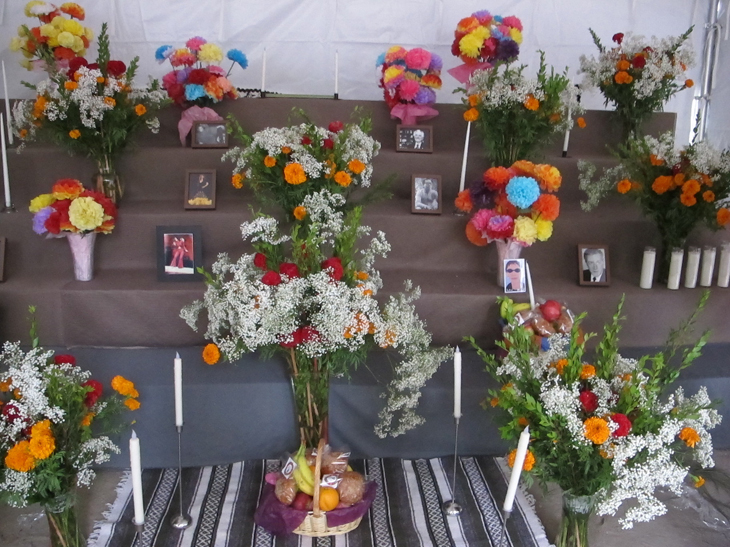
Today is a great day to think about Mexican genealogy. What other culture embraces their ancestors with such joy and spirit? Today is the first day of Dia de los Muertos, or Day of the Dead, a two-day traditional Mexican holiday that honors family members who have past away. With roots in indigenous spirituality and colonial Catholicism, this holiday looks like Halloween and Christmas intermixed—colorful costumes, skulls and bones, elaborate make-up, house decorations, festive foods, and parades. It is traditionally celebrated on November 1 and 2 to coincide with All Saint’s Day and All Soul’s Day. But many families celebrate throughout the months of October and November. The centerpiece of this holiday is the special altar built and decorated almost like a Christmas tree.

Pan de Muertos
Pan de Muertos for Dia de los Muertos.

“My mother would put several tables together to form one very long table for our altar. It stretched almost through our whole house!” said Maria Garcia, a Puebla native who lives and works in New York. “We would set a place for my grandparents and their grandparents. We included their photos and a name sign, favorite foods, colorful flowers, especially marigolds, candles and handmade and toy skulls,” Maria explained. Three categories of death are remembered: children, people who died of normal causes, and those killed, orphaned or who committed suicide. “For that last category, we would put their altar outside behind the house because their souls usually cannot ascend to heaven directly,” Maria said. Day 2 is for visiting the cemetery where gravesites are cleaned, decorated and offerings are left.

village churchyard altar
Dia de los Mueros altar at St. Mark’s Church in the Bowery.

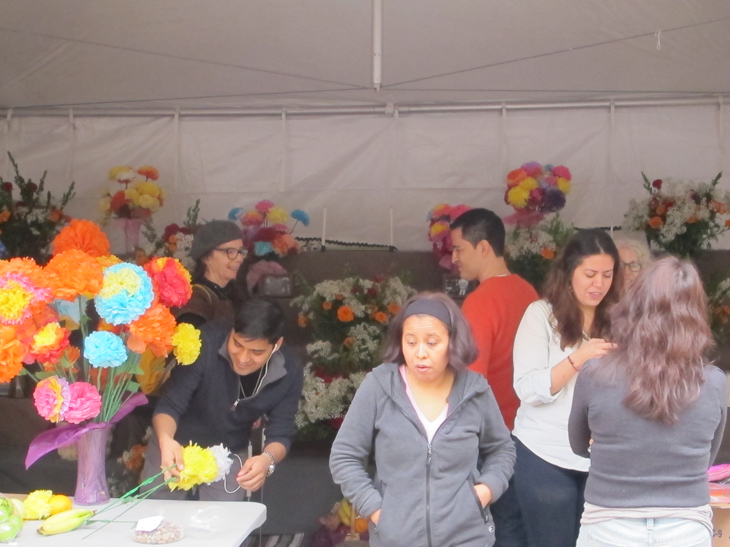
Family heirloom items are taken out of storage, such as her great-grandmother’s tablecloths and antique candleholders. Besides the many varieties of skulls, the children and family members place colorful tissue paper flowers with care above and around the table. Food and family stories take center stage during this time. Special bread called pan de muertos, bread of the dead, is a special altar offering and must not be eaten! The bread, similar to challah, is elaborately decorated with dough sculls and saint faces. Other major altar offerings include special chocolate disks, the basis of a spicy hot chocolate beverage, bowls of mole, and beer or mescal.

neighbors build altar at St. Mark's church for Dia de los Muertos.
neighbors build altar at St. Mark’s church for Dia de los Muertos.

If you have Mexican ancestry and are interested in researching your family history, there are many websites and many resources available. Two sites that I like are: Mexican Genealogy and Cyndi’s list.

Have you ever been to a Dia de los Muertos event? Please share your experience in the comments section here.

Genie TV in Brooklyn

Sylvia Wong Lewis offers genealogy tips and how to preserve family photos.

Genie TV comes to Brooklyn! Brooklyn Savvy produced and will re-broadcast its programs on genealogy and family history. A genie is a nickname for genealogist. Check out noted genies Sylvia Wong Lewis, Narrative Network founder and Wilhelmena Kelly, on New York’s popular local television show called Brooklyn Savvy.

Their featured segments are entitled “Know your roots!” and ‘What’s Your Narrative?”

Together with the lively producer Toni Williams and guests hosts, Sylvia and Wilhelmena discuss family stories, American history including early America’s “open society” before slavery and the post Civil War era.

Sylvia traced her ancestors in Mississippi, Louisiana, the Caribbean, China and Africa to slavers and enslaved.

For tips on ways to honor your family history, here’s an excerpt from Sylvia’s October post about Family History Month:

“Family History Month is celebrated in October by genealogists worldwide. This is a perfect time to celebrate your food legacy. I learned so much about my Southern and Caribbean genealogy and culture through the food we ate at home.

Here are 3 ways to honor your family’s food legacy:

  1. Share memories of food you ate growing up. Don’t take your culinary traditions for granted. Be proud of all the crazy things you ate at home!
  2. Create a family cookbook by collecting recipes. Read or write about how food intersects with culture and history.
  3. Travel to your ancestral homeland to taste and witness your authentic roots. The land, waterways, air, plants, animals, fish, fowl, bugs, farms, gardens, environment and dietary habits of your people are all important parts to your history.”

Wilhelmena is a direct descendant of Pocahontas and was recently inducted into the Daughters of the American Revolution (DAR). Ms. Wilhelmena Rhodes Kelly and Linda Rhodes Jones published a book tracing their family to Pocahontas. She shared her story about her African American family’s descent from John Rolfe and Pocahontas through Edward Yates Hamlin and Dollie Scott of Dinwiddie, Virginia.

Wilhelmena, Sylvia and the show’s hosts discussed oral history, research, family and extended family interviews and other challenges faced by African Americans and other mixed-heritage families in their genealogy search. To find one’s family history, it can takes decades of work and commitment.

Brooklyn Savvy airs every Sunday, 8am on NYClife Channel 25 and Cablevision 22.

Buried Treasures Wrap-up

original newspaper
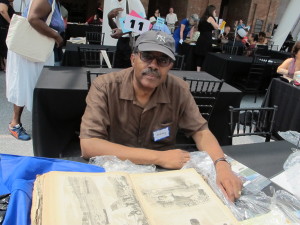
Anthony Cochran shows his original Harper’s Weekly Magazine at Brooklyn Museum event.

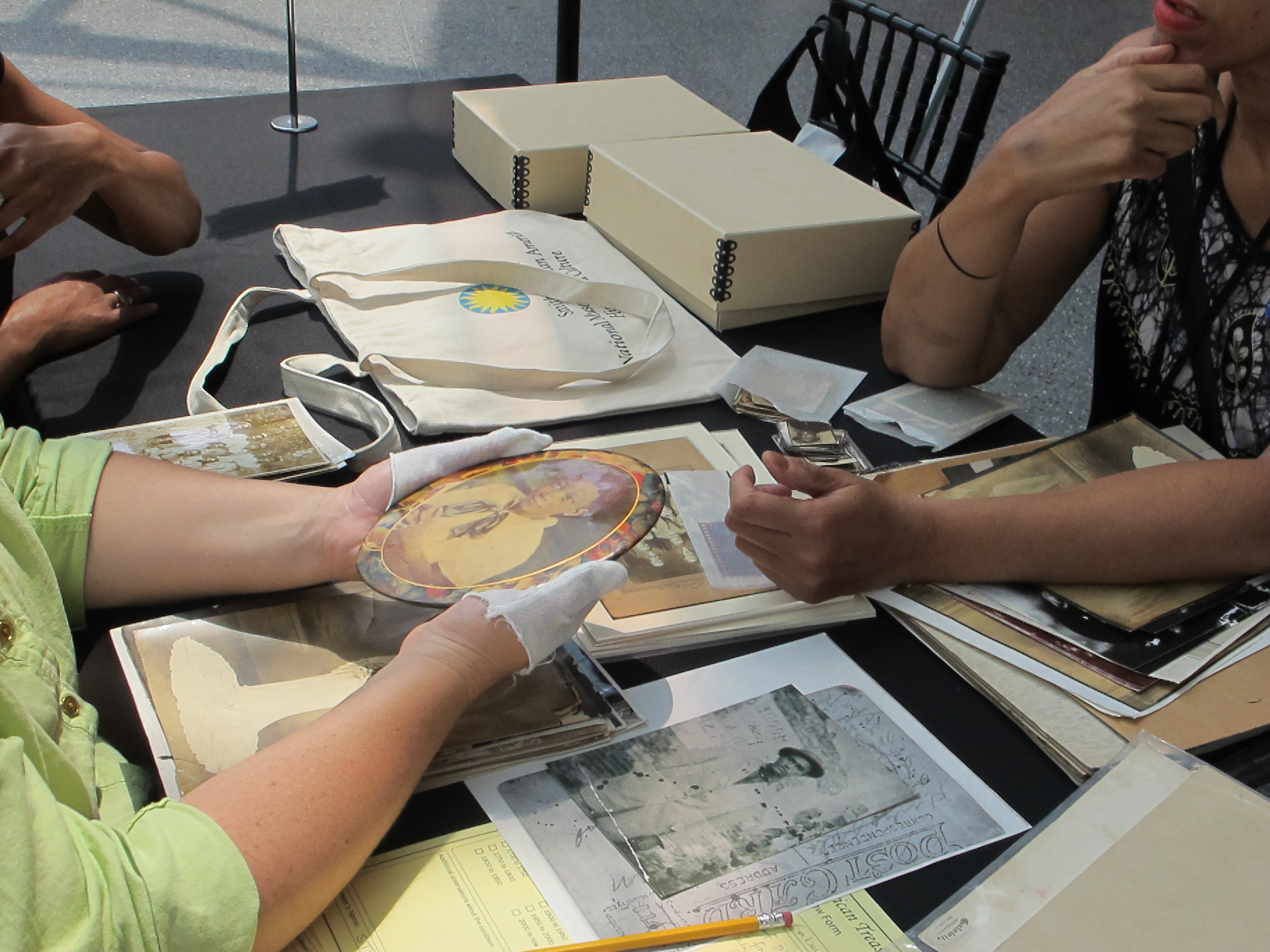
Buried treasures abound in Brooklyn. Anthony Cochran brought in an 1863 original edition of Harper’s Weekly Magazine that he inherited from his maternal uncle. Anthony, an author and family historian, was among dozens of participants at the Smithsonian Museum’s “Save Our African American Treasures” event held recently at the Brooklyn Museum. The examiner quickly opened his bound volume to the cover page of July 4th, 1863, to exam the stories and images. “Harper’s was the most famous of the news media during the Civil War. This page is a favorite among Civil War collectors. They would cut out the images, delete the text, and make post cards to sell,” said the examiner.


treasured photos, old papers are collector's items
Old treasured photos are collector’s items.

Anthony gave the ‘buried treasures’ event high marks: “The Smithsonian Museum did a great deed by proactively looking for our history and teaching about preservation. The representative who evaluated my publication was knowledgeable and also genuinely passionate about the work she was doing. I found all the staff members extremely warm, sincere and enthusiastic.”

The Fourth of July edition of Anthony’s Harper’s newspaper featured a story entitled: “A Typical Negro.” We all have seen the image, but not the story of this courageous formerly enslaved man called “Gordon.” His back is scared, blistered, and exposed. The museum examiner explained that Gordon was actually enlisting for military duty at a Baton Rouge Union post after escaping twice from a brutal Mississippi slave plantation and serving as a Unionist guide. His bravery is described in the published Harper’s account. She said the vivid images told several American stories: of slavery, the Civil War and about media – especially graphics, photography and print media. She explained that newspaper images were actual woodcut drawings created by a skilled artist. Photographs could not be printed in newspapers yet. The army officers were so outraged by Gordon’s injuries that they documented three images of him: ragged and barefoot when he entered their lines; at the military medical exam; and in full uniform as a soldier in the Union forces. Anthony’s rare newspaper editions were measured and preserved in a custom-made box. He said he would pass it down to a family member rather than donate or sell his treasure.

Brooklyn Museum’s lobby bustled with over twenty-five Smithsonian Museum professionals standing by to examine items at numerous examination tables. “Buried Treasure” participants brought in all kinds of items: an ancient wedding dress, Bibles, photographs, books, artwork, quilts and more.

Valerie Faulk, a caretaker for a forgotten Tuskegee Airman, brought in his aviator’s goggles, medals, certificates and military cap. She said that she had cared for the unsung hero for over five years until he recently died. She said when she heard about the museum’s event. She was excited. The Airman’s family told her to discard his things. But she could not part with them. The staff showed tender loving care as they listened and examined her treasures. She had everything wrapped in plastic. A team properly re-wrapped the items in acid-free paper and placed them in custom-made boxes. She expressed gratitude. But said she wanted to gift the items to the museum for posterity. Regretfully, they could not accept her offer.

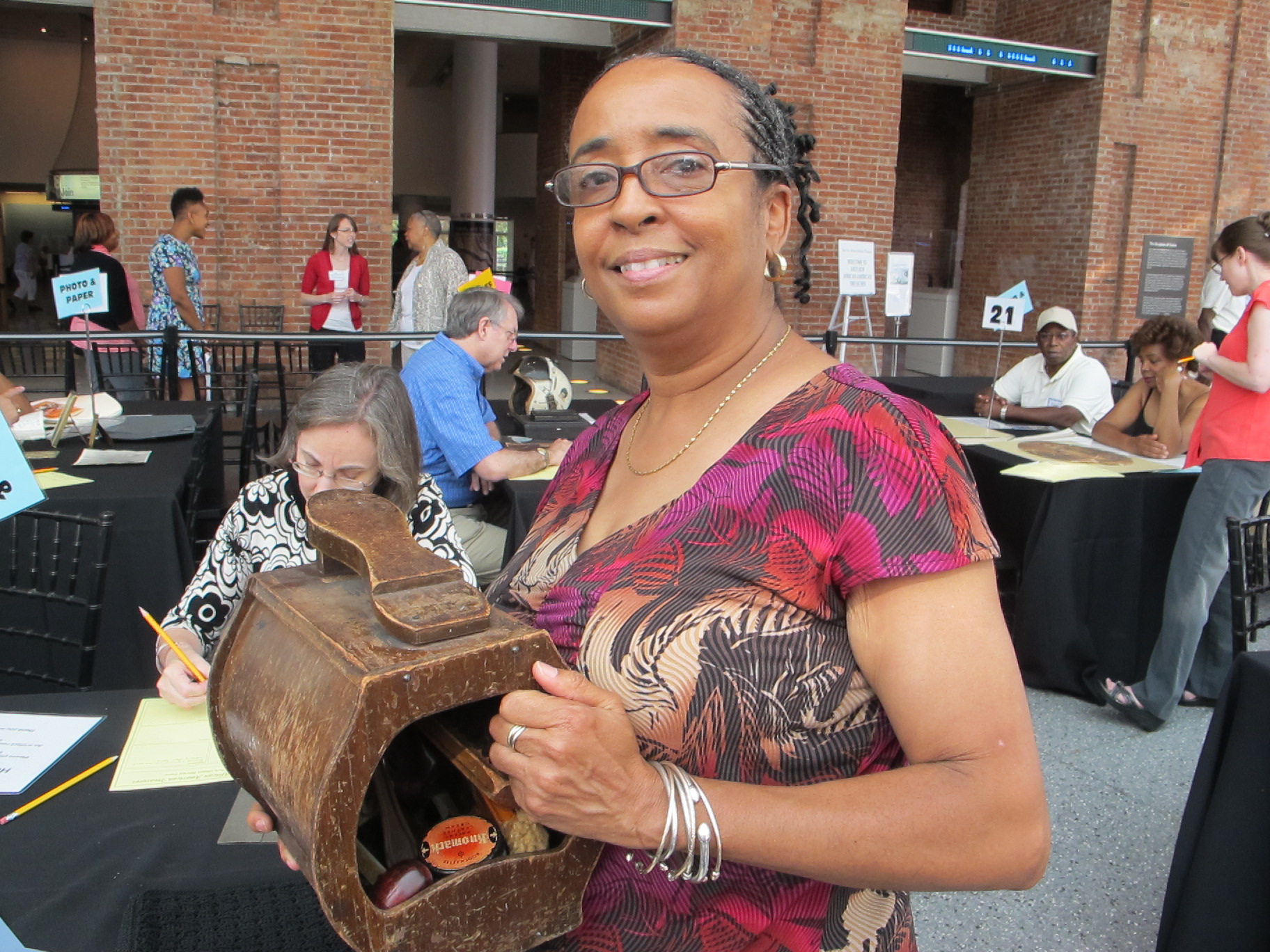
Holding her father's old shoeshine box
Holding her father’s old shoeshine box.


Jean-Marie Bain from Grenada, West Indies, brought in her father’s shoeshine box, his banjo and an exquisite photograph of him. The photo was autographed by the famous Harlem photographer James Van Der Zee. Her items told a story of Caribbean immigration, the Harlem Renaissance, and segregation. Her dad shined shoes and entertained passerby’s during in the 1930s. She said dad worked at Ocean Crest Hotel lobby in Long Beach. From his meager earnings, he was able to purchase a Brooklyn brownstone where she still lives today.


Peace advocates show old folks music books

Sharleen Leahey, a peace advocate and folksinger brought in “Red Dust and Broadsides,” a songbook by Broadside magazine publisher, Sis Cunningham; a topical folk music songbook published in the early 1950s called “The Peoples Songbook” and a back issue of the topical folk music magazine “Broadside” published in 1964. The items provided an overview of American folklorists, the peace movement and authentic Black music. Lyrics and transcriptions of “Negro Slave” songs were published in the Cunningham book.

“The Smithsonian appraiser seemed quite knowledgeable about preserving old books and magazines and had a special interest in music publishing. We discussed some of the songs and issues discussed in my publications. In addition, we exchanged our knowledge of the legendary folklorists John and Alan Lomax who collected hundreds of American folk songs for the Smithsonian Folklife Center in the early and mid-20th Century,” said Leahy.

Photo: Jean-Marie Bain holds her father’s shoe shine box at Brooklyn’ Museum’s “Buried Treasures” event sponsored by the Smithsonian Museum. Smithsonian Institute’s National Museum of African American History and Culture will bring “Buried Treasures” to more locations. For more information go to: nmaahc.si.edu.


Brooklyn’s “Buried Treasures” Wrap-up

Jean-Marie Bain holds her father’s shoe shine box at Brooklyn’ Museum’s “Buried Treasures” event sponsored by the Smithsonian Museum.

Anthony Cochran brought in an 1863 original edition of Harper’s Weekly Magazine that he inherited from his maternal uncle. Anthony, an author and family historian, was among dozens of participants at the Smithsonian Museum’s “Save Our African American Treasures” event held recently at the Brooklyn Museum. The examiner quickly opened his bound volume to the cover page of July 4th, 1863, to exam the stories and images. “Harper’s was the most famous of the news media during the Civil War. This page is a favorite among Civil War collectors. They would cut out the images, delete the text, and make post cards to sell,” said the examiner.

Anthony gave the event high marks: The Smithsonian Museum did a great deed by proactively looking for our history and teaching about preservation. The representative who evaluated my publication was knowledgeable and also genuinely passionate about the work she was doing. I found all the staff members extremely warm, sincere and enthusiastic.”

Anthony Cochran presents his original edition of 1863 Harper’s Weekly Magazine at Brooklyn Museum’s “Buried Treasures” event.

The Fourth of July edition of Anthony’s Harper’s newspaper featured a story entitled: “A Typical Negro.” We all have seen the image but not the story of this courageous formerly enslaved man called  “Gordon.”  His back is scared, blistered, and exposed. The museum examiner explained that Gordon was actually enlisting for military duty at a Baton Rouge Union post after escaping twice from a brutal Mississippi slave plantation and serving as a Unionist guide. His bravery is described in the published Harper’s account. She said the vivid images told several American stories: of slavery, the Civil War and about media – especially graphics, photography and print media. She explained that newspaper images were actual woodcut drawings created by a skilled artist. Photographs could not be printed in newspapers yet. The army officers were so outraged by Gordon’s injuries that they documented three images of him: ragged and barefoot when he entered their lines; at the military medical exam; and in full uniform as a soldier in the Union forces.  Anthony’s rare newspaper editions were measured and preserved in a custom-made box. He said he would pass it down to a family member rather than donate or sell his treasure.

Brooklyn Museum’s lobby bustled with over twenty-five Smithsonian Museum professionals standing by to examine items at numerous examination tables. “Buried Treasure” participants brought in all kinds of items: an ancient wedding dress, Bibles, photographs, books, artwork, quilts and more.

Gordon, a courageous, formerly enslaved man, enlists for Union Army, as featured on cover of Harper’s Weekly Magazine, July 4, 1863.


Valerie Faulk, a caretaker for a forgotten Tuskegee Airman, brought in his aviator’s goggles, medals, certificates and military cap. She said that she had cared for the unsung hero for over five years until he recently died. She said when she heard about the museum’s event, she was excited. The Airman’s family told her to discard his things. But she could not part with them. The staff showed tender loving care as they listened and examined her treasures. She had everything wrapped in plastic. A team properly re-wrapped the items in acid-free paper and placed them in custom-made boxes.  She expressed gratitude. But said she wanted to gift the items to the museum for posterity. Regretfully, they could not accept her offer.

Valerie Falk with Tuskegee Airman’s items at Brooklyn Museum’s “Buried Treasures” event.

Jean-Marie Bain from Grenada, West Indies, brought in her father’s shoeshine box, his banjo and an exquisite photograph of him. The photo was autographed by the famous Harlem photographer James Van Der Zee. Her items told a story of Caribbean immigration, the Harlem Renaissance, and segregation. Her dad shined shoes and entertained passerby’s during in the 1930s. She said dad worked at Ocean Crest Hotel lobby in Long Beach. From his meager earnings, he was able to purchase a Brooklyn brownstone where she still lives today.

Sharleen Leahey, a peace advocate and folksinger brought in “Red Dust and Broadsides,” a songbook by Broadside magazine publisher, Sis Cunningham; a topical folk music songbook published in the early 1950s called “The Peoples Songbook” and a back issue of the topical folk music magazine “Broadside” published in 1964. The items provided an overview of American folklorists, the peace movement and authentic Black music. Lyrics and transcriptions of  “Negro Slave” songs were published in the Cunningham book.
“The Smithsonian appraiser seemed quite knowledgeable about preserving old books and magazines and had a special interest in music publishing. We discussed some of the songs and issues discussed in my publications. In addition, we exchanged our knowledge of the legendary folklorists John and Alan Lomax who collected hundreds of American folk songs for the Smithsonian Folklife Center in the early and mid-20th Century,” said Leahy.

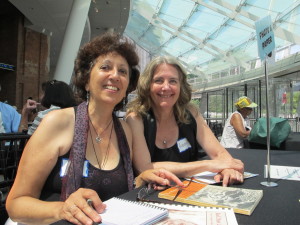
Sharleen Leahey (l) with friend Audrey O’Connell (r) presented their folk music books at Smithsonian Museum’s “Buried Treasures” event at Brooklyn Museum.

Smithsonian Institute’s National Museum of African American History and Culture will bring “Buried Treasures” to more locations. For more information go to: nmaahc.si.edu.