Music Genes: Madame Tempy

Music was key to my family’s survival, according to stories I heard since childhood. Our music genes were inherited from my paternal grandmother, Madame Tempy (Stuart) Smith, (1884-1960) the family matriarch. She was born and raised on a dairy farm in Ocean Springs, Mississippi, two generations from slavery. Despite racism, lynchings, and segregation, Madame Tempy managed to acquire a college education at Straight College now known as Dillard University and the Boston Conservatory. She developed an exceptional reputation as a music teacher and performer in Ocean Springs and New Orleans, according to news clips and family stories.

After filing for a divorce, Madame Tempy (sometimes spelled Tempe) singlehandedly raised her large family of talented musicians, singers and dancers. An extremely independent, self-reliant and perceptive person, she recognized her family’s perilous living conditions. Like the Sound of Music’s Von Trapp family that escaped the Nazis, Madame Tempy turned her young, talented brood into a musical group and quietly escaped the South. The difference between my family and the Von Trapp’s was that they were not told that they were escaping or that they were part of America’s largest, historic migration! Driving a funny-looking, packed automobile, my family followed the legendary “Chitlin Circuit.” They performed in many venues both large and small from Mississippi all the way to Harlem.

Madame Tempy’s musical and business skills were fully realized when she joined others who were part of the Harlem Renaissance. A courageous person with a dictatorial personality, she became a real estate entrepreneur, sacred music composer, and legendary piano teacher. With every Harlem apartment building that she purchased a music school was set-up, and rehearsal studios and rooms were rented. She employed all of her children, nieces, nephews and many extended family members.

My aunts and uncles continued in show business and became teachers too. My Aunt Jeri Smith, who drove the getaway car, gave piano lessons when she was not leading her own orchestra, touring Europe or performing in Hollywood films. My Uncle Joe Smith, my father’s baby brother, was the star of the family’s traveling show. He was the Sammy Davis and the  ‘Michael Jackson’ of the family act. A talented tap dancer, singer, and musician, Uncle Joe was called a five-year-old “wizard drummer,” in a New Orleans newspaper.

It was a tradition for the older cousins to tutor the younger ones. My older cousin Sonny Brigman mentored me on the nuances of Beethoven’s piano Sonata Pathetique. I also trained on the viola. My whole family was musical including my mother, father, sister and two brothers. We played piano, violin, guitar, percussion and wind instruments.

I wish the younger generation of nieces, nephews, and cousins could have met their elders. Because of segregation and racism, we were a tight-knit family. Thanks to racial integration, the family has spread out all over the world. I am still digging for musical genes in my family both past and present.

Do you have music genes in your family?

BBC Radio: ‘Strange Fruit’

Sylvia Wong Lewis, Narrative Network founder, is featured on BBC Radio program Soul Music, on an episode called “Strange Fruit.” Producer Maggie Ayre, looks for stories behind music with powerful emotional impact. Concerned that UK audiences may not know about lynching, Jim Crow laws and other harms that resulted from the Trans-Atlantic slave trade, Maggie decided to take another look at this protest song.

Maggie found me through my slavery group–Coming to the Table, and invited me to join her Soul Music program with Emmett Till’s cousin, Simeon Wright; Robert Meeropol, the adopted son of Jewish teacher Abel Meeropol, author of the poem/song; and April Shipp, a Detroit quilt maker who created the “Strange Fruit” quilt. Each of us was asked to engage about the song, “Strange Fruit.”

“First recorded in 1939 by Billie Holiday, the protest song Strange Fruit came to symbolize the brutality and racism of the practice of lynching in America’s South. Now, decades later, such is the song’s enduring power that rapper Kanye West sampled the track on his latest album “Yeezus.” – Maggie Ayre, Producer, Soul Music, Radio 4, BBC News, Entertainment & Arts.

“The smell of the honeysuckle brings all of it back. That’s the smell prevalent in the area where we lived. The honeysuckle was in bloom. Because words can’t describe how we felt that night. How I felt. It was a combination of grief, shock, and fear. You have a sorrow that grips you because of what happened to Emmett.” – Simeon Wright, Emmett Till’s cousin.

Click here to read the full story: http://www.bbc.co.uk/news/entertainment-arts-25034438

To listen to BBC Radio program, click here for the webpage in advance of the Tuesday, November 26, 2013, broadcast of Soul Music. Look on the Gallery section for photos of radio show guests:

http://www.bbc.co.uk/programmes/b03jb1w1

Happy UnThanksgiving

UnThanksgiving reflections – Some of you may remember the Red Power Civil Rights movement of the 1960s and 1970s. Those brothers and sisters were the first people who started UnThanksgiving also known as Indigenous Peoples Annual Sunrise ceremony. Thousands of Native Americans and their supporters still gather, on Alcatraz Island in the San Francisco Bay Area for an annual Sunrise Gathering on Thanksgiving Day, to pray and pay homage to indigenous people.

In honor of my own Native ancestors, I attended a ceremony during the 80s when I lived in Oakland. It was the largest Powwow that I had ever attended. The Elders were standing, teaching, and leading prayers. They also shared their prophecies about the “invaders.”

To the sound of drums I witnessed a sea of many tribes–from Alaska, Hawaii, Mexico, Canada, East coast, Southern states, Caribbean, South America and more. Many of them proudly wore their full regalia and some  were in plain clothes. The men, women children and elders danced, sang and chanted in a huge solemn circle. It was beautiful, joyful, magical and sad all at the same time. The goal of the event, created by the International Indian Treaty Council and the American Indian Contemporary Arts, was to honor Native American history and to educate others about indigenous people everywhere.

“We are here to remind people that want to destroy our way of life, that we are still here. We are still carrying on our ways. We are still carrying on our traditions,” said Bill “Jimbo” Simmons, an International Indian Treaty Council leader at a past ceremony.

Forget about Black Friday shopping! Instead, eat, pray, love, read, and view some documentaries to make your Thanksgiving holiday more meaningful.

Here is my UnThanksgiving to-do list:

Native Foods: On Thanksgiving Day, make sure you eat or prepare something from the “three sisters”: beans, corn and squash, often called the heart and soul of America’s indigenous diet.

Pray: Expand your Thanksgiving prayer to include something about the indigenous people everywhere. Be creative and make up a special prayer.

Read: Did you know that some people believe that the history of Thanksgiving began in Texas and Florida and not with the Pilgrims at Plymouth Plantation? Some people (especially many Natives!) doubt Thanksgiving really happened! Learn the myth of Spider Woman, the creator of Mother Earth and other Native American legends. Read all about it.

Films: There are many films with Native American themes that I liked, such as Dances with Wolves and Windtalkers. Red Cry is a documentary that really stands out and is generating a lot of buzz now. Check it out.

What do you think of Un-Thanksgiving? Do you have any other suggestions for Native American-themed films or books? In your family history, do you have Native ancestry? Please share in the comments section below.

Cooking Genes: Culinary Legacy

Most of my family members seem to have cooking genes. Well, except for my oldest brother Johnny. When asked what he made for dinner, he always said: “I made a phone call!” My other brother Sidney can hold his own with Red Beans and Rice (Louisiana-style) or Chicken Pelau (Trinidadian one-pot stewed chicken and rice).

However, my father was a professional baker. And he could “throw-down” his own traditional Southern Creole and African American soul food (Mississippi and Louisiana). When I asked him how he learned to cook so well, he said: “Where I come from, everybody knows how to cook!” On weekends mom and dad had a tag team catering business, of sorts. He was a local legend for his pies baked in the Southern tradition—apple, peach, sweet potato, and pecan.

But, he never sold them. He was a gentle, sweetheart of a man who believed in southern hospitality. He gave away his pies simply because people loved them. Brooklyn neighbors would visit and wait for the pies to come out of the oven. After he passed away, it was years before I would eat pie.

My mother was a great cook too, God rest her soul. She loved to say that our food was delicious because we were a “mixed-up” family! She had a different outlook regarding enterprise. She would certainly sell a few of dad’s pies! She was West Indian (Chinese Trinidadian/Guyanese) and always included a pie deal in her boxed-lunch business—one of her many “side hustles.”  Mom’s specialties were Creole Caribbean appetizers.  She would re-purpose dad’s extra piecrust dough to make Jamaican Meat Patties and Indo-Caribbean Samosas.

Dad always made extra piecrust for Mom and pretended as if he didn’t know what she was up to. My parents cooked in their own separate kitchens. The kind of food that we ate could be called: Afro-Asian-Indo-Caribbean-Soul-Creole Cuisine. We lived in a two-family brownstone—dad downstairs and mom upstairs. Our home was always full of our mixed-heritage relatives and extended family members. Most of them had migrated from the American South or some Caribbean nation.

Mom would setup over a dozen trays of patties and samosas. She would cook some and freeze and bake some later. Actually, “the girls”—me, my sister Kim and cousin Sandi— were put to work on a home-based assembly line. That was “back in the day” when children were obedient. Kim would roll out the dough and cut out circles using a cookie cutter or an inverted jar. I would fill the dough circles with a cooked spicy ground meat mixture or potato-vegetable fillings. I would carefully fold the patties into half moons and press them closed with a fork. Sandi would paint each patty with an egg wash, arrange on trays, and place in an oven and bake. We made what seemed like hundreds of these bite-sized snacks. On the day of Mom’s event, like an Atlantic City bus trip, we would wake early bake, cool, and pack and sell these goodies as part of a boxed-lunch deal.

Today, my sister and I both love to prepare our traditional foods. When we get together, we exchange food gifts and re-trace family recipes. We sometimes shop in old ethnic New York neighborhoods searching for special items. I believe that we inherited “cooking genes.” We learned to cook by immersion in our elder’s kitchens. They taught us the same way that they learned —through family stories and hands-on experience.

Traditional food has always been my passion. I love the stories associated with them as well as the opportunity to experiment with healthier versions of these traditions. I also love cookbooks, food blogs, and I am always searching for interesting family recipes and stories.

Who inherited cooking genes in your family? Do you have a favorite family recipe? Would you like to participate as a guest blogger in our “cooking genes” series?

Military genealogy

Military genealogy is a good way to celebrate Veteran’s Day. In honor of this year’s Veteran’s Day, I dedicate this post to saying “Thank you” to all veterans.  Let us remember all the sacrifices that veterans made just so we could have safety and freedom. Do a genealogy search for the military veterans in your family. Always keep in mind: “Freedom is not free.” No amount of appreciation is enough to honor our veterans.

This is also a special time for me to remember some of the heroes in my family and community including my big brother John A. Smith (Viet Nam era), my father Alfred Burton Smith, paternal uncles Joseph and John Baptiste Smith, maternal uncle Owen Cameron, the Navajo Code Talkers (Native American WWll soldiers who confounded the enemy by talking in an unbreakable code); Tuskegee Airmen (America’s first military Black airmen); Montford Point Marines (first Black Marines, WWll), Buffalo Soldiers, and other veterans who “fought for the right to fight.” This year’s New York 94th Annual Veteran’s Day Parade theme is “Women in Service.”  So, a special salute to all women who served our nation is always in order too. Thank you, Women Warriors! Sending up love and light to all veterans and their families.

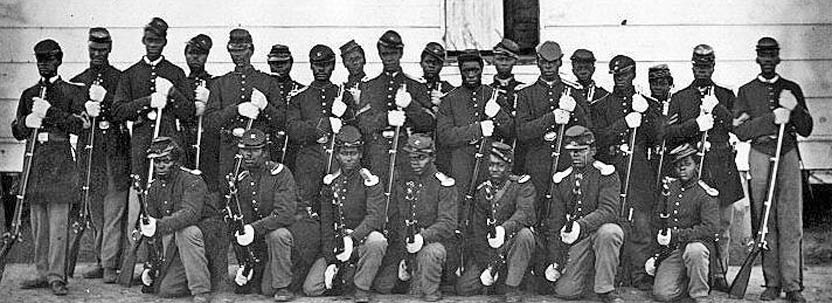
African American Civil War soldiers

What about your military ancestors. Would you like to know more about your family’s military genealogy?

How to do military genealogy: If you want to do a genealogy search for military veterans in your family history, there are many resources available to you online. But, you must first ask yourself many questions before you get started. What do you want to know? Many times your search will lead to more questions! Here is an overview from National Archives about how to approach your search: “When researchers contact the National Archives to conduct research on their ancestors, they often ask about records relating to military service. Unfortunately, there is no simple answer. The inquiry, in fact, leads to more questions: What branch of service did the person serve in? Do you know the conflict they fought in or their dates of service? Was the person in the Regular Army or a volunteer unit? Did the individual serve as an officer or enlisted man? Did the person apply for or receive a pension? These questions are important, for the answers help determine which search paths to follow. The two main repositories for records relating to military service are the National Archives and the National Personnel Records Center (NPRC). The National Archives Building, Washington, D.C., holds records relating to

  • Volunteer enlisted men and officers whose military service was performed during an emergency and whose service was considered to be in the federal interest, 1775 to 1902
  • Regular Army enlisted personnel, serving 1789–October 31, 1912
  • Regular Army officers, serving 1789–June 30, 1917
  • U.S. Navy enlisted personnel, serving 1798–1885
  • U.S. Navy officers, serving 1798–1902
  • U.S. Marine Corps enlisted personnel, serving 1798–1904
  • Some U.S. Marine Corps officers, serving 1798–1895
  • Those who served in predecessor agencies to the U.S. Coast Guard (i.e., the Revenue Cutter Service [Revenue Marine], the Life-Saving Service, and the Lighthouse Service, 1791–1919)

The National Personnel Records Center, St. Louis, Missouri, holds military personnel files of

  • U.S. Army officers separated after June 30, 1917, and enlisted personnel separated after October 31, 1912
  • U.S. Air Force officers and enlisted personnel separated after September 1947
  • U.S. Navy officers separated after 1902 and enlisted personnel separated after 1885
  • U.S. Marine Corps officers separated after 1895 and enlisted personnel separated after 1904
  • U.S. Coast Guard officers separated after 1928 and enlisted personnel separated after 1914; civilian employees of Coast Guard predecessor agencies such as Revenue Cutter Service, Lifesaving Service, and Lighthouse Service, 1864–1919

To request copies of an individual’s military personnel file held at the National Personnel Records Center, use a Standard Form 180, “Request Pertaining to Military Records.” For more information on what records are available at NPRC and who may request them, consult their web site. Locating the Records The records and microfilm publications described here are available at the National Archives Building in Washington, D.C. Some microfilm publications are available at NARA’s regional facilities. Consult the online Microfilm Catalog to find out which facilities may have the microfilm you are looking for. For researchers unable to visit the National Archives, copies of compiled military service records, pension files, and bounty land records held by NARA can be obtained through the mail. To obtain the proper request form, please write to Old Military and Civil Records, National Archives and Records Administration, 700 Pennsylvania Avenue NW, Washington, DC 20408-0001. NATF Form 80 is now obsolete and has been replaced by NATF Form 85, “National Archives Order for Copies of Federal Pension or Bounty Land Warrant Applications,” and Form 86, “National Archives Order for Copies of Military Service Records.” Forms can also be requested through our web site. If requesting information on military records related to Navy, Marine Corps, or Coast Guard personnel, please do not use a form; send a written inquiry either by mail to the address above or by email to Contact NARA. For additional information beyond the scope of this article, consult the Guide to Genealogical Research in the National Archives of the United States (2000). There is a section on military records containing chapters on records of the Regular Army, service records of volunteers, naval and marine service records, pension records, bounty land warrant records, and other records relating to military service.”

Are you looking for family history military records? Please share your story.