Drinking genes: Alcoholism in the family

Your genes determine whether you get drunk after drinking.

I wonder about drinking genes. Alcoholism seems to run in my family. Several of my relatives died from cirrhosis, an illness related to alcoholism. Thank goodness, I’m not much of a drinker. But my mom told me she worried that I might be at risk because I was born drunk. Well, truthfully, she was drunk when I was born. She said her excuse was that I took too long to be born. She said that she drank a full bottle of wine during her ninth month of pregnancy with me. Finally, I popped out several weeks overdue! I have always limited my alcohol intake because it makes my face and neck flush and my heart race. Knowing your family’s health problems, especially with alcohol, proves why genealogy is good for your health.

Scientists have proven that there are several genes related to alcohol metabolism.

“Multiple genes play a role in a person’s risk for developing alcoholism. There are genes that increase a person’s risk, as well as those that may decrease that risk, directly or indirectly. For instance, some people of Asian descent carry a gene variant that alters their rate of alcohol metabolism, causing them to have symptoms like flushing, nausea, and rapid heartbeat when they drink. Many people who experience these effects avoid alcohol, which helps protect them from developing alcoholism.” Click here to read more.

Book cover about underage drinking and peer pressure. Go to:http://www.thecoolspot.gov/

How do you know if your child will become an alcoholic? Key genes play a role in alcohol dependence.

“Today, scientists at the Scripps Research Institute announced they’ve identified a key gene that appears to strongly influence the development of alcoholism and alcohol dependence. The research could prove key to zeroing in on how increased risk for alcoholism runs in families. The study, published in Biological Psychiatry, sheds considerable light on genetic variations and how they predict who becomes dependent on alcohol and the severity of the disease. (Yes, alcohol is a disease.)”  To read more click here.

What about hangovers? Yes, there’s a gene for that too.

“Some people get hangovers after a night of drinking, while others don’t, and the reason may be in their genes, a new study of twins in Australia suggests. Researchers looked for links between the study participants’ genetic makeups and the number of hangovers the individuals reported experiencing in the past year. The results showed that genetic factors accounted for 45 percent of the difference in hangover frequency in women and 40 percent in men. Click here to learn more.

For a list of family illnesses caused by heavy drinking, click here.

Do you have drinking genes in your family?

Cooking Genes: Chino-Cubano food

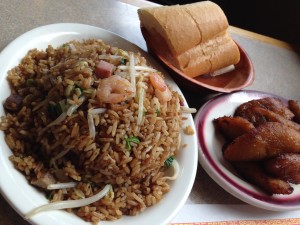
Cubano Chino lunch

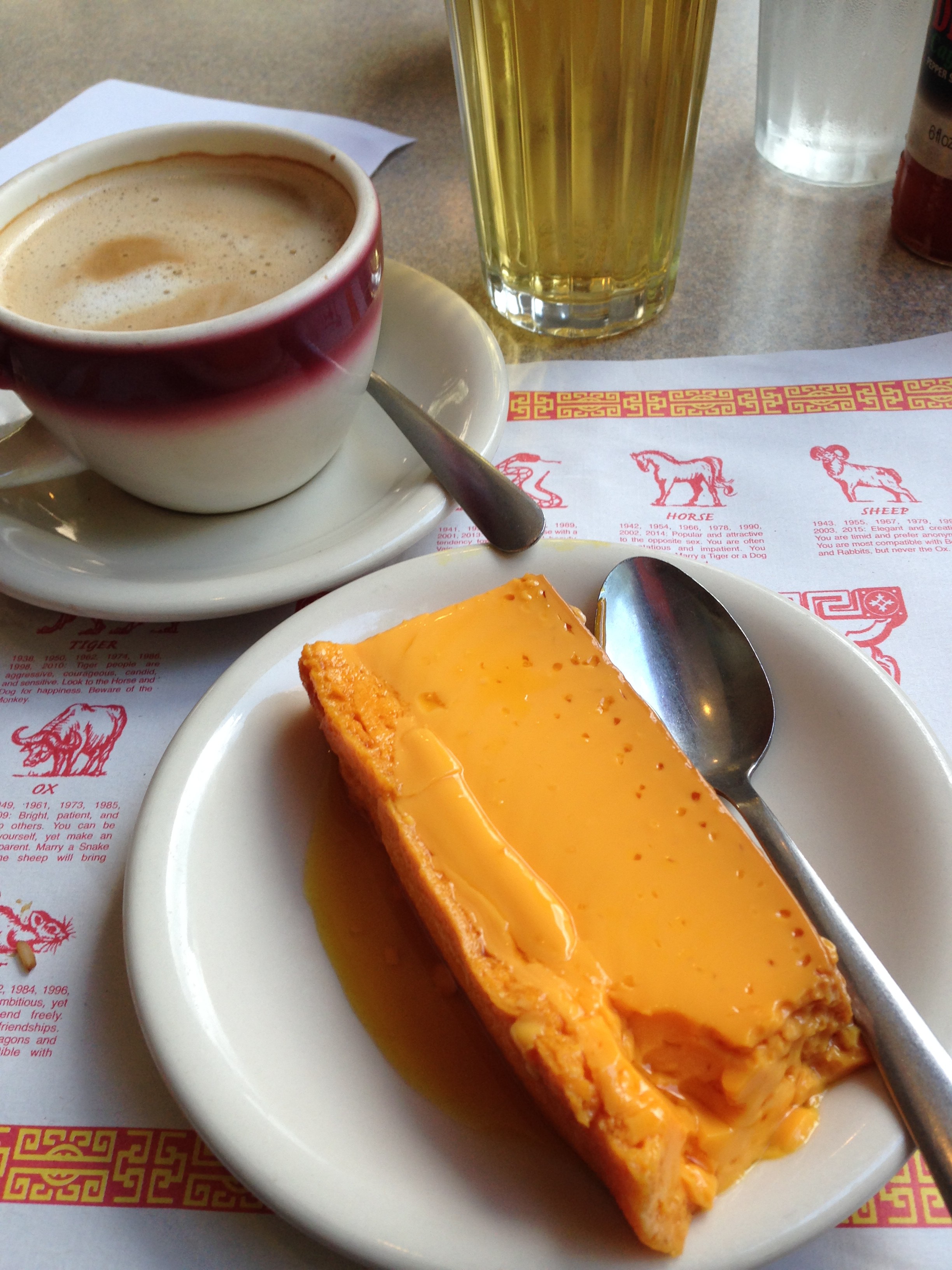
Desert

I miss Chino-Cubano food. Although my family’s cooking genes featured a range of old-school Caribbean-Asian fusion, I discovered Chino-Cubano food late in life. Right after college graduation, I ate this delicious, affordable food every day when I worked in NYC’s Hell’s Kitchen. There were two eateries on 9th avenue owned by the same chef that I loved. I don’t recall the name. But the owner’s name was Mr. Yip. Both joints featured a huge melange of Chinese-Cuban food served on oval plates for just a few dollars.

Besides the delicious food, I loved eavesdropping on the Chinese workers speaking Cantonese to each other and Spanish to customers. This was an only-in-New York experience or an anthropologist’s dream. I think I loved listening to the workers talk as much as I loved hearing my own Chinese Trinidadian relatives speak with West Indian accents.

Back in the 70s, my first job as a teacher-counselor at the YMCA took me to this old West side neighborhood. Located next door to a police precinct on West 54th between 9th and 10th avenues, it was my usual lunch time routine to explore 9th Avenue, NYC’s richest ethnic food world.  Although both eateries offered basically the same menu, I took turns going to each one. I was raised eating Guyanese, Trinidadian and Jamaican-Chinese Caribbean food. Chino-Cubano food was a welcome change.

My usual meal was simple: Special Fried Rice, a side order of fried platanos and a café for $4. Today, this meal cost about $10! This is still a bargain. Cuban-Chinese cuisine is not really fusion. It features juxtaposition or a pairing of both Chinese and Cuban food on the same plate. Eg. black beans, with rice—either white, yellow or Chinese fried rice, platanos, bok choy, Chinese dumplings, broccoli, pork, chicken or seafood.

Sometimes my Trini-Chinese mother tried her hand at Chino-Cubano cooking. She would “Latina-fy” her menu with black beans, yellow rice and plantains. To “China-fy” Cuban food, my mother would insert ginger, Hoisin or oyster sauce, bean sprouts and bean curd to her dishes.

At one of NYC’s oldest Chino-Cubano restaurants, La Caridad78’s menu features wonderful contradictions:  “Comida China y Criolla” lists the Cuban dishes as “Spanish Dishes.” “Platos Criollos” is the menu headline, but the word criollo is a contradiction too. It was originally used to distinguish Cubans from colonials. A Puerto Rican friend pointed out to me that the dishes listed are actually Cuban, not Spanish: vaca frita, chuletas en salsa soya, bisté de palomilla, rabo encendido and others. Listed on other menu pages were typical Chinese dishes such as bok choy, lo mein, beef with bean curd, and sweet and sour chicken. Tsingtao, a Chinese beer is also served along side regular ones.

There are very few Chino-Cubano recipes posted online. Here are a few that I found:

http://icuban.com/food/puerco_estilo_chino-cubano.html

http://icuban.com/food/platanos_maduros.html

Genealogy background: Chinese indentured male workers arrived in Cuba in 1847 to replace the African slaves. Since the Chinese women were not allowed to join them, many Chinese men intermarried with Afro-Cuban, Native and local island women creating a unique multicultural society. Another migration from 1919 to 1925 brought over 25,000 more Chinese immigrants. They took advantage of the island’s prosperity during those times, primarily in Havana. This long Chinese history on the island left an indelible mark especially in traditional Cuban food. After the Fidel Castro’s Cuban Revolution, many left for Miami and New York where the Chino-Cubano restaurants flourished in the 1960s and 1970s. Sadly, today, very few of these eateries exist. Many New Yorkers like me have fond memories of their favorite Chino-Cubano restaurants.

(Cooking Genes is an ongoing series)

Do you recall eating Chino-Cubano food? Do you have any recipes or menus?


Caribbean-Chinese Genealogy Tips

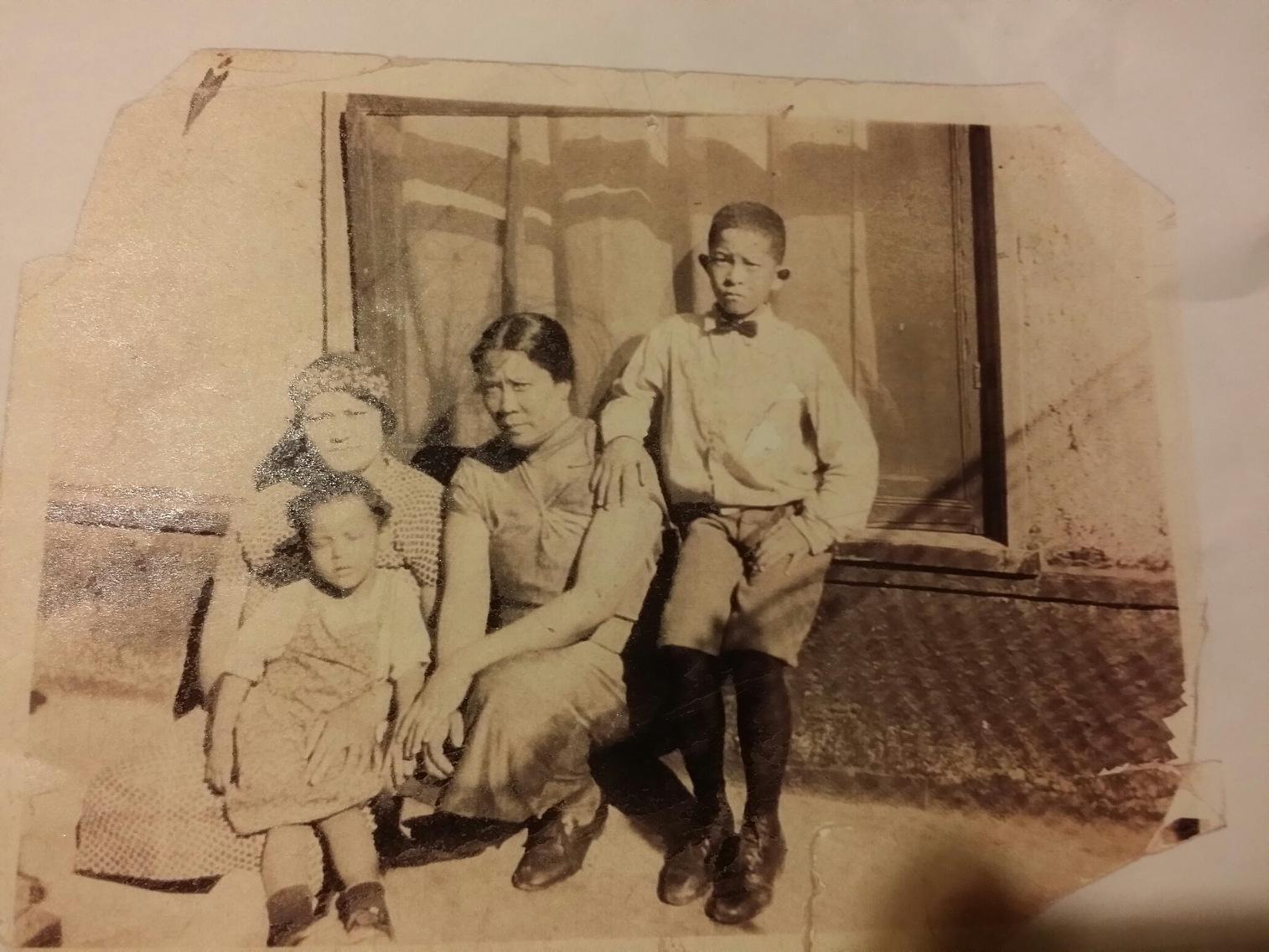
Aunt Sybil, Agnes, Elaine in Trinidad
It took over a decade before my Chinese-Trinidadian maternal Aunts Sybil, Agnes, and Elaine were reunited with their mother (my grandmother) and siblings (my mother) in NYC.

Have you searched for your Caribbean Chinese Diaspora ancestors?

I did. I consulted the UK-National Archives. It was part of my research efforts to find Trinidad and Guyana immigrants with Chinese heritage for my film “From Shanghai to Harlem.” (https://www.youtube.com/watch?v=LBHYtofVnh0)

The UK-National Archives offered some very helpful advice about Caribbean-Chinese diaspora genealogy search. Here is their reply to my recent inquiry:

“There aren’t a lot of records of Indentured labour.  Most of the records relating to this subject are of an administrative nature and relate to the functioning of the indentured labour system. I don’t think you are going to find much relating to individuals, if anything. 

“You would need to consult the Colonial Office Original Correspondence for the relevant colony.  The correspondence consists of letters coming into London from the colonies. For example:  

CO 111          Colonial Office Original Correspondence British Guiana  

CO 345          Registers of Correspondence: British Guiana  

CO 295          Colonial Office Original Correspondence: Trinidad

CO 372          Registers of Correspondence: Trinidad 

As Venezuela was not a British Colony any relevant records will be in the records of the Foreign Office in:

FO 80             Foreign Office: Venezuela

FO 420           Foreign Office: Confidential Print: Venezuela

If grants of land were made at the end of the period of indentured labour then I think these would be in the Archives in Guyana or Trinidad:  HoweverI have consulted our database of overseas archives and we don’t have details of these.

If you are new to this kind of research, please go to the Start your research here section of our website for help on where and how to begin your research.

Discovery, The National Archives’ catalogue, contains millions of record descriptions and references. You can search our catalogue specifying keywords and dates. 

Searching for records in our catalogue will provide you with a document reference that then allows you to see the document onsite at Kew or to pay for copies to be sent to you using our record copying service. Some documents are available to download from home, but most are not. 

To visit The National Archives to undertake research yourself please check our website for important information regarding our opening hours and closure dates, what to bring and ID requirements. This is especially important if you need to look at original documents as you must have the two valid and correct proofs of ID with you.

Making a personal visit is not convenient for everyone. To find out about employing an independent researcher to carry out research for you or about our paid search service please look on our website.

We wish you every success in your research, but please be aware that the records in our custody are not always complete: they were not created or kept for research purposes, but for use by the government or law courts of the day. We cannot guarantee that you will find what you are looking for.

I have not treated this as a request for information under the Freedom of Information Act. If you want us to treat it as a Freedom of Information request, please re-send your enquiry using the contact form but please note that we will charge for research.

If you need to respond to this email, please click on Reply to do so. It is very helpful for us for the text of the earlier emails to be included. For a new enquiry, please complete our contact form

To avoid receiving our initial auto-response again please make sure you include the letters SART, with a space on either side, in your subject line.

Yours sincerely,

Neil G Cobbett

Reader Adviser

www.nationalarchives.gov.uk


My Chinese-Caribbean Diaspora family
My Chinese-Trinidadian-Guyanese maternal family arrival in Harlem.

Dear The National Archives,

My name is Sylvia Wong-Lewis, and I am producing a film about my family. My Chinese great-grandparents signed indentured servant contracts with the British government in Hong Kong and were sent to Venezuela, Trinidad and Guyana. I want to find out more about my Chinese ancestors and tell a story about their migration from China to the Caribbean.

I am writing for advice about finding their contracts. If I cannot find their exact contracts, is it possible for me to take a look at other contracts of Chinese indentured servants sent to Venezuela, Trinidad or Guyana.

I greatly appreciate your time and help!

Thanks,

Sylvia” 

Do you know anyone with Caribbean Chinese or Caribbean-Asian ancestors? Are they conducting family history searches?

Stories from stuff

Stories from stuff – Let go of your stuff with a story at a Show & Tell-NYC event Saturday, May 31, 5-7pm, @BuythatBag, 159 28th street, Sunset Park, Brooklyn.

Here’s an excerpt from my story:
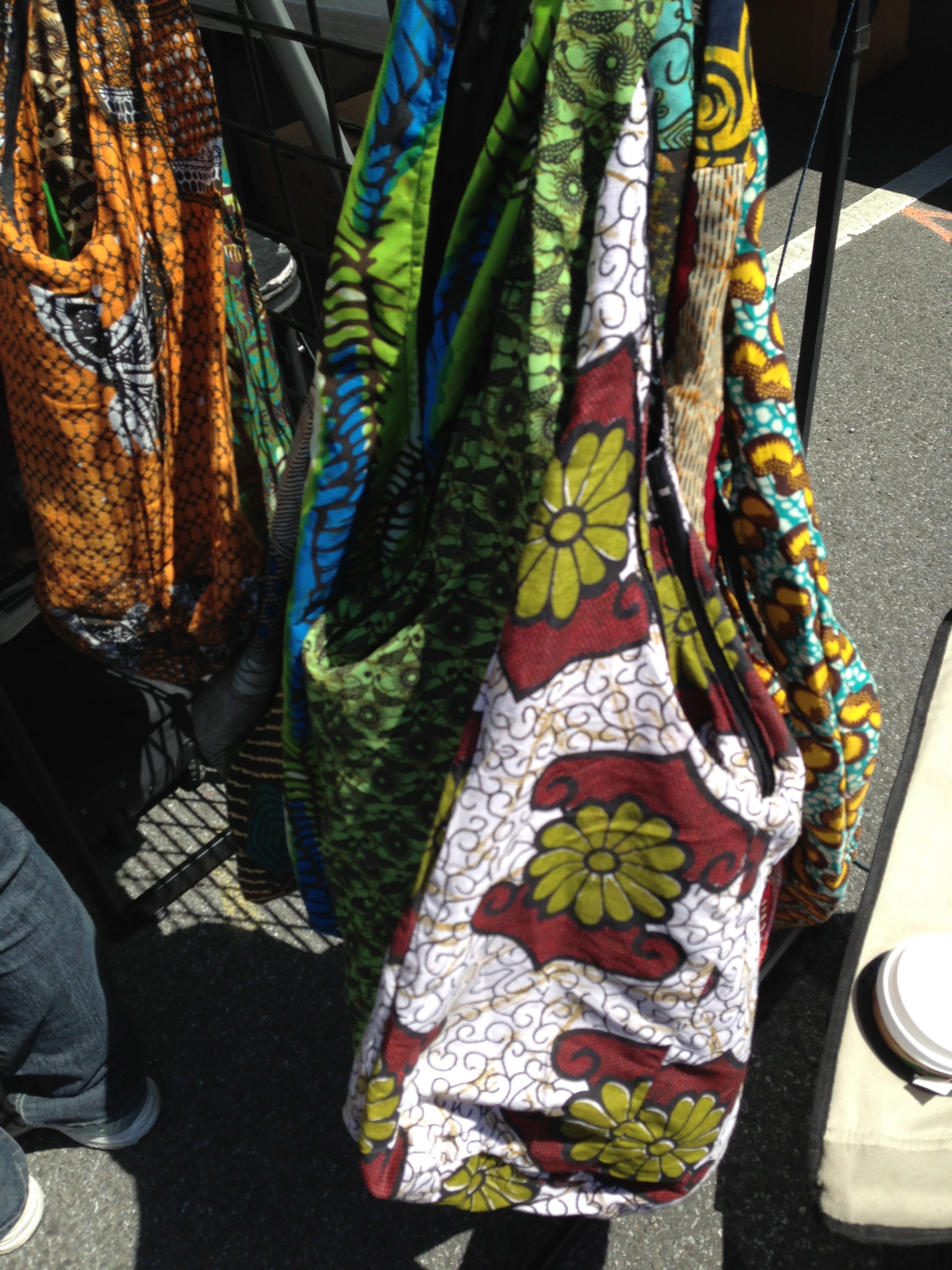
“I refused to dump mother’s possessions at the curb. But, I could not keep anything. I was in a dilemma. I justified leaving the old trunk safely in the house just sold. Since the new owners were distant relatives, I left hoping that they might find something useful. Their eyes lit up!  They knew of mother’s superstitious habit of hiding her money. My inner artist had long been submerged by grief on that last day at mother’s house. Today, I would have easily found a way to keep some colorful fabric to make quilts, other creations and donate the rest.

Show&Tell-NYC, May 31, 5-7pm, @buythatbag,Brooklyn
Show&Tell-NYC, May 31, 5-7pm, @buythatbag, Brooklyn“I refused to dump mother’s possessions at the curb. But, I could not keep them. I was in a dilemma. I justified leaving the old trunk safely in the house just sold. Since the new owners were distant relatives, I left hoping that they would find some use for that old stuff. My inner artist had long been submerged by grief on that last day at mother’s house. Today, I would have easily found a way to keep some of that fabric to make quilts and other creations and donate the rest to charity.

Caribbean nick-knacks to donate

My mother told me that she inherited that old, heavy, wooden trunk from her mother. When my maternal grandmother arrived in Harlem from Trinidad, she found it on a sidewalk. She painted it with colorful flowers and it moved into her life.  My mother said that she used to sit and climb on it just as we did as children. That trunk moved with Grandma every time she moved—to various Harlem apartments, down to the Bowery, to 14th street, Chinatown, and eventually to our house on President Street in Brooklyn.  The trunk, now painted grey, was last kept in our basement. It was intermingled with my mother’s and grandmother’s things—vintage fabric and tapestries, sewing notions like zippers, snaps, hooks, buttons, beads and fibers including yarn, threads, twines, ribbons, sequins, lace, fringe, trimmings, tassels, and crochet, knitting, embroidery and art supplies. There were also nick-knacks, old greeting cards, and how-to booklets. My maternal elders were talented craftswomen who made everything with their hands—upholstery, apparel, costumes, rugs, curtains, quilts, pillowcases and other domestic items.” Excerpted from “Fabric of Our Lives,” published in my blog post March 12. 2013.

If you are de-cluttering, moving or simply letting go of your old stuff, tell a story about it at a grown-up  “Show & Tell” coming to Brooklyn – @BuythatBag, 159 28th street (Sunset Park), Saturday, May 31, 5-7pm. This event will benefit the Housing Works, an organization that helps HIV-AIDS survivors. Here’s the link for more information:

http://www.prnewswire.com/news-releases/show–tell-nyc-teams-up-with-housing-works-hwthrifts-259287471.html


BBC Radio Academy Award-Gold!

I am honored to announce that the BBC Radio program featuring my interview and storytelling among others, recently received the prestigious BBC Radio Academy Award-Gold Award for “Strange Fruit,” produced by Maggie Ayre.

Congratulations to the amazing producer Maggie Ayre and the awesome storytellers on the show. After reading my story on the Coming to the Table website about my Uncle Warren’s lynching, BBC Radio producer Maggie Ayre invited me to join her Soul Music program. The show also included Emmett Till’s cousin, Simeon Wright; Robert Meeropol, the adopted son of Jewish teacher Abel Meeropol, author of the poem/song; and April Shipp, a Detroit quilt maker who created a “Strange Fruit” quilt. Each of us engaged about the song, “Strange Fruit” and shared our own personal story.

radio
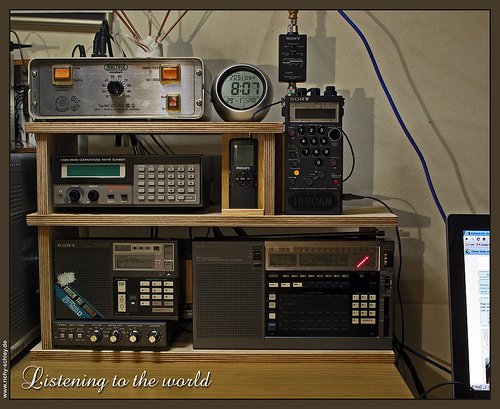
What kind of radio do you listen to?

What the judges said about  “Strange Fruit”:

“Using a simple format with moving interviews, this was immensely powerful storytelling through and about music. It allowed the lyrics to breathe, resulting in an impactful and brilliant show. This was ‘stop and listen’ radio.”

Here’s the link to BBC Radio Academy Award announcement: http://www.radioacademyawards.org/winners/index.cfm?winners_year=2014&winners_award_group_id=4&winners_award_category_id=21

“Strange Fruit” Headed to the Theater Stage: In addition, this amazing radio program inspired a theater production in England. Anyone want to join me for a trip to the UK this summer? I was only given bare details at press time. I received word second-hand from the producer that he is going ahead on July 10th at the Wirral Festival of Firsts. For updates, go to:  http://www.festivaloffirsts.com/home/4582210171.

To hear the original BBC broadcast, check out a past blog post by clicking here.