Watch Night is also a time to cook traditional food.

Watch Night

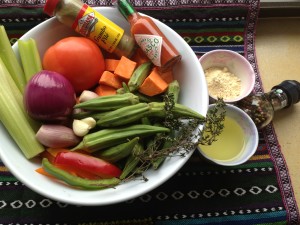
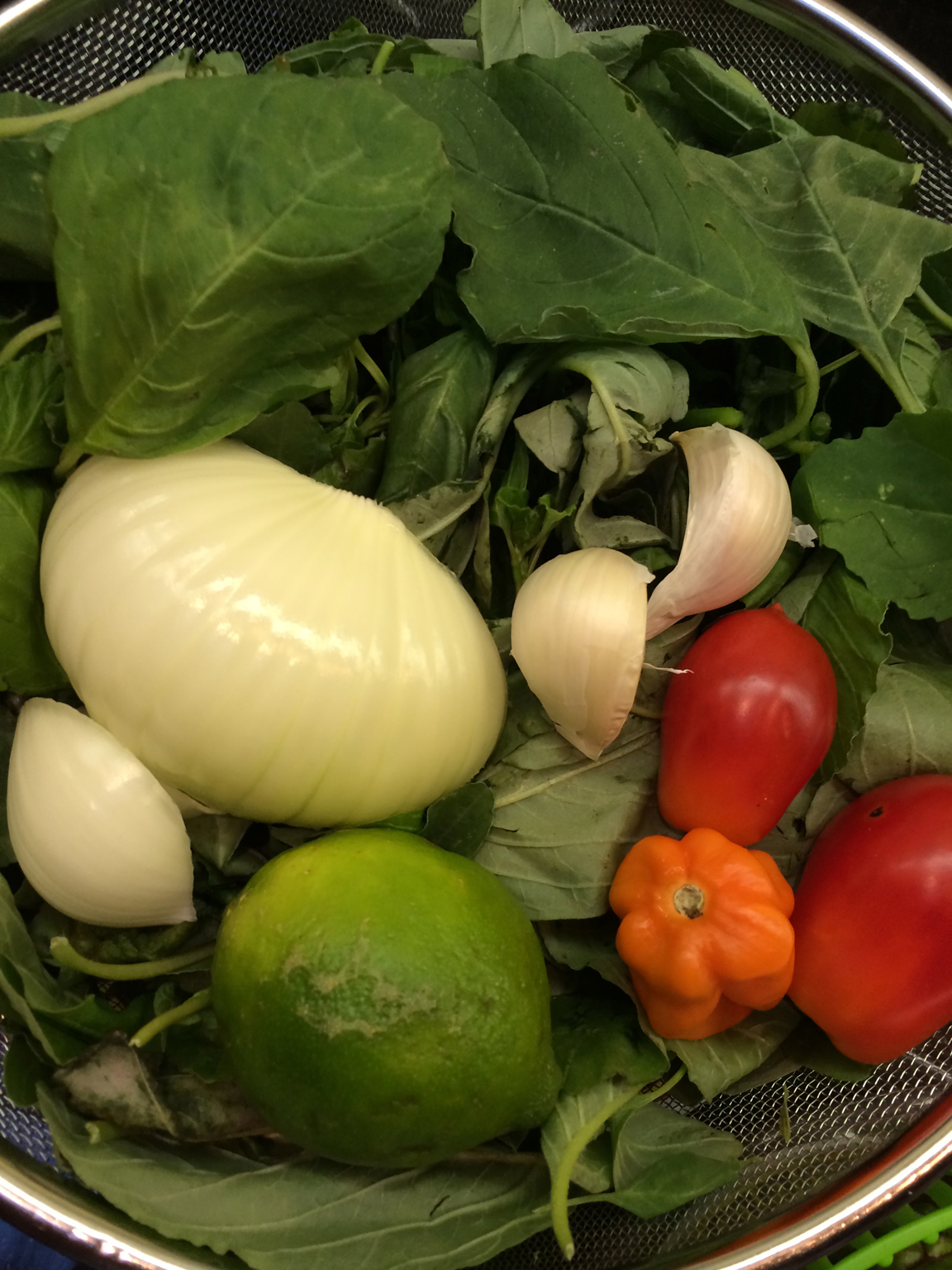
Watch Night is also a time to cook traditional food.


It’s been a while since I attended Watch Night services at church on New Year’s Eve. But many family members and friends still do, in between all the New Years Eve cooking that they are doing. Did you cook special foods on Watch Night to bring good luck? Greens are believed to attract dollars and beans will bring extra change! New Years Eve is a night that I keep up my family’s food traditions too. My greens were marinating as my beans cooked when I wrote this post. My Watch Night memories? Service at my preacher uncle’s Pentecostal church on New Years Eve stands out. The Gospel band rocked and the air was electric. My brother Sidney was 7 and I was 6. We accompanied our father to service where he played the piano. ‘Saved’ folks danced, shouted, spoke in tongues and some of them passed out. Then a crew of my ‘aunts’ wearing white dresses and gloves appeared and carried away those who passed out. They placed them on a side pew and fanned them until they revived. One aunt winked at us in the middle of all this commotion. I guess she was letting us little ‘un-saved,’ Catholic/Buddhists kids know that we would be okay. Although the ‘spirit’ scared the daylights out of us, we loved it too. I always wondered if the spirit was going to get us and take us away. No one ever mentioned the word ‘slavery’ at any Watch Night service that I can recall. In fact, today, some of my relatives get angry if I bring up that dreaded topic!

Genealogy/History: But I am a historian and a slavery expert. On New Year’s Eve I wish more Americans would pay attention to history and their genealogy. It’s all related—food, family, history etc. In fact, we are all related. We share many linked descendants because of our unique American slavery history. For example, I recently discovered a new DNA white cousin. But after I informed him that I was a person of color with a mixed heritage, he said: “There must be some mistake!” Sorry, buddy. DNA does not lie! We are third cousins!
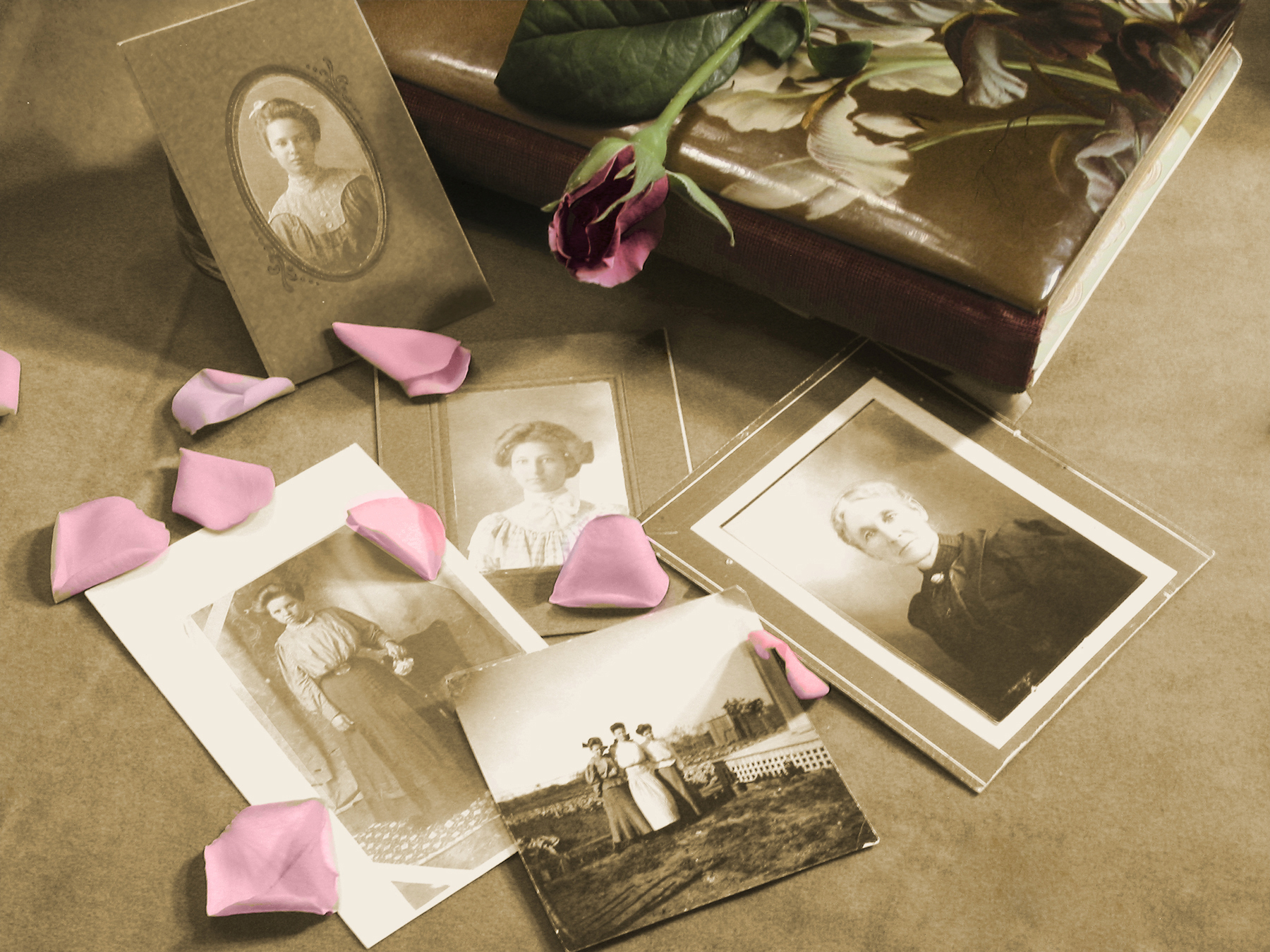
Watch Night is part of genealogy search

Very few folks black or white care to remember that this historic night – Watch Night- is about slavery—the end of it. This year (2013) is the 153rd anniversary of the signing of the American Emancipation Proclamation—the end of the enslavement of Diasporan Africans. But, by now we all know that the emancipation was all an illusion. Slavery did not really end. The aftermath of slavery left deep wounds that continues to harm all of us. My white friend who discovered, through genealogy, that her ancestor lynched and murdered innocent black folks, is still today in 2016, very affected by her family’s past. Scientific evidence has proven that vast numbers of African Americans suffer from extensive racism caused by the aftermath of slavery.

”For more than one hundred years, scholars have written about the illusory nature of the Emancipation Proclamation. President Abraham Lincoln issued a declaration purporting to free slaves held in Southern Confederate states, but not a single black slave was actually free to walk away from a master in those states as a result. A civil war had to be won first, hundreds of thousands of lives lost, and then—only then—were slaves across the South set free.” From ‘The New Jim Crow’ by Michelle Alexander, chapter 1, pp20, ’The Rebirth of Caste.’ To read more, click here for link.
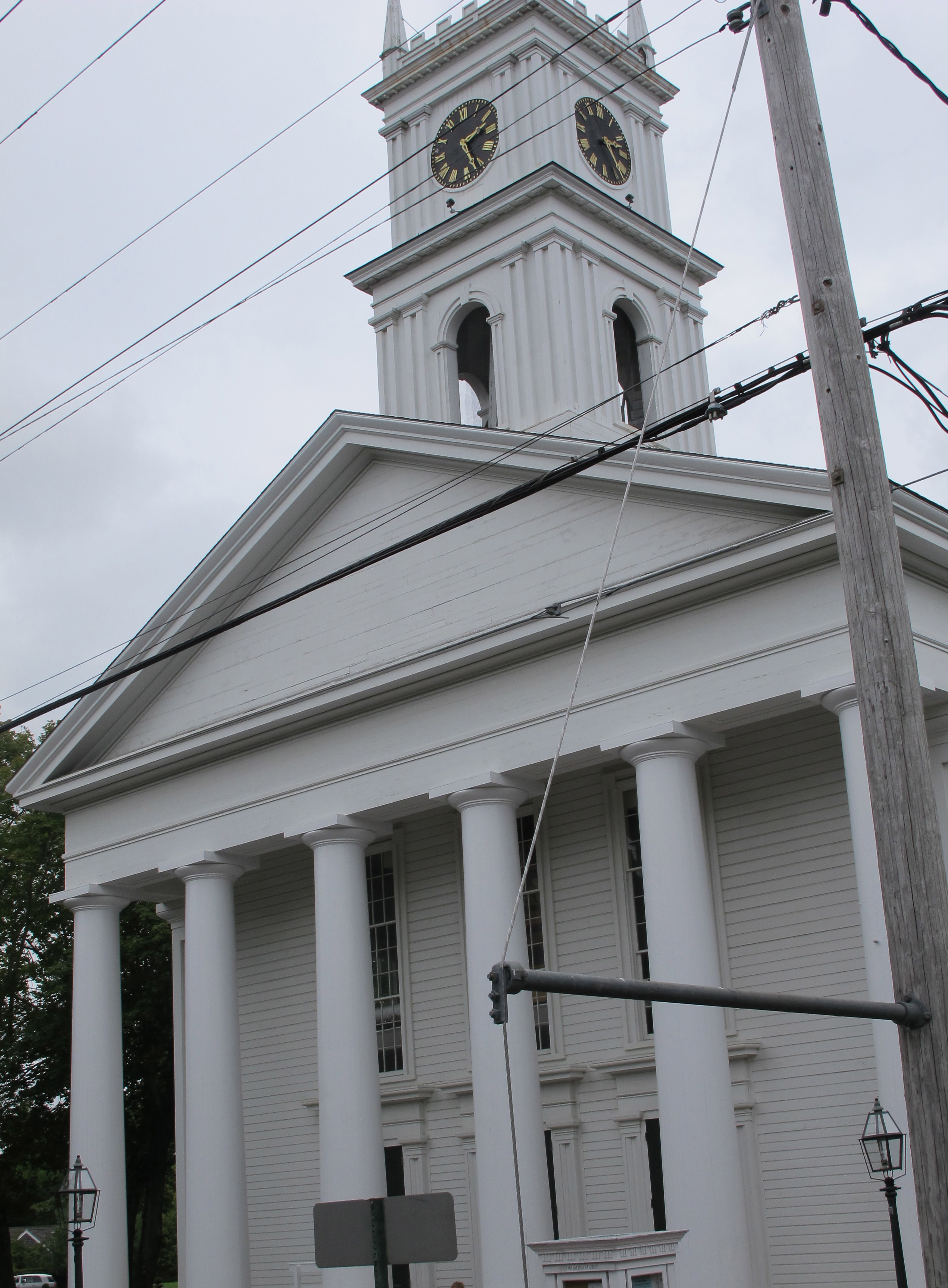
Watch Night services were held in church on New Years Eve.

Year-end reflections: When I reflect on this year, I can say that despite amazing professional and personal achievements, I am glad it is over. Our planet needs healing in so many areas. We should start with grief therapy. I believe that we can all benefit from therapy, counseling. I hope more of us will seek help and enjoy the benefits of mental and spiritual wellness.

I am grateful for the Millennials who organized the Black Lives Matter movement and their intersectional allies. I am also encouraged to see more privileged people waking up. Today’s civil rights activists are stepping up. My parents and their allies were relentless. My generation—Boomers—grew up keeping the pressure on. My hope for 2016 is that today’s activists will find the strength to keep on keeping on– mobilizing our country to fight against caste systems, unfairness, and other destructive ways to people and the planet.

Seek art in all forms: Now more than ever, I feel that our chaotic world needs more artists—dancers, musicians, poets, writers, painters, actors, chefs, gardeners, builders, new media, and all forms of art. Only artists know how to express hopeful visions and tell simple, truthful stories that cannot be denied. I look forward to expanding my involvement with the arts especially for healing in 2016.

In honor of the 153rd anniversary of the signing of the Emancipation Proclamation, learn about US President Obama’s favorite artwork that he had installed on a White House wall, in the Oval Room. The painting “Waiting for the Hour” tells a pivotal American story about the hour that slavery ended on New Year’s Day. Click here to read the full article.
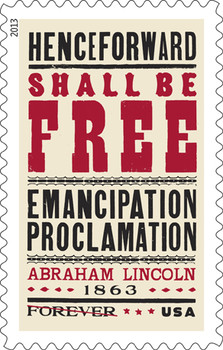
Watch Night recalls Emancipation Proclamation 150th anniversary stamp

Also art-related, in 2013, to mark the 150th anniversary of the Emancipation Proclamation, the US Postal Service issued a specially designed stamp to mark the historic occasion. Click here to read about the stamp.

Do you attend Watch Night church service on New Year’s Eve? Did you make any resolutions for the New Year?
Save

Holiday Reunion memories

Holiday reunions are coming. Are you ready for your crazy relatives? Back in the day, every weekend was a holiday reunion. The menu, script, and cast of characters were always set. There were always surprise guests and food items. Sometimes Dad’s Harlem-Southern and Mom’s Chinese West Indian folks would visit at the same time.

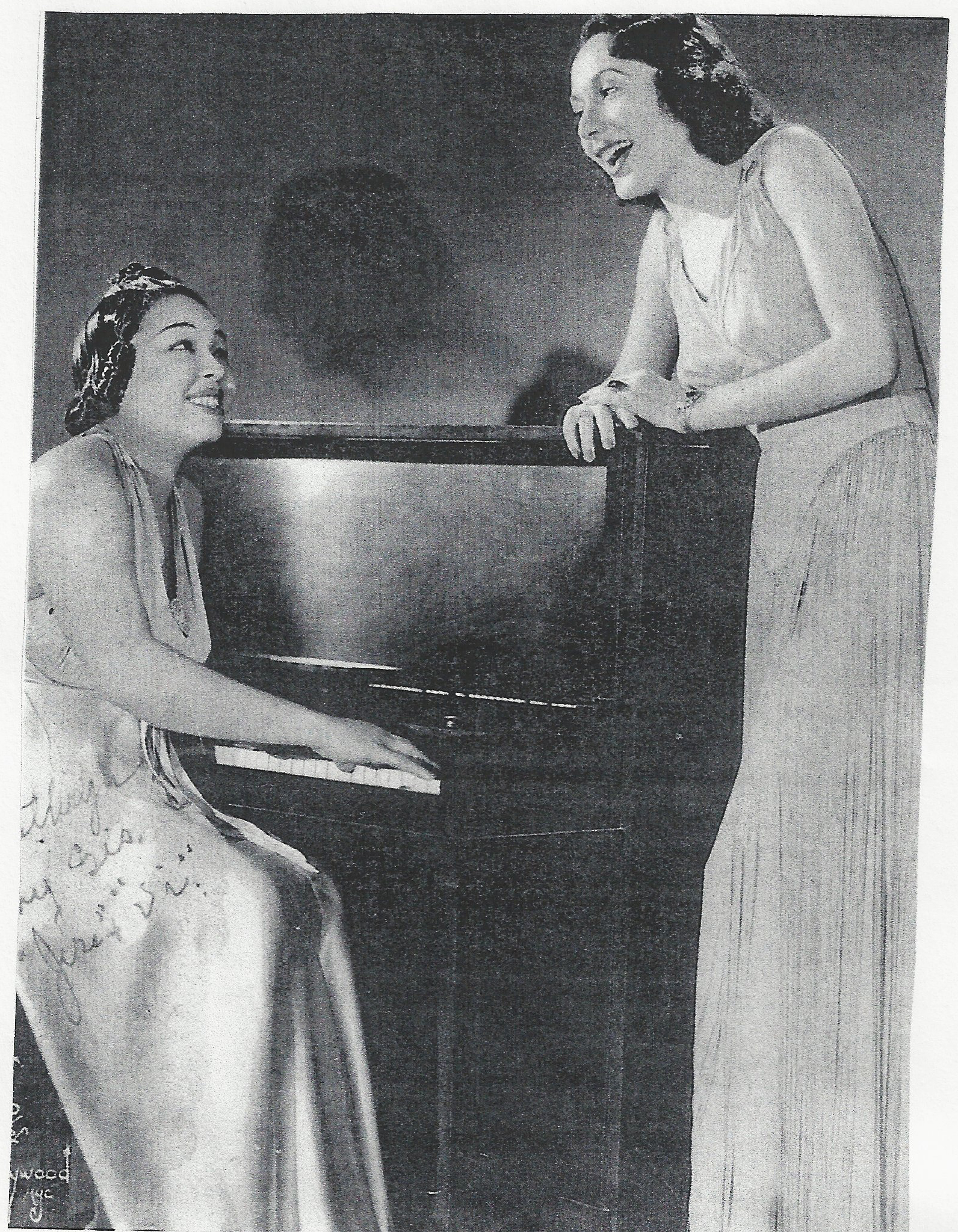
Aunt Jerri Smith w Miriam Hopkins, in 'Smiling Lieutenant,' 1931.
Aunt Jerri Smith w Miriam Hopkins, in ‘Smiling Lieutenant,’ 1931.

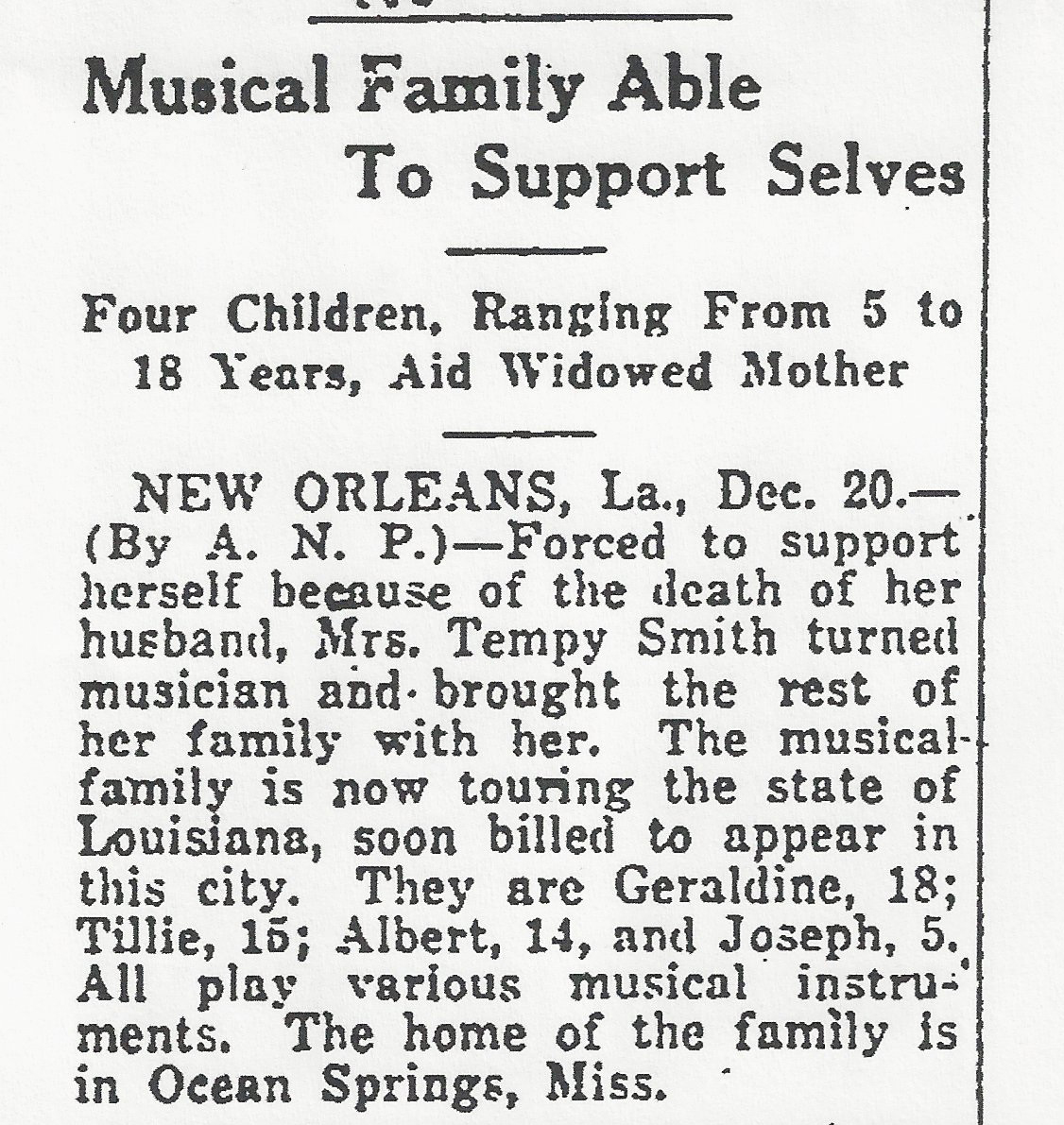
But today, because we recently recognized my Dad on Facebook for Veteran’s Day, I am still thinking about his people. Thanksgiving was a big holiday for them. They were part of America’s largest migration of Black folks from the Deep South to the North. Dad and his siblings performed ‘on the road’ in a family musical show from Mississippi, New Orleans, and many Chitlin’ Circuit venues all the way to Harlem. Their journey was documented in Harlem Renaissance news clips found during my extensive genealogy searches. Music, religion, food, and drama are my most vivid memories. We routinely gathered on Sundays after church at Grandmother’s house. Madame Tempy Stuart Smith or Mother, as she was called, was our Pentecostal matriarch. To her, folks were either ‘saints’ or ‘sinners.’

Drama genes: Scientific DNA proof that drama genes exist may still be unproven. But I’m sure Dad’s very intense family have strong drama genes! From the kitchen to the living room, basement, backyard porch, and dining table, there would be drama with this clan. Invariably, someone would say something. Drunk Uncle might quote the Bible. He would call out The Hussie and her daughter, Hoochie Girl as sinners. “They are not saved!” Family Peacemakers and ‘saints’ would rush in to quiet the gossip. Funny Elder Male Cousin would imitate an X-rated Red Fox’s comedy routine. Tap dancing, piano playing, and singing aunts, uncles and cousins would compete to showoff their skills. There would be multi-generational knee slapping, head shaking, laughter, arguing and applause. There would be tears too. Memories of many long gone or a new trauma would shift the mood. These intimate gatherings were loud, lively and could last for days. My parents, both classically trained musicians, inherited four pianos, leftover from grandmother’s music schools. Positioned in the front and back on three floors of our Brooklyn brownstone, our pianos were used by visiting artists to rehearse shows as well as by us for home entertainment. No TV or Internet folks! Live entertainment! Classical piano training and dance was mandatory in Dad’s family. We were all pupils, tutors, or teachers at grandmother’s music schools. Some of my family performed in Hollywood films and on Broadway with Cab Calloway and Sammy Davis Jr. Everyone could be called on to perform a dance step, play a concerto, recite a poem or sing along. My eldest cousin Sonny, a masterful pianist, Aunt Kaye’s son, tutored me on Beethoven Sonatas during these gatherings.

MusicalFamilyAbletoSupportSelves


Cast of characters: Dad was the mellow one. Everyone else seemed to have fierce personalities. We often blamed our African, Cherokee and European Creole ancestors for their colorful behavior. Who was going to ‘show out’ this time? Did anybody care that some of us children were too sensitive to be exposed to them? No! Kids didn’t matter back then. My Brother Sidney and I both wondered if we were born into the wrong family. Fueled by our Chinese West Indian Mom’s teachings about Hindu and Buddhism, we would speculate about reincarnation and other spiritual forces. Were we here before? What if we were born during another era, as a different gender, race, nationality, or from another planet?

What planet did our Family Diva Queen, Aunt Kaye come from? She was one of my father’s three sisters. Making a grand entrance, like Lena Horn, Aunt Kaye often appeared with her ‘friend’ Aunt Dorothea. ‘Bull Dagger’ and ‘dyke’ were labels we heard in reference to Aunt Dorothea. But no one dared say that to her face. We loved and admired Dorothea’s magnificent contralto voice, especially singing Negro Spirituals. She was one of the world’s first dark-skinned African American opera singers who regularly toured Europe. Dorothea was a true Grand Diva. Off stage she wore tailored men’s suits and could knock back whiskey shots like a man. One day Miss Busy Body asked: ‘But, where’s cousin Sonny’s dad, Uncle Brigman, Aunt Kaye’s husband? ”Oh, him!” snapped Kaye. “He raped me! Folks would rolls their eyes. “Yes, he did. Twice, in Grants Tomb!” Aunt Kaye was known to exaggerate, faint and threaten suicide. As children, we were simultaneously distressed and amused by her.

Aunt Kaye with her mother Madame Tempy Stuart Smith


After a few sips of her cocktail, Kaye would show out. She would go from poised, well-spoken Negro film star to full-blown crazy, finger-pointing, squinty-eyed, possessed lady. “What kind of family is this? None of you love me! When was the last time YOU called or YOU visited me? Not one birthday card from anybody! None of you care about me! Why don’t I just go and jump off the Brooklyn Bridge?” Under her breath, Sanctified Aunt said: ”Oh Lord, there she goes again with that fake madness! She should go on then. Do it! Spare us the drama!” Eventually, order would be restored. We would end up hugging and telling Aunt Kaye that we loved her—about a million times through the night! Thankfully, at these holiday reunions, food and festive beverages would be the featured attraction and distraction.

Holiday food: Our holiday feasts always paired traditional menus of Southern Creole and Caribbean food because of our mixed heritage. It was never just about turkey, collards greens and cornbread. The Thanksgiving soul food menu is quite diverse.

“There’s a wide repertoire of food. Everybody understands the iconic list of greens and pork chops and corn bread and sweet potato pie. But that is only a minor list of all of the different foods that people eat within their own communities,” says a researcher at Thomas Jefferson’s Monticello.” Click here to read more about our ancestors’ regional holiday foods.
Naturally, Christmas is huge in the Caribbean. Each island offers a unique style of cooking using regional ingredients.

“The fact is that no one celebrates Christmas with more verve and gusto than the folks in the Caribbean. From Puerto Rico to Guadeloupe to Jamaica, the holiday is a time for fun, family and food. Each island puts its own stamp on the season, but everywhere there’s rum and rejoicing — plus, the pigs are sacred!”

To learn more about Caribbean holidays traditions, click here for details.

Do you recall family drama or colorful characters from your holiday reunions?

Watch Night is part of genealogy search

Family History Month

Creole PrepFamily History Month is celebrated in October by genealogists worldwide. This is a perfect time to celebrate your food legacy. I learned so much about my Southern and Caribbean genealogy and culture through the food we ate at home.

Here are 3 ways to honor your family’s food legacy:

  1. Share memories of food you ate growing up. Don’t take your culinary traditions for granted. Be proud of all the crazy things you ate at home!
  2. Create a family cookbook by collecting recipes. Read or write about how food intersects with culture and history.
  3. Travel to your ancestral homeland to taste and witness your authentic roots. The land, waterways, air, plants, animals, fish, fowl, bugs, farms, gardens, environment and dietary habits of your people are all important parts to your history.

“Almost every family has a treasured recipe, beloved as much for the memories it evokes of family get-togethers or a special family member, as it is for its taste. Most families have many such recipes, handed down through generations, taught to children, or squirreled away on index cards or scraps of paper.” Click here for tips on how to create your own cookbook.

Cooking Genes: To start your food legacy journey, do some genealogy research first to learn about your cooking genes. Collect videos, blog posts, podcasts, news clips and photos to share with relatives. My father was a Creole baker via Mississippi and Louisiana. His pies are still legendary in our old Crown Heights, Brooklyn neighborhood. Although we are New Yorkers, the great migration brought our family North from the Deep South and the Caribbean via Africa and China.

Genealogy

A tiny newspaper announcement about my paternal great-grandfather’s award-winning ‘Creole’ onions confirmed stories about his farming/gardening genes in Ocean Springs, Mississippi. I also verified stories about his food business marketing genes from a classified ad in a local Louisiana newspaper. It listed my grandmother, Tempy Stuart Smith, as the contact for the sale of a cow from the family’s dairy farm. West Indian foods provoke fond memories from my maternal island relatives, especially – hot sauce, Dasheen greens, Callaloo, crab, king fish and a salt cod fish dish called Buljol, from the French brûle gueule, which means “burn mouth.”

Scary, weird food: Actually, a lot of our home food was scary and weird to us as kids. My brother Sidney recently recalled Callaloo as a “green swamp with crab claws crawling out from a tureen ready to attack.”  But he added that he loved eating it! A finicky eater, Sidney was bothered by pig parts, like tails, feet, ears or whole pig heads, especially eyeballs in the pots. Another memory he shared: “Uncle Louie’s ‘monster’ fish with big teeth that he caught off local NYC waterways! We survived eating contaminated fish!”  Certain foods still conjure fun memories about colorful characters in our family! By the way, check out my brother’s new podcast called Uncle Sidney.’ He’s a wonderful storyteller and sometimes includes family stories!

Creole food:  Whenever I see my brother Sidney I ask him: ”Did we really eat that or was I dreaming?” Those were the days when food was ‘real’! Ask any Southerner or Caribbean native about Creole food and you will get an earful of flavorful, down-home ingredients and preparations: onions, peppers, garlic, celery, tomatoes, greens, okras, yams, sugar cane, coconut, mangoes, limes, meats, seafood, spices, sauces and seasonings! Sometimes island recipe items are confusing—for example pimentos really mean allspice berries— not those red things in olives!

The basis of Creole cooking is the mirepoix, holy trinity, sofrito and other humble beginnings. To learn more, click here.
Creole food can be complex and simple. It can be any combination of African, Native, Caribbean, Chinese, Indian, French, Spanish, and Mediterranean elements. Sometimes it is simple country or Soul cooking with a French flair or straight-up Afro-Latino food!

gumbo

Callalou and Gumbo are great examples of Creole food that I grew up eating. Both dishes—soup, stew, or braised 1-pot meals – tell Diaspora stories of slavery, freedom, migration, and immigration. Both of these dishes have okra in common. Both can also be a side dish or main course. Both can be vegan, or made by combining ham bones, pig tails, chicken, sausage, fish and seafood. While Callaloo is primarily green, gumbo can be green, red/orange or brown. I’m passionate about Creole cookery. I’m always exploring new recipes.

Here is a link for a Trinidad Callaloo recipe.

Here is a link for some Gumbo recipes.

What’s in your family food legacy? Do you have any scary, weird food memories to share?

Julian Bond Tribute

Tribute: Julian Bond tributes are still pouring in. He may be with the ancestors now but the news clips, audios and videos continue to roll in. I especially loved Julian, Alice Walker’s poem. It will make you cry. I loved Bond’s last interview done only a few weeks ago in Boston. It’s a must listen/read. His memory was also honored recently with the re-airing of Oprah Winfrey Presents: Legends Who Paved The Way, Saturday afternoon, (August 22). In that show Bond along with other Civil Rights legends, were featured including Congressman John Lewis, Ambassador Andrew Young, Berry Gordy, Jr., Rev. C.T. Vivian, Diane Nash, Dick Gregory, Rev. Jesse Jackson Sr., Rev. Joseph Lowery, Juanita Jones Abernathy, Marian Wright Edelman, Myrlie Evers-Williams, Quincy Jones, Sidney Poitier and others. Click here for info. Catch this show if you can. It will do your heart good to see our living legends.

As we watched the program, my husband Byron and I both lamented the loss of a great peace warrior. Julian was a celebrity for us in the Boomer generation. What I mean by the word ‘celebrity’ is different from what today’s youth think about celebrity. To my generation (60+), a celebrity is someone who deserves to be celebrated. What I admired about Julian was that he was a celebrity who was ‘down with the people.’ He really did not act like a celebrity. If you met him, he chatted with you. You could actually call him on the phone. He would answer his emails promptly. Who does that anymore? Not too many people! He was friendly and helpful to everyone especially students who saw him everyday at UVA. He was a gentleman with old-school manners.

Julian was also a leading heart throb for the ladies of my generation. As one Sista said: “He was so foine!” I do hope that more young people will get to know him better. So, for newbies, I would recommend viewing the film Eyes on the Prize, which Julian narrated. This film and a variety of his essays and poems can give newcomers an introduction to this amazing multi-generational leader.

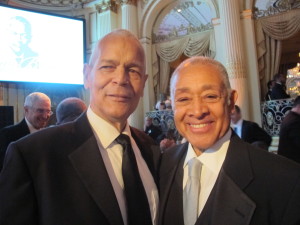
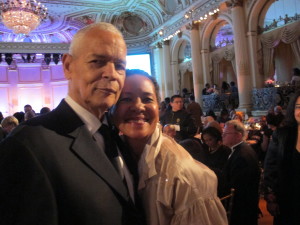
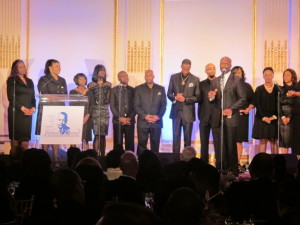
My personal connection to Bond was through my husband’s television show, America’s Black Forum (ABF), a nationally syndicated black news show. A close family friend, Julian was employed there as host for many years. Do you remember that pre-internet TV show? There are boxes and boxes of tapes of America’s Black Forum at our home in storage on VHS and CDs. We hope to convert them for modern viewing one day. I met him at social occasions. At these events, he would move freely around the room, visit everyone’s table to chat and joke. He liked to be with the people. Many stars surround themselves with handlers and you can’t get near them. Julian was different. He was very funny and approachable. He liked to take photos with folks too. A few months ago, I sent a note asking for help with a project. He readily responded. I was so excited that he replied! We attended Julian’s retirement party billed as a Julian Bond Gala at New York City’s Plaza Hotel.

Here’s an excerpt from my blog post:

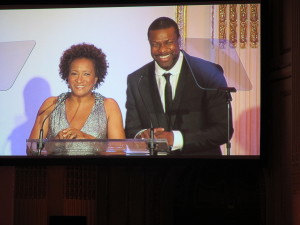
“Human Rights icon, Julian Bond was honored with a star-studded formal gala at the Plaza Hotel on Wednesday, May 2, 2012. The event was a combination Civil Rights reunion, retirement party for Julian, professor at the University of Virginia (UVA) and fundraising effort to elevate and advance the teaching and interpreting of Civil Rights Studies. Comedians Wanda Sykes and Chris Tucker were the gala emcees at Julian Bond’s event at Plaza Hotel. UVA hopes to create the Julian Bond Professorship in Civil Rights and Social Justice. This chair will make it possible to attract outstanding teachers and scholars who can build on Julian’s legacy and make UVA the nation’s leading center on Civil Rights literacy and its continuing impact on the American History narrative.

“It is critically important that students and the public know the history of the Civil Rights Movement so that concerned citizens can recognize any effort to reverse advances in equal opportunity and empowerment for women and minorities,”  said Bond.

Let’s keep Bond’s dream alive of teaching Civil Rights Studies and Literacy in every classroom and university! He was brilliant, visionary, courageous, generous, humorous and most of all a bright star of our time.

Do you have a Julian Bond story or photo? Please share.


QM2 musings

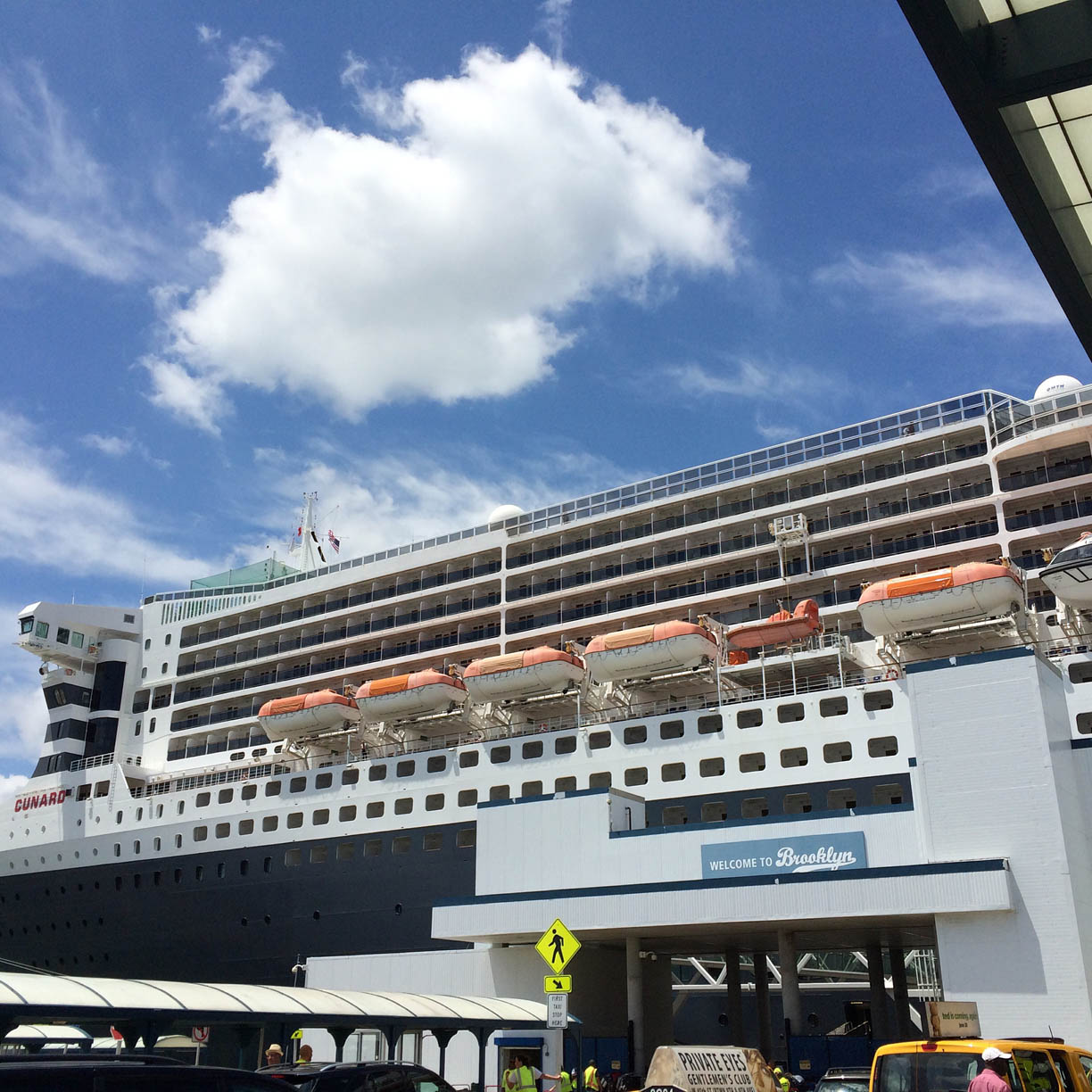
QM2 at Red Hook, BrooklynQueen Mary 2 (QM2) was a lovely way to start our summer vacation. We were celebrating our anniversary and my successful BBC Radio project. Cunard Line was celebrating too–its 175th anniversary. Its grand style, formal dress codes, afternoon teas, chamber music, ballroom dancing, and sea air added up to a memorable time. Yes, this was quite a change from your usual cruise. You might avoid the word ‘cruise’ while aboard any of Cunard’s exceptional fleet which include Queen Elizabeth, Queen Victoria and the Queen Mary 2. This was an ‘Atlantic Crossing!’ Many consider the QM2 crossing, a trip of a lifetime! It was.

Ancestral thoughts: We embarked from Red Hook, Brooklyn Pier for seven days at sea. Why did I think about slave ships that stole my ancestors away from Africa and China? I also imagined war as thousands of WWII US soldiers slept below deck on hammocks. The original Queen Mary  was once a war ship. It is now a hotel and museum in Long Beach, Ca. My Chinese West Indian grandfather came to mind too. My brother Sidney reminded me that our maternal grandfather was a British citizen. He arrived in Harlem from England aboard the Queen Mary years ago. He was born in Guyana while it was still a colony called British Guiana or “BG.”

QM2, Balcony stateroomSouthampton, England was our QM2 destination. Our plans included an extra week in London for BBC and museum meetings, visiting friends and eating. We also traveled via Virgin Rail to Liverpool. The Transatlantic International Slave Museum was our ultimate goal. Funny how everyone thought we were seeking Beatles’ history!

Showtime: Our favorite show on the QM2 was the Four Tunes. All male tenors, they sang Broadway hits from the Jersey Boys, Phantom of the Opera and more. We saw them twice! I also loved the dancing—promenade, circle, square and ballroom dancing. On the first formal evening we were treated to an Edwardian promenade dance lesson. It was fun to feel like we were inside of a scene from Downton Abbey! Royal Academy of Dramatic Art (RADA) performances were among the daily entertainment offerings. I was delighted to see a brother portray Mr. Darcy in Jane Austen’s Pride and Prejudice. And speaking of brothers, we wondered if we were the only black folks on this luxury trip.

QM2, BFF from Brixton

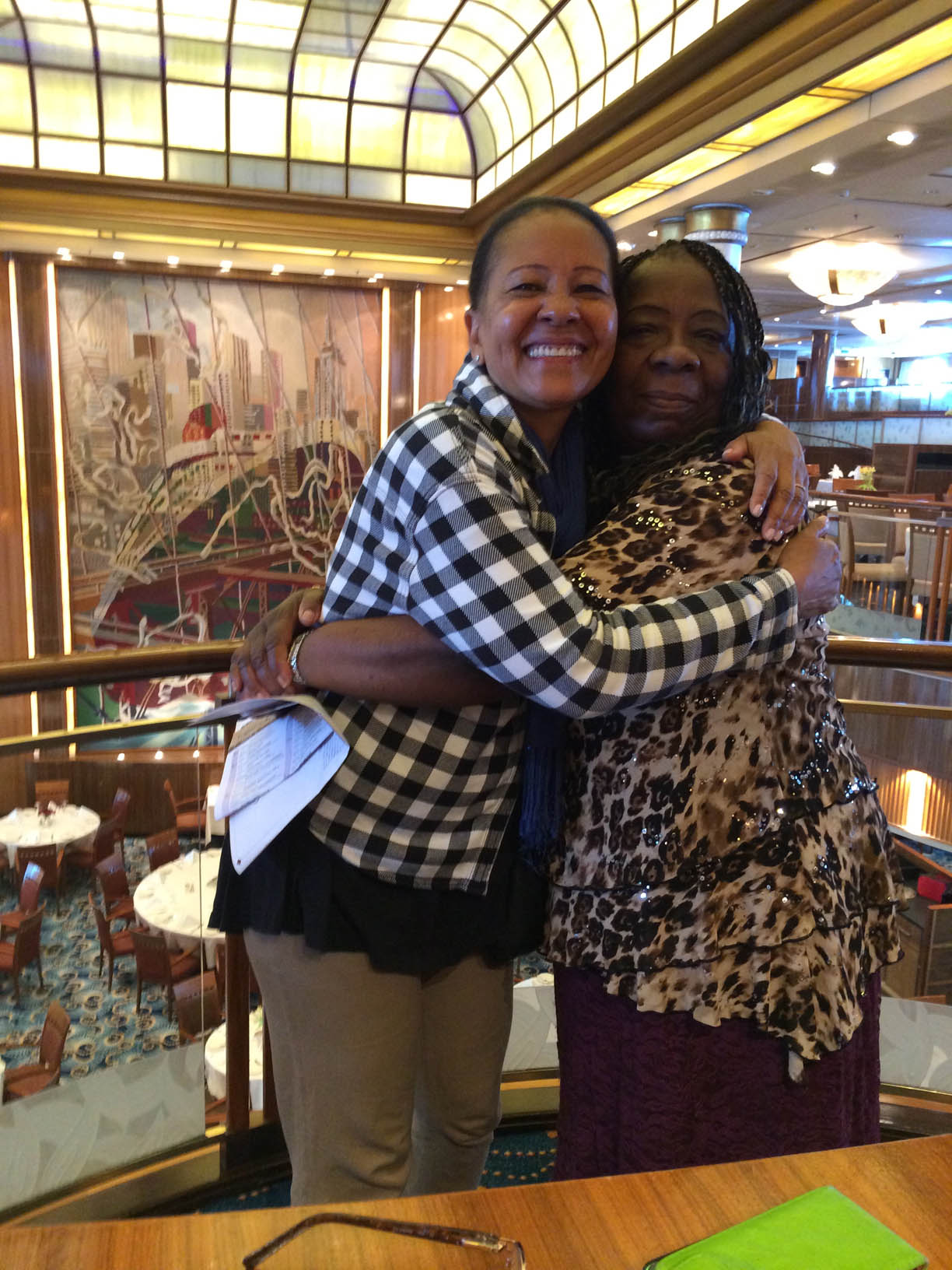
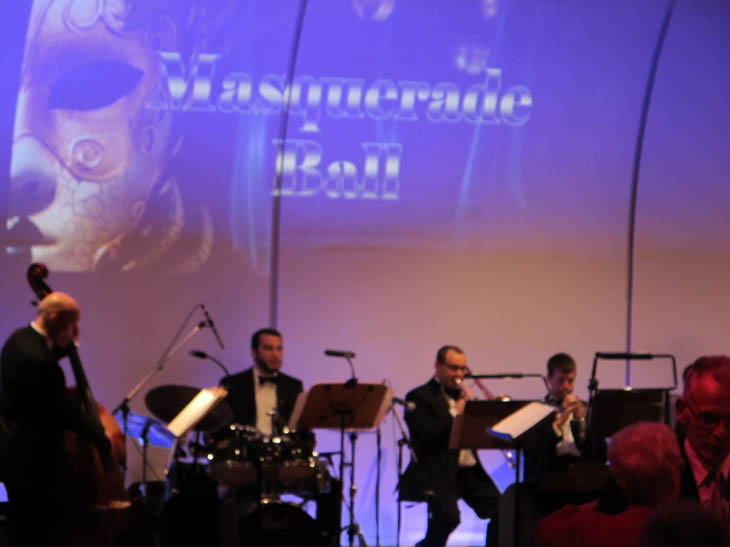
People: Eventually, I spotted about 10 black folks out of approximately 2400 passengers. An African American family from Shreveport, Louisiana became our new BFFs. We enjoyed breakfast with them almost everyday. My other BFF was a Bajan sister from Brixton. We quickly embraced as if we were sisters while on the kitchen tour. (photo on left) Several gay couples from the Friends of Dorothy, Cunard’s LGBT group and the Young Adults (18-30) livened things up too. There were meet-up groups for singles young and old and special topics too. Beyond Boomers: The mostly European passengers, whose average age was 70+, were friendly, fun and feisty. I loved how they switched from sedate to swinging once the music played. The orchestra, led by another brother, who was a suave vocalist, orchestra leader and MC, drew everyone to their feet. At Afternoon Tea, oldsters danced in casual clothes. In the evening they danced in ball gowns and tuxedos. Each dance style was announced: ”Ladies and gentlemen, get ready for the… Rhumba, Quick Step, Waltz, Cha Cha, Tango, Salsa.” Very skilled male and female dance ‘hosts’ were available as dance partners for everyone! Did you hear that? Dance partners for everyone–even little kids! I did see a few children on this trip. My dance card was filled all the time. Yes, I learned how to ballroom dance on this trip. I danced with male and female partners daily. What a ball! It was a nice change of pace from the Electric Slide!

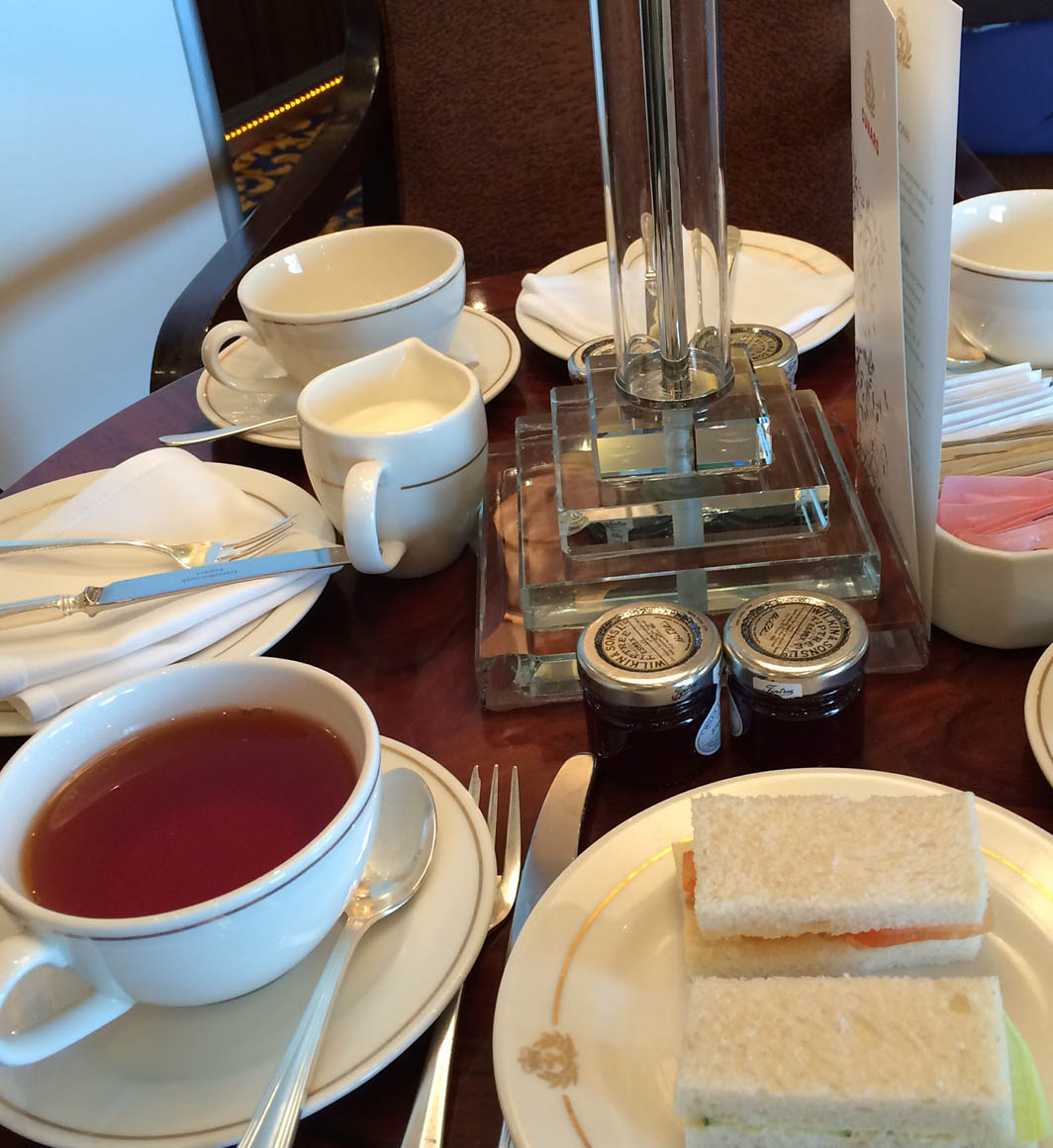
QM2, Afternoon TeaFood: Pace yourself. Like most cruises, there’s lots of eating. This is where the superb Cunard staff shines!Nowhere is the sheer volume of food on a cruise more apparent than on a boat like the Queen Mary 2. Feeding 2,400 guests each day three meals a day means that up to 15,000 meals are served on a daily basis. Add to this the fact that the Queen Mary 2 only uses Wedgwood crockery and linen napkins over disposable ware. This makes the operation larger than one could ever consider.” Click here for more.  Foodies interested in the private kitchen tour (It’s not free!), you must wake up early on Day 1 to sign-up. There was a long line of about 100 people waiting at 8am for only 20 spots! We ate breakfast in the casual King Court buffet on Deck 7. Get there early or late as everyone angles for window seats. It’s a cafeteria with lots of buffet stations. Lunch and dinner were more civilized in the upscale Britannia Dining Room. We usually skipped lunch in favor of Afternoon Tea. We chose the early dinner seating at 6pm so we could take in an early show afterwards. We were assigned to a ‘table for two’ as we requested. You must choose your dining time and seating during booking. We loved our cheerful dinner neighbors—a retired Polish couple from Chicago and a retired British couple from Sheffield, England. The British couple had VIP status having sailed 25 round-trips from Southampton. They had the inside scoop on staff and other ship old-timers. They regaled us with stories. We loved the one about the merry old Bavarian widow who booked a separate stateroom just for her ball gowns and dancing shoes. She was actually on board. Once the music played, she discarded her walker and waltzed around the ballroom with various partners like a champ. She was a star!

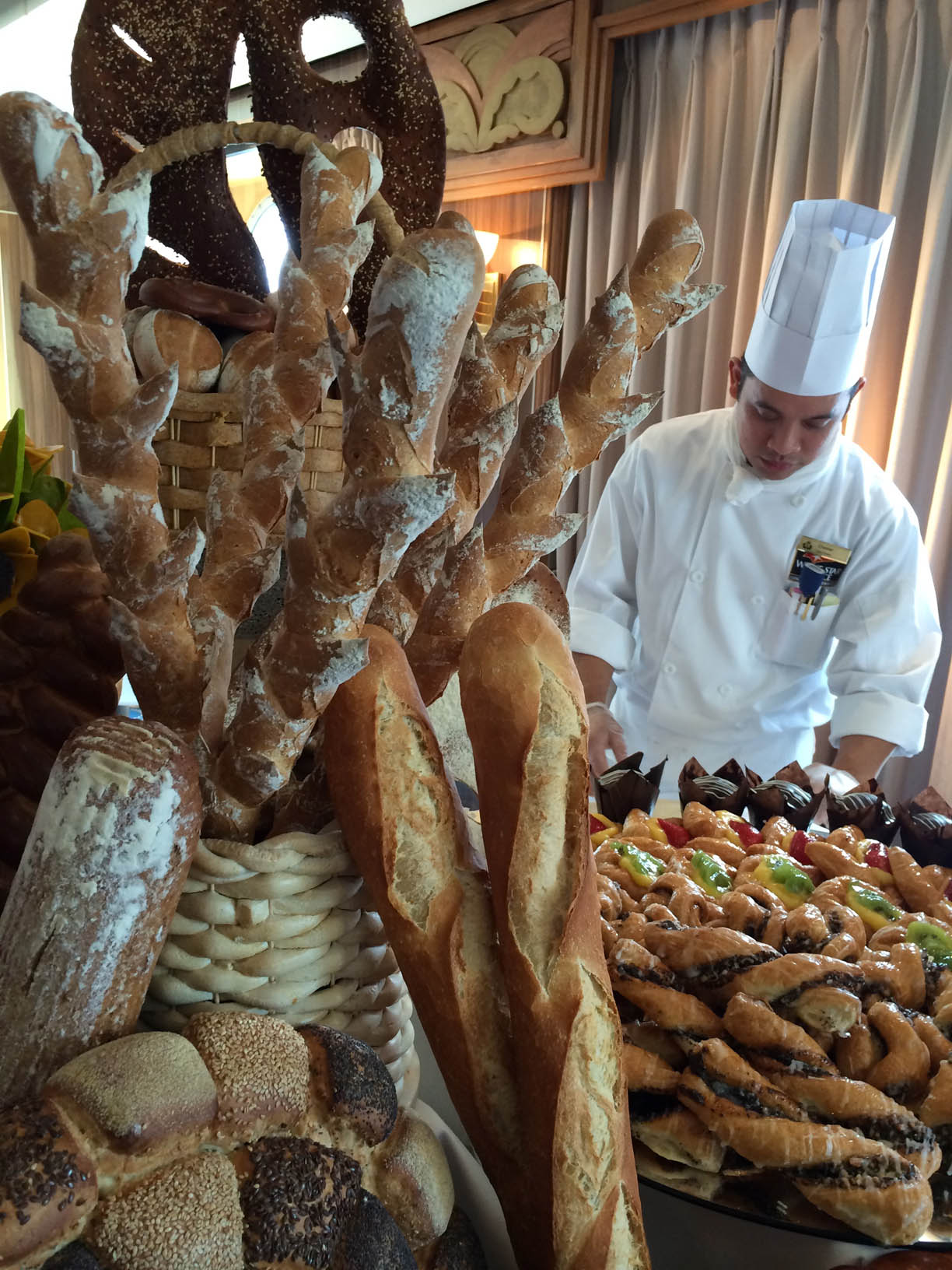
QM2 bakery demoMy Routine: After about three days of themed evenings (Masquerade Night, etc.) and tuxedos, my husband slowed down a bit with a cold. Doses of cough medicine purchased from a well-stocked gift shop helped him rest. While he napped, I went exploring. Funny how every time I returned, he seemed ‘cured.’ The TV would be blasting and books and newspapers were strewn about. I presented ’my report’ about the ship’s layout, short cuts, videos and photos from my adventures until he needed another dose of cough medicine. Our stateroom TV offered a nice choice of UK programs. Wi-Fi service was a bit iffy and cost extra. So, it was great to digitally un-plug. The library, art galleries, boutiques, casino and the ship’s nooks and crannies provided ample byways to wander and wonder. My routine included: chapel, shopping, fitness class, teatime, bridge class, watercolor art class, Wi-Fi help desk, fruit & veggie carving class, meet-ups, planetarium, films, afternoon chamber music concerts, casino, spa, health, beauty, fitness seminars, lectures, films, library, solo piano concerts, late night ghost stories, jazz poetry, ballroom dance classes, ship tours, board games, and of course—taking photos and making new friends. Sleep: Several nights we slept through for 12 hours without trying! There’s something about the Atlantic Crossing that delivers the best sleep you will ever experience. The bathrobes and beds were luxurious too!

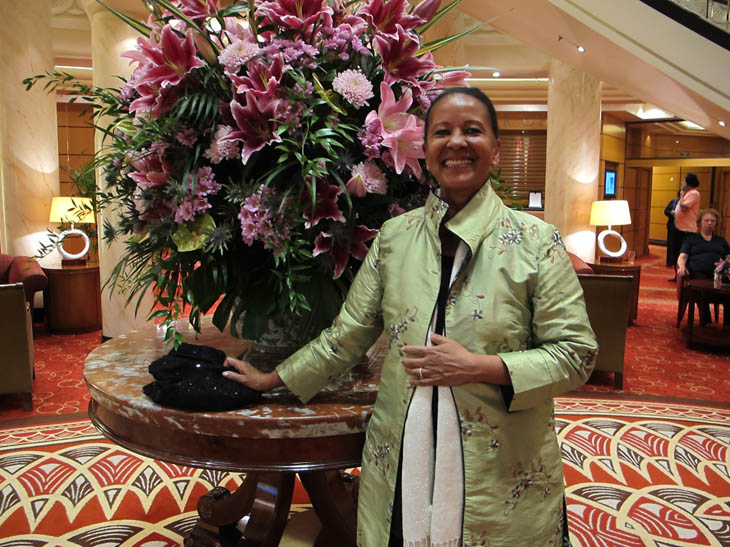
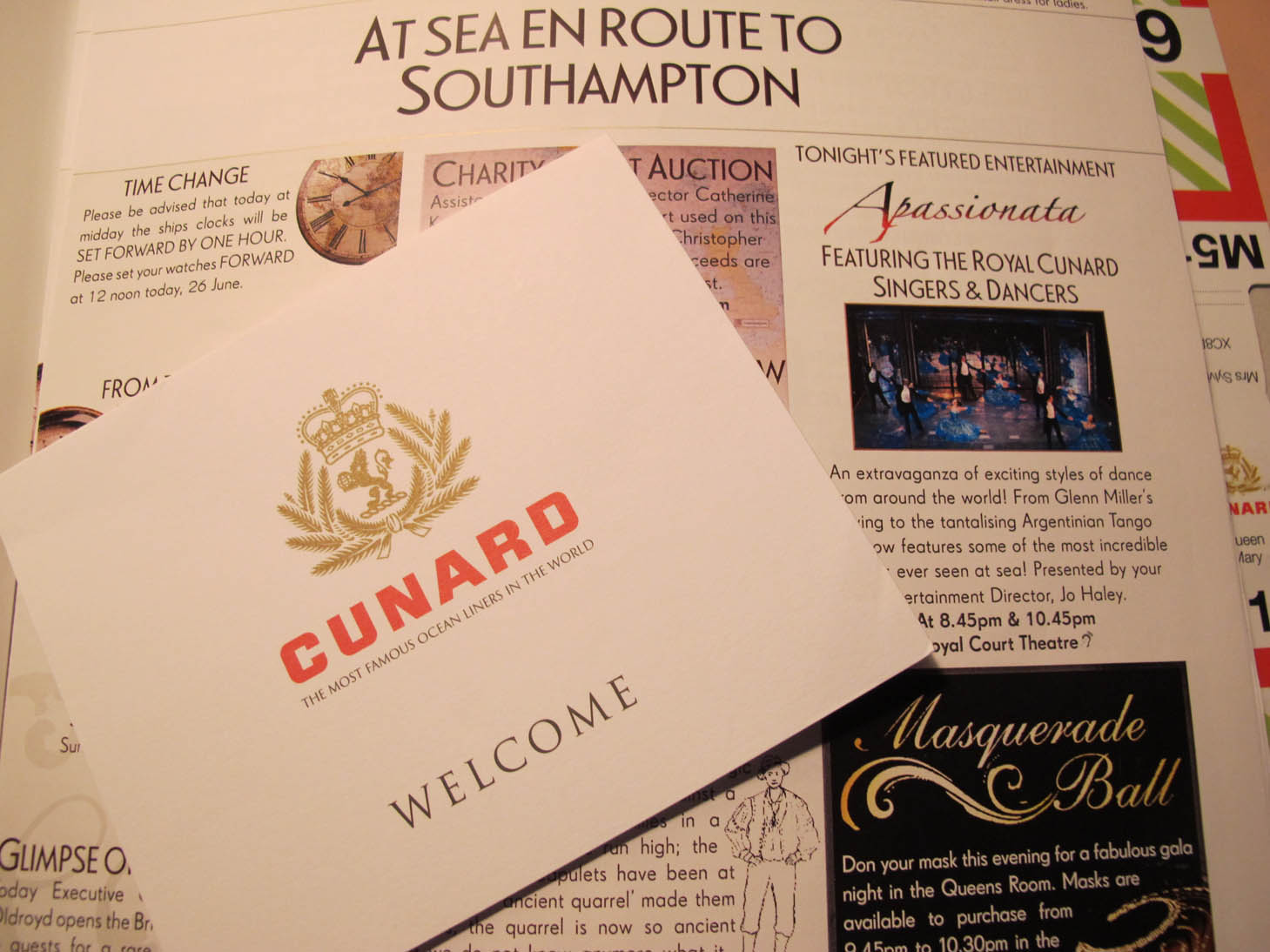
QM2 Masquerade BallWhat to wear: You are reminded daily about the dress code via the daily newsletter. “Ladies, No denim, flip flops, or armpits showing please!”  Men must wear dinner jackets or stay in your room! I packed my dapper husband’s evening clothes– tuxedo, dark suit, dress shirts, ties, cuff links, dress shoes and socks. Many women brought their grand ball gowns! I chose a simplified route. I wore evening jackets, tunics, pants and skirts and flats. In late June, we should have brought along all-weather jackets, gloves and hats. Luckily, I always travel with extra scarves. I loved the brisk sea air. It was exhilarating to be on the windy deck and balcony. Many passengers wore nice casual day dresses and separates. Laundry: The launderette was busy. Excited family groups primped and prepped for formal evenings ahead. They waited on orderly lines for washers, dryers and ironing boards. It was a surprising fun place to connect. Everyone was assigned a butler. Our guy, Ricardo, was always nearby checking on us. No, he did not do laundry! Other staff cleaned and changed linens. He mostly advised us about activities and directions, as the ship was huge.

QM2 evening jacket

Details: American Express Platinum travel services booked our trip. They are Cunard Line experts. We stayed at London’s Langham Hotel and Liverpool’s Hope Street Hotel. Our first class, direct airline tickets on Norwegian Air from London to New York were a surprising deal-about $500 each! We also received $600 ship credit to defray drinks, spa and shopping costs. Our balcony stateroom on the sixth level was perfectly located near the middle of the ship. We had unobstructed views of the ocean. Sail from Brooklyn and fly back from Europe for your first Atlantic Crossing. Bon Voyage!


QM2 newsletter