Indo-Afro Dance

At a recent private Lincoln Center screening of dance film UPAJ, viewers witnessed the creation of India Jazz Suites, an amazing Indo-Afro collaboration starring a 68-year-old Indian Kathak icon and a 32-year-old African American tap dance star. Subtitled “the story of a friendship unlikely,” the Issie Award winning documentary, rolled out like a modern father-son love story. Upaj means ‘improvise’ in Hindi. The unlikely pair’s journey was full of magic and rhythm as these two divergent and humorous souls invented and performed unscripted lives ‘on the road’ in India and America.

The film featured my paternal cousin Jason Samuels Smith, 32, tap dance star of “Bring in Da’ Noise” fame, who comes from a family full of dancers. Pandit Chitresh Das, 68, India’s foremost Kathak dance master, is a descendant of one of India’s most prominent dance families.  

The documentary is a behind the scenes look at friendship,  family history and life as artists. We saw Jason as a child dance star on TV’s Sesame Street with dance superstar Savion Glover.  Memorable film clips and black and white family photos of Das’ parents costumed in Kathak performances during colonial India were also featured. The story inside the story portrays the struggle of all artists: sacrifice, demons, dedication, devotion to craft and most of all— the quest to engage with an audience!

Finally, they are booked to perform at a prominent Indian wedding. Thousands attended the traditional weeklong wedding event at a huge stadium. After their successful performances, Das and Jason and their accompanying musicians received several bookings throughout India—at universities, on television shows, and at a variety of venues. The camera follows them over six years, as they engage, perform and travel from place to place.

There was humor and pathos throughout the film as both men—Das colorfully costumed, barefoot with bells on his ankles and Jason in tap shoes sporting a variety of hairstyles—entertain with joy and wonder. Jason and his crew’s exhaustion from a weeklong wedding was comical.  Jason’s reactions to India’s monkeys that ran wild contrasted with his astonishment at the incredible poverty in India: “Man, I thought I came from the ‘hood until I went to India,” he said.

Archival film excerpts of tap dance giants Nicholas Brothers and Gregory Hines provided nostalgic moments. Jason lamented the loss of his mentor, Gregory Hines. Das recalled memories of his guru’s murder and eventual cremation.  There was a bit of dance history from both Indian and American cultures.  But most of all, we saw two lovable characters develop a friendship and evolve—Jason matured to manhood and Das mellowed. There were many standing ovations after the screening of this magnificent film. Kudos to the award-winning filmmakers: director Hoku Uchiyama and producer Antara Bhardwa. Jason and Das both have won numerous awards individually, and together they won the Isadora Duncan Dance Award for the Best Ensemble Performance of the Year.

Mark you calendar for this must-see film that crosses age, race and cultural boundaries. It is set for Martin Luther King Day, Monday, January 20, 2014, 8pm on PBS’s AfroPoP: The Ultimate Cultural Exchange. Do you know about other Indo-Afro collaborations? Eg. Culture, cuisine, the arts? Please describe in comments.

Auntyland

Music Genes: Piano lessons

“The show must go on,” was a family mantra that I heard often. My uncles and aunts told stories of daily performances “on the road.” They said that although they were only children, they could never be sick or too tired to perform. People in show business still live by that rule.

Actually, many in my generation were forced to study music. Even my gangster cousin Reggie Bolt could play Mozart and Chopin on the piano! Our grandmother, Madame Tempy or Mother, as she was often called, insisted that we learn classical music. Some of my relatives secretly played jazz, gospel and popular music. Some of them received voice training and instruction on a variety of instruments like the violin, sax, trumpet, clarinet, drums and various percussion instruments. Old-fashioned piano teachers like my grandmother employed all kinds of teaching techniques that would never fly today, like tying cord around our fingers for muscle memory, hitting our knuckles with a ruler, grunting or yelling if you played wrong notes, and assigning difficult make-up homework.

There was no getting out of piano lessons. Like church, it was a family requirement. Very few escaped. And we had to practice everyday. We were lucky enough to have four pianos at home—three uprights and one concert grand—all leftovers from grandmother’s studios. Living with that many pianos created a fun atmosphere. At times, my home was like a music school, theater or nightclub depending on the day and who was there.

Researching about my family’s traveling musical act as they “migrated” from the South to Harlem has been my passion for years. I inherited many photos and stories. As a college student I even composed a folk opera about their journey. I am also digging for information about my mother’s Caribbean musical relatives. My maternal Aunt Elaine Wong Cameron, my middle namesake, sent piano books to me from Trinidad often. I heard that she led a steel drum (pan) orchestra that was wildly popular in Trinidad. I am always searching for musical family stories. I believe that music helped my family cope with the difficulties associated with immigration and migration.  Scientists believe that music is powerful medicine. Click here to learn about the healing power of music. Studying the mysterious connection between music and genes is ongoing. Click here to learn more.

If you could start over, what musical instrument would you play?

Music Genes: Madame Tempy

Music was key to my family’s survival, according to stories I heard since childhood. Our music genes were inherited from my paternal grandmother, Madame Tempy (Stuart) Smith, (1884-1960) the family matriarch. She was born and raised on a dairy farm in Ocean Springs, Mississippi, two generations from slavery. Despite racism, lynchings, and segregation, Madame Tempy managed to acquire a college education at Straight College now known as Dillard University and the Boston Conservatory. She developed an exceptional reputation as a music teacher and performer in Ocean Springs and New Orleans, according to news clips and family stories.

After filing for a divorce, Madame Tempy (sometimes spelled Tempe) singlehandedly raised her large family of talented musicians, singers and dancers. An extremely independent, self-reliant and perceptive person, she recognized her family’s perilous living conditions. Like the Sound of Music’s Von Trapp family that escaped the Nazis, Madame Tempy turned her young, talented brood into a musical group and quietly escaped the South. The difference between my family and the Von Trapp’s was that they were not told that they were escaping or that they were part of America’s largest, historic migration! Driving a funny-looking, packed automobile, my family followed the legendary “Chitlin Circuit.” They performed in many venues both large and small from Mississippi all the way to Harlem.

Madame Tempy’s musical and business skills were fully realized when she joined others who were part of the Harlem Renaissance. A courageous person with a dictatorial personality, she became a real estate entrepreneur, sacred music composer, and legendary piano teacher. With every Harlem apartment building that she purchased a music school was set-up, and rehearsal studios and rooms were rented. She employed all of her children, nieces, nephews and many extended family members.

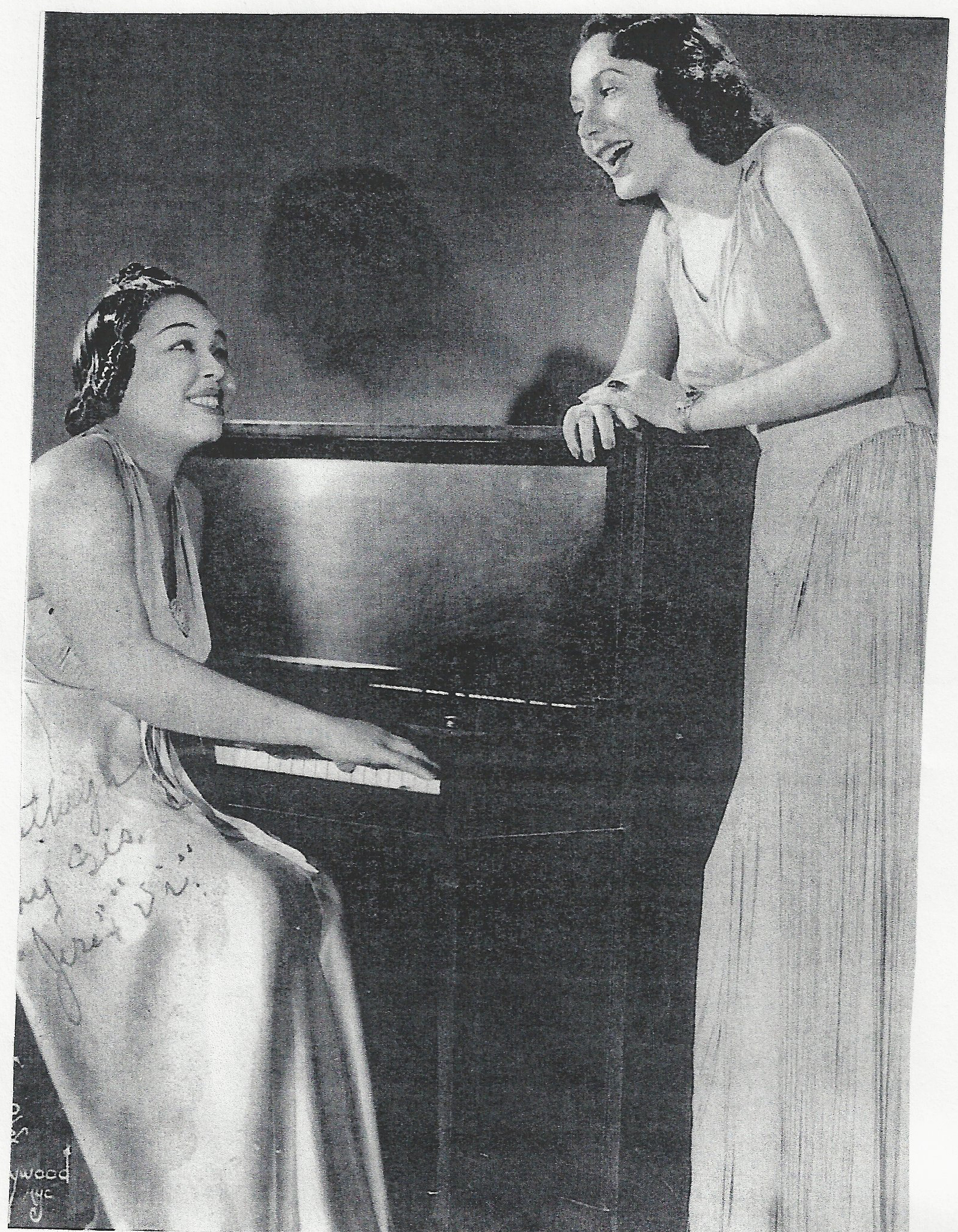
My aunts and uncles continued in show business and became teachers too. My Aunt Jeri Smith, who drove the getaway car, gave piano lessons when she was not leading her own orchestra, touring Europe or performing in Hollywood films. My Uncle Joe Smith, my father’s baby brother, was the star of the family’s traveling show. He was the Sammy Davis and the  ‘Michael Jackson’ of the family act. A talented tap dancer, singer, and musician, Uncle Joe was called a five-year-old “wizard drummer,” in a New Orleans newspaper.

It was a tradition for the older cousins to tutor the younger ones. My older cousin Sonny Brigman mentored me on the nuances of Beethoven’s piano Sonata Pathetique. I also trained on the viola. My whole family was musical including my mother, father, sister and two brothers. We played piano, violin, guitar, percussion and wind instruments.

I wish the younger generation of nieces, nephews, and cousins could have met their elders. Because of segregation and racism, we were a tight-knit family. Thanks to racial integration, the family has spread out all over the world. I am still digging for musical genes in my family both past and present.

Do you have music genes in your family?

BBC Radio: ‘Strange Fruit’

Sylvia Wong Lewis, Narrative Network founder, is featured on BBC Radio program Soul Music, on an episode called “Strange Fruit.” Producer Maggie Ayre, looks for stories behind music with powerful emotional impact. Concerned that UK audiences may not know about lynching, Jim Crow laws and other harms that resulted from the Trans-Atlantic slave trade, Maggie decided to take another look at this protest song.

Maggie found me through my slavery group–Coming to the Table, and invited me to join her Soul Music program with Emmett Till’s cousin, Simeon Wright; Robert Meeropol, the adopted son of Jewish teacher Abel Meeropol, author of the poem/song; and April Shipp, a Detroit quilt maker who created the “Strange Fruit” quilt. Each of us was asked to engage about the song, “Strange Fruit.”

“First recorded in 1939 by Billie Holiday, the protest song Strange Fruit came to symbolize the brutality and racism of the practice of lynching in America’s South. Now, decades later, such is the song’s enduring power that rapper Kanye West sampled the track on his latest album “Yeezus.” – Maggie Ayre, Producer, Soul Music, Radio 4, BBC News, Entertainment & Arts.

“The smell of the honeysuckle brings all of it back. That’s the smell prevalent in the area where we lived. The honeysuckle was in bloom. Because words can’t describe how we felt that night. How I felt. It was a combination of grief, shock, and fear. You have a sorrow that grips you because of what happened to Emmett.” – Simeon Wright, Emmett Till’s cousin.

Click here to read the full story: http://www.bbc.co.uk/news/entertainment-arts-25034438

To listen to BBC Radio program, click here for the webpage in advance of the Tuesday, November 26, 2013, broadcast of Soul Music. Look on the Gallery section for photos of radio show guests:

http://www.bbc.co.uk/programmes/b03jb1w1

Happy UnThanksgiving

UnThanksgiving reflections – Some of you may remember the Red Power Civil Rights movement of the 1960s and 1970s. Those brothers and sisters were the first people who started UnThanksgiving also known as Indigenous Peoples Annual Sunrise ceremony. Thousands of Native Americans and their supporters still gather, on Alcatraz Island in the San Francisco Bay Area for an annual Sunrise Gathering on Thanksgiving Day, to pray and pay homage to indigenous people.

In honor of my own Native ancestors, I attended a ceremony during the 80s when I lived in Oakland. It was the largest Powwow that I had ever attended. The Elders were standing, teaching, and leading prayers. They also shared their prophecies about the “invaders.”

To the sound of drums I witnessed a sea of many tribes–from Alaska, Hawaii, Mexico, Canada, East coast, Southern states, Caribbean, South America and more. Many of them proudly wore their full regalia and some  were in plain clothes. The men, women children and elders danced, sang and chanted in a huge solemn circle. It was beautiful, joyful, magical and sad all at the same time. The goal of the event, created by the International Indian Treaty Council and the American Indian Contemporary Arts, was to honor Native American history and to educate others about indigenous people everywhere.

“We are here to remind people that want to destroy our way of life, that we are still here. We are still carrying on our ways. We are still carrying on our traditions,” said Bill “Jimbo” Simmons, an International Indian Treaty Council leader at a past ceremony.

Forget about Black Friday shopping! Instead, eat, pray, love, read, and view some documentaries to make your Thanksgiving holiday more meaningful.

Here is my UnThanksgiving to-do list:

Native Foods: On Thanksgiving Day, make sure you eat or prepare something from the “three sisters”: beans, corn and squash, often called the heart and soul of America’s indigenous diet.

Pray: Expand your Thanksgiving prayer to include something about the indigenous people everywhere. Be creative and make up a special prayer.

Read: Did you know that some people believe that the history of Thanksgiving began in Texas and Florida and not with the Pilgrims at Plymouth Plantation? Some people (especially many Natives!) doubt Thanksgiving really happened! Learn the myth of Spider Woman, the creator of Mother Earth and other Native American legends. Read all about it.

Films: There are many films with Native American themes that I liked, such as Dances with Wolves and Windtalkers. Red Cry is a documentary that really stands out and is generating a lot of buzz now. Check it out.

What do you think of Un-Thanksgiving? Do you have any other suggestions for Native American-themed films or books? In your family history, do you have Native ancestry? Please share in the comments section below.