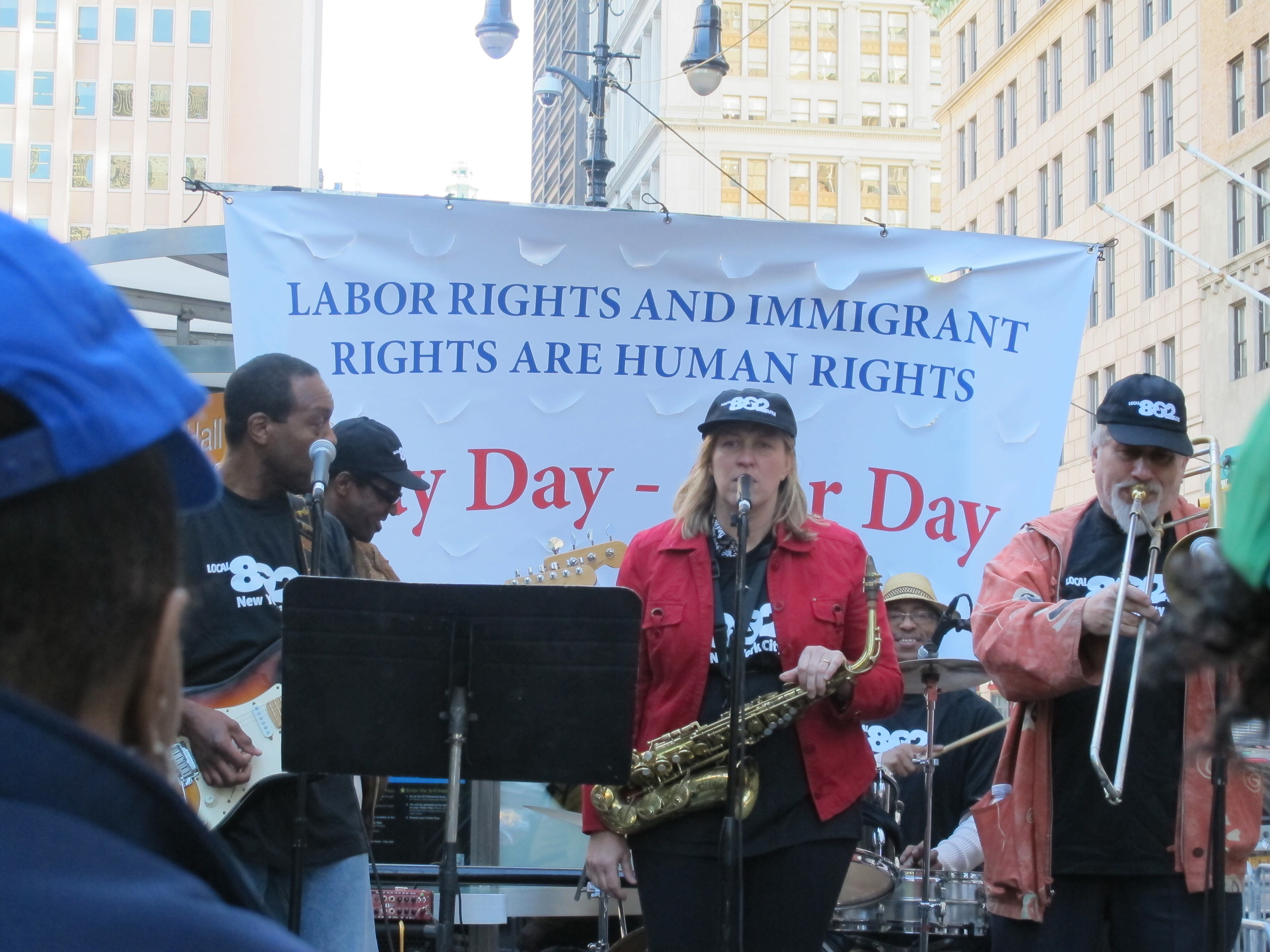
Immigration reform is always the May Day rally theme in New York City. Pro-labor and pro-immigrant activists joined forces at NYC’s recent May Day rally at City Hall to the groove of Bob Marley’s “Don’t worry about a thing.” The refrain to that song “Every little thing gonna to be alright…” were words of hope that everybody could appreciate.
Labor and immigration activists join forces on stage at NYC City Hall, May Day event, 2013.
The festive demonstration to honor and support unions, workers and laborers was highlighted by a Broadway parade that started in midtown and ended at City Hall. Waves of New York’s labor force marched—several with their own marching bands. One group of Mexican workers featured traditional Mayan folk dances. At City Hall, a central stage was set for speakers amid heavy police presence. Dolly Parton’s “9-5” was another anthem heard over loud speakers that produced impromptu jam sessions among the various groups.
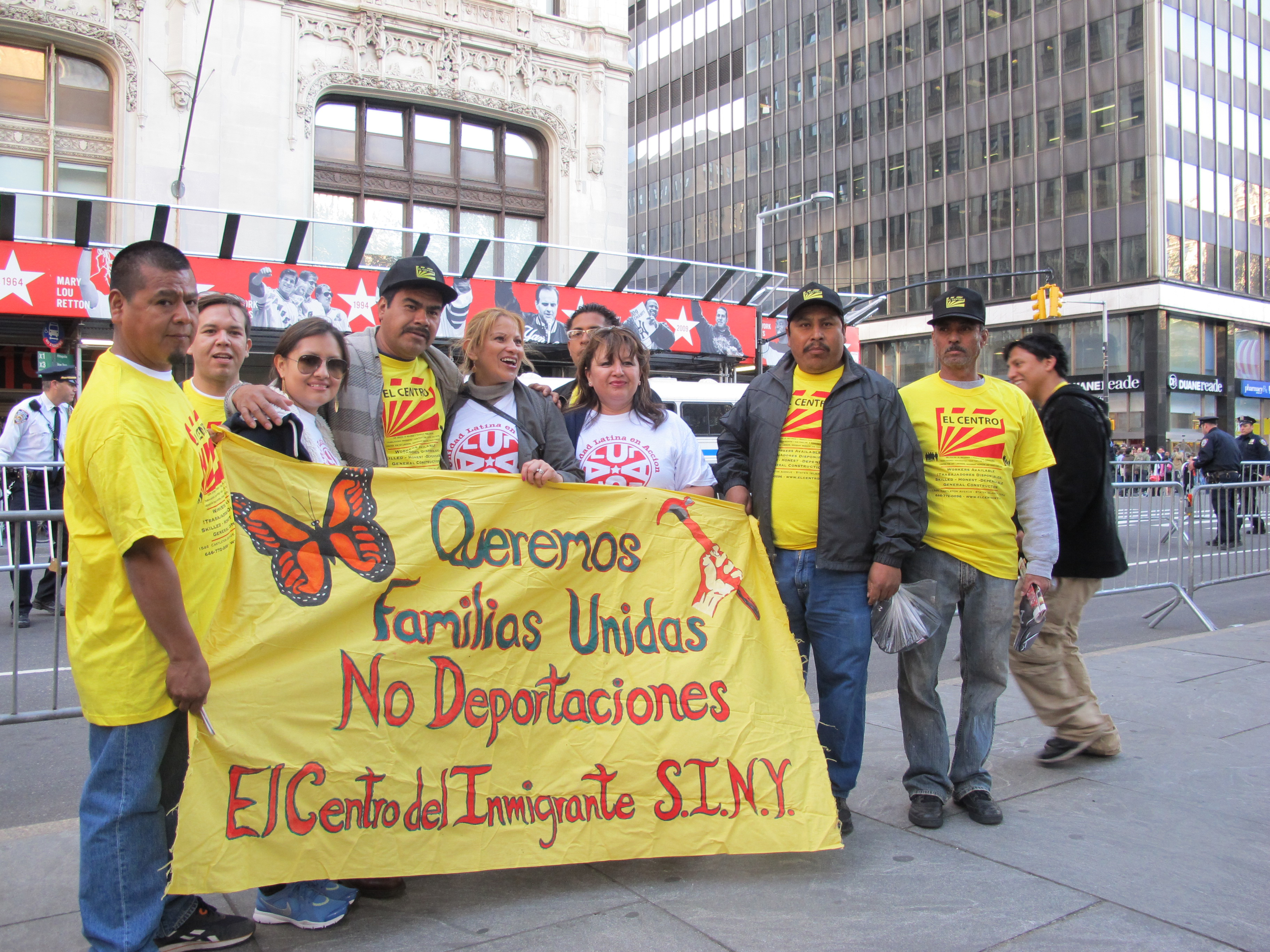
Immigration activist at May Day rally at NYC City Hall, 2013.
Beside the immigration theme, an atmosphere of camaraderie and pride was visible on the rally signs and posters carried by affinity groups including Filipino health employees, Africans and Korean labor groups, and transit, carpenters, teachers and musicians unions and more.
The bipartisan immigration reform bill currently in the Senate has been called “unjust” plan by several participants because they said it leaves out too many immigrants and focuses too much on Mexico border issues.
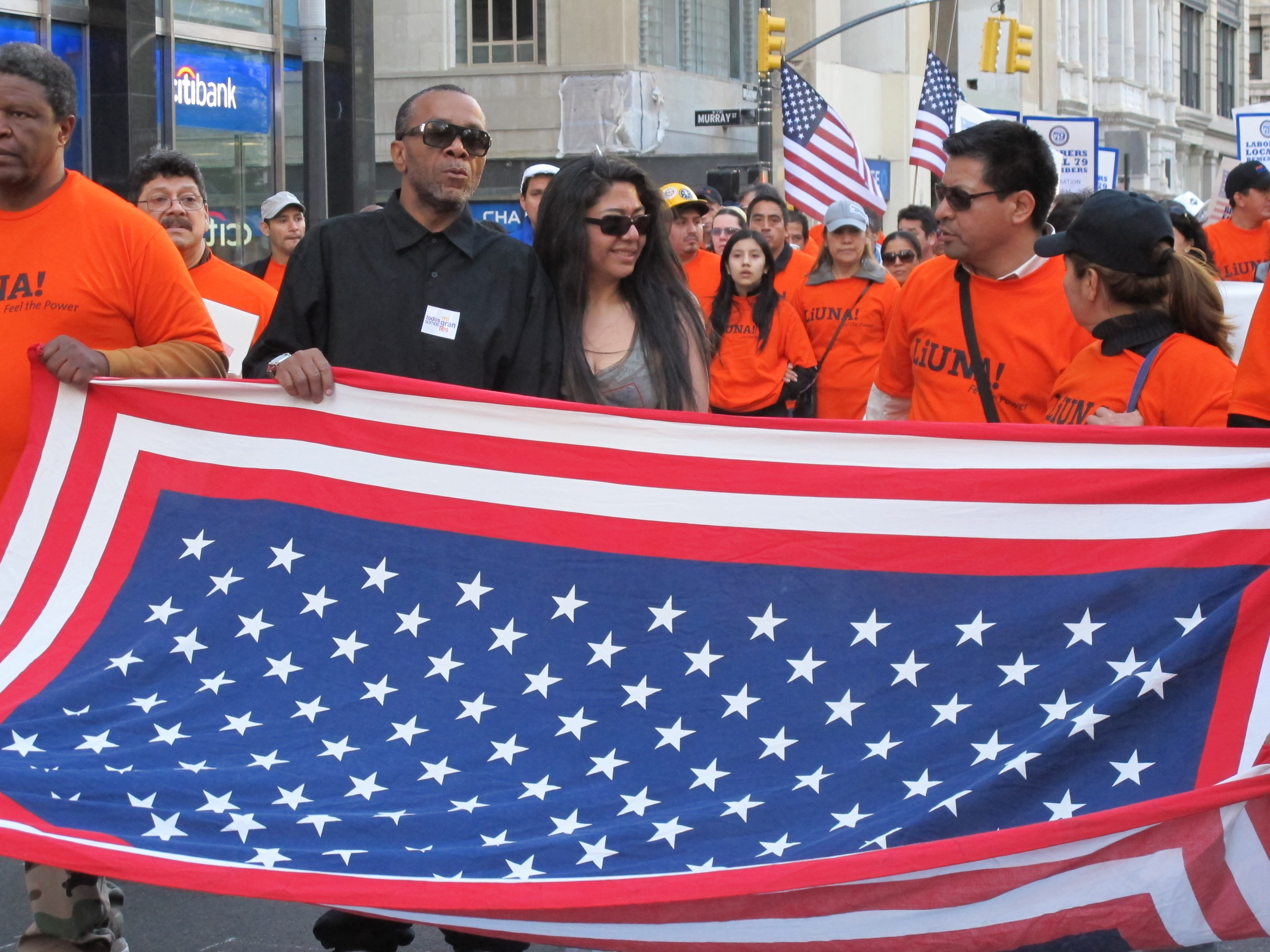
Immigration activists show patriotism with flag at May Day rally.
“This bill represents a shift from family-based immigration policy to merit-based on skill and employment-based visas. Many of us could end up waiting 20 years for citizenship,” said an Asian activist. The Senate Judiciary Committee has scheduled a hearing for May 8.
The history of May Day or International Workers Day is a commemoration of four anarchists, (as trade union organizers were called) who were framed and executed in Chicago in 1886 for demanding an 8-hour day. Over 400,000 laborers went out on strike. Shortly after, the American Federation of Labor adopted the 8-hour workday.
Carpenters’ union members proudly pose together at May Day rally, 2013.
Pro-labor and pro-immigrant activists joined forces at NYC’s recent May Day rally at City Hall to the groove of Bob Marley’s “Don’t worry about a thing.” The refrain to that song “Every little thing gonna to be alright…” were words of hope to the immigrants assembled.
The festive demonstration to honor and support unions, workers and laborers were highlighted by a Broadway parade that started in midtown and ended at City Hall. Waves of New York’s labor force marched—several with their own marching bands. One group of Mexican workers featured traditional Mayan folk dances. At City Hall, a central stage was set for speakers amid heavy police presence. Dolly Parton’s “9-5” was another anthem heard over loudspeakers that produced impromptu jam sessions among the various groups.
Beside the immigration theme, an atmosphere of camaraderie and pride was visible on the rally signs and posters carried by affinity groups including Filipino health employees, Africans and Korean labor groups, and transit, carpenters, teachers and musicians unions and more.
The bipartisan immigration reform bill currently in the Senate has been called “unjust” plan by several participants because they said it leaves out too many immigrants and focuses too much on Mexico border issues.
“This bill represents a shift from family-based immigration policy to merit-based on skill and employment-based visas. Many of us could end up waiting 20 years for citizenship,” said an Asian activist. The Senate Judiciary Committee has scheduled a hearing for May 8.
The history of May Day or International Workers Day is a commemoration of four anarchists, (as trade union organizers were called) who were framed and executed in Chicago in 1886 for demanding an 8-hour day. Over 400,000 laborers went out on strike. Shortly after, the American Federation of Labor adopted the 8-hour workday.
Fabric of our lives. I wish I kept my mother’s trunk. It was filled with fabrics and needlework supplies. I was thinking about that old trunk as I prepared to interview Dindga McCannon, multimedia artist and Harlem resident. Dindga is the guiding force behind a group art show Harlem Memorabilia: Reflections in Fiber, set for an opening reception on Thursday, March 14, 5-7:30pm at Interchurch Center’s Treasure Room Gallery; and an art talk & walk, Tuesday, March 19, 1pm. RSVP 212-459-1854.
This amazing show, March 4— March 26, moved me to reflect. It took me over a decade before I would sell my mother’s home and get rid of things after her transition. After speaking with Dindga about Women’s History Month, inheriting old stuff and creating art from it, I began to recall memories. On the last day at mother’s brownstone, I left her trunk and two upright pianos. I was told: “No one wants that“old junk trunk”! Relatives said that they would take the pianos if I paid for tuning and moving. “Oh, Really?”
I refused to dump mother’s possessions at the curb. But, I could not keep them. I was in a dilemma. I justified leaving the old trunk safely in the house. I thought that maybe because the new owners were distant relatives, that they might find some use for that old stuff. My inner artist had long been submerged by grief on that last day at mother’s house. Today, I would have easily found a way to keep everything.
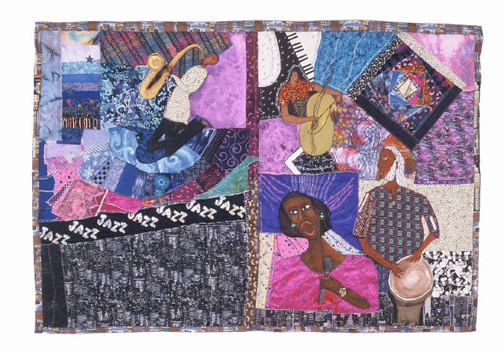
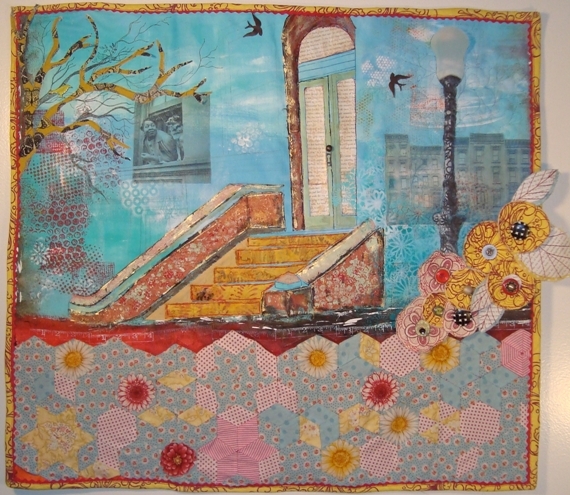
artist quilt Miss Ethel Lee, by Lisa Curran
My mother told me that she inherited that old, heavy, wooden trunk from her mother. When my maternal Chinese-Caribbean grandmother arrived in Harlem from Trinidad, she found it on a sidewalk. She painted it with colorful flowers and it moved into her life. That trunk moved with her every time she moved—to various Harlem apartments, down to the Bowery, to 14th street, Chinatown, and eventually to our house on President Street in Brooklyn. The trunk, now painted grey, was last kept in our basement. It was intermingled with my mother’s and grandmother’s things—vintage fabric and tapestries, sewing notions like zippers, snaps, hooks, buttons, beads and fibers including yarn, threads, twines, ribbons, sequins, lace, fringe, trimmings, tassels, and crochet, knitting, embroidery and art supplies. There were also patterns, old greeting cards, and how-to booklets. My maternal elders were talented craftswomen and they made everything with their hands—upholstery, apparel, costumes, rugs, curtains, quilts, pillowcases and other domestic items.
As a pre-teen, I used to spend hours going through that trunk when it was set upstairs in our dining room. My mother had told me once that there was money buried in it because Grandma always hid her money. So, dollar bills were always at the back of my mind as I sifted through it. That old trunk was sometimes used as side seating dressed with a home-made skirt and a rectangle cushion or a sideboard covered with a custom tablecloth.
book cover of Peaches, book by Dindga McCannon, written, illustrated as a teen.
I did not realize it then, but that trunk was filled with the fabric of our family’s life. The trunk contents told stories about how our blended West Indian and American Deep Southern traditions were literally intertwined and threaded together. I learned to sew, knit, crochet, embroider, braid, weave, and dream from my maternal elders. Mother and grandma both had sewing rooms filled to the rafters with their needlework supplies. That trunk was for leftovers and stray items as far as they were concerned.
Mother, Carmen Wong and grandma, Violet Chan Keong, did teach me a lot despite me being left-handed. But my maternal Aunt Sybil Romain was the virtuoso. She was the undisputed Queen Bee, a maestro! In another time, she would have been the first Vera Wang. She ran her own successful, exclusive bridal salon on Jamaica Avenue, Queens that catered to Caribbean Chinese, Indian, Latina and Afro-Caribbean clients. Mum, as we all called her, was my mentor and Godmother. She was known for her high standards and exacting temperament. She was more than a seamstress. She designed, created and produced. A perfectionist, she would tear out your stitch if it was crooked, undo a hem if it was uneven and scrap your fabric if she thought it was wrong for the design. She would yell too if you did not follow instructions. My cousin Sandy and I had our own sewing projects and special assignments from Mum. Some of these included simple repairs, button replacement, zippers and assisting her with her numerous client projects. “What are we, slaves?” we mumbled to ourselves.
We were a human assembly line in her sewing room. We had to pin the patterns to fabric—very carefully! Sometimes, she created the patterns drawn on paper bags based on magazine photos. The next phase was to carefully cut out the garment pieces. When all the labeled pieces were cut and laid out, they looked like a puzzle. It always seemed a miracle that all the pieces fit together. We learned how to curate too, as Mum’s clients loved details like trimmings, lace, ribbons, beading, and lush linings. We tagged behind her from one end of the city to the other searching fabric stores and digging in remnant bins. All the while, Mum was constantly instructing us on how to examine fabrics for things like quality, texture and defects especially on silk, chiffon, taffeta, cotton, rayon, wools, blends. We had to measure, match colors, lines, adjust beading and myriad details for her huge multicultural weddings. Everything had to be “just right.”
Our “home-training” taught us so many things—about thrift, pride, dignity and survival. Those simple activities were also life lessons on entrepreneurship, diligence, excellence, focus, practice, patience, creativity, meditation, prayer, self-respect and self-expression. Because of this background, I have never been bored a day in my life.
So, I am grateful to Dindga for helping me remember my girlhood sewing lessons in honor of Women’s History Month. Thanks to her guidance as a master teacher, multimedia artist and author, and the efforts of a talented group of artists, women’s traditional fiber arts are the centerpiece of a Women’s History Month exhibit.
The show will feature a stunning collection of art quilts and hand-made cloth books. Congratulations to the featured artists: Angela Loftin-Blake, Phyllis Bowdwin, Jackie Burgess, Shirley Burton Cox, Lisa Curran, Valerie Deas, Shimoda, Izola Emanuel, Laura Gadson, Nancy Ivy, Shani Jamila, Arlene “Kweli” Jones, Nora Lee, Barbara Mims, Tanya Montgut, Rita Strictland, Olga Torrey and Dindga McCannon.
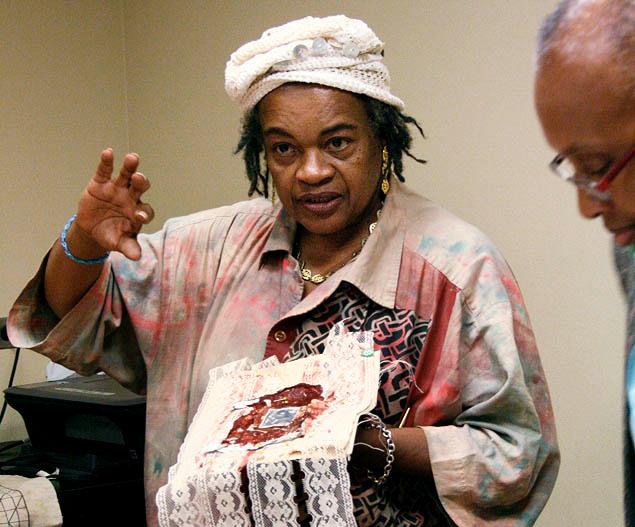
Artist Dindga McCannon demonstrates technique in quilting class.
Didga McCannon’s comments: “Since I am now the eldest in my family, I taught my daughter and granddaughter about continuing our needlework traditions. At 9- years old, my granddaughter announced that she is an artist. I am so proud of her. It is important for us to respect and nurture our girl’s artistic dreams and to let them know that their ideas are not crazy. From the beginning of time, women artists had limited chances of developing and rare encouragement. But some of us managed to break through. I was blessed with great mentors and was featured early in my career at the Cinque Gallery and other places.”
“I work intuitively fusing my art training with the traditional women’s needlework taught to me by my mother, Lottie K. Porter and grandmother Hattie Kilgro—sewing, beading, embroidery and quilting into what is now known as artquilts,” said the author of Peaches, a book about the adventures of a young girl who wants to be an artist, that she authored and illustrated, as a teenager.
McCannon, 65, who has a strong sense of family and community believes that one of the best things we can do for Women’s History Month is to nurture girl artists and teach them traditional women’s skills. “My early training came from my mother and grandmother. It is our duty to pass down our traditions. They need these skills to help them relax, counter peer pressure and computer buzz. Some girls are taught skills but not about art. But traditional training is an important first step towards artistry.”
When asked if she considered herself a feminist, Dindga said: “I don’t know if I would call myself a feminist. But I have long been included in feminist literature because I started a Black women’s art collective in the 70s and advocate for women.”
McCannon, who studied at the Arts Students’ League and City University of New York, attended Harlem’s PS 157 at 127th Street & St. Nicholas, now an apartment building; and Junior High School 143 at 129th Street @ Amsterdam Avenue, the setting of her first book Peaches. McCannon still believes the mantra: “A woman’s work is never done.” Happy Women’s History Month!
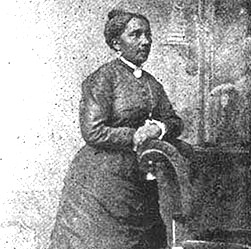
Elizabeth Jennings Graham, 1830-1901, won early civil rights court case to ride streetcar in NYC in 1854. New York’s version of a ‘Rosa Parks’ figure.
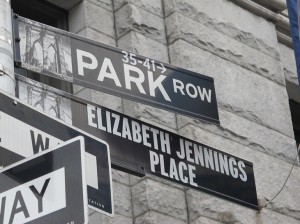
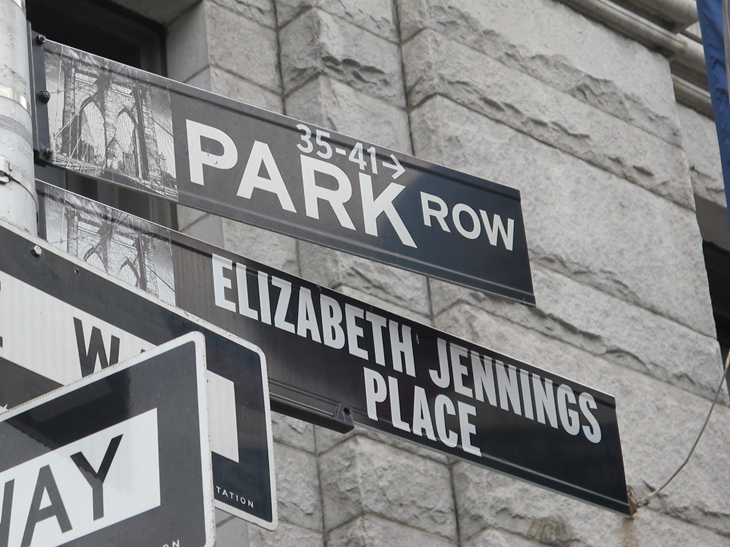
Elizabeth Jennings was a sister with an attitude. About 100 years before Rosa Parks, Elizabeth Jennings refused to get off a horse-drawn streetcar in New York when ordered to. Think of Miss Jennings as a ‘Rosa Parks’ with a New York attitude. Not only did the 24 year-old teacher and church organist refuse to get off the horse-drawn streetcar, but she fought the driver, conductor and policeman, reminded them of her rights, sued them and the transit company and won! Oh, and did I mention that her lawyer went on to become president of the United States? More on that later. Thanks to some conscientious New York City school children, a street was named Elizabeth Jennings Place in Lower Manhattan in 2007 at Park Row and Spruce Street. More on the school children later.
I first heard about Miss Jennings (later she married Charles Graham) from Rev. Dr. Calvin Butts who preached about her from the pulpit at Harlem’s Abyssinian Baptist Church years ago in honor of Black History Month. Elizabeth Jennings is one of my favorite unsung sheroes. She was courageous and outrageous, two important qualities needed in the long struggle for women’s equal rights in this nation.
Miss Jennings was wealthy and educated during a time when most African Americans were not. In fact, most were enslaved. Can you imagine being a BAP-Black American Princess during slavery? Her father was a successful, well-connected tailor with a shop on Church Street. He held patents on methods for renovating clothing and was an abolition leader at two major Black churches— Abyssinian and St. Phillips, both located in Lower Manhattan, New York’s original Black community! Usually, Miss Jennings was transported around town by her chauffeur. But on this day she and her friend Sarah E. Adams were running late for choir practice at the First Colored Congregational Church on Sixth Street and Second Avenue. She flagged the streetcar that picked her and her companion up at Pearl and Chatham streets on Sunday, July 16, 1854. Then, things went downhill. The conductor and driver tried to kick her off.
NYC street named Elizabeth Jennings Place, an African American schoolteacher who refused to get off the streetcar in 1854.
The Details— Here’s an account that was read aloud (as she was still recovering from injuries, her words were read by the meeting secretary) from an open letter to the church rally and as published in Horace Greeley’s New York Tribune, July 19, 1854, 7:2 (edited) article: Outrage Upon Colored Persons – “I held my gloved hand up to the driver and he stopped the cars. We got on the platform, when the conductor told us to wait for the next car. I told him I could not wait, as I was in a hurry to go to church. He insisted upon my getting off, but I did not get off. He waited a few minutes, when the driver, becoming impatient, said to me, “Well, you may go in, but remember, if the passengers raise any objections you shall go out, whether or no, or I’ll put you out.”
I then told him that I was a respectable person, born and raised in New York, that I had never been insulted before while going to church, and that I did not know where he came from but that he was a no good for nothing impudent fellow for insulting decent persons while on their way to church. He then said that he would put me out.
I told him not to lay his hands on me. He took hold of me and I took hold of the window sash and held on; he pulled me until he broke my grasp and I took hold of his coat and held onto that but previously he had dragged my companion out, she was all the while screaming for him to let go of me. A crowd gathered. The driver then went to his horses. I went again into the car. The conductor said, “You shall sweat for this.”
He then told the driver to drive as fast as he could and not to take another passenger in the car, to drive until he saw an officer or a Station House. We saw an officer at the corner of Walker and Bowery and he without listening to anything that I had to say, thrust me out, and then pushed me down, and tauntingly told me to get redress if I could. I would have come up myself, but am quite sore and stiff from the treatment that I received from those monsters in human form yesterday afternoon.” (this account was picked up by Black and White newspapers across the nation!)
New York, being the financial capital of slavery during the time, was full of organized movements among successful, free, Black New Yorkers to end discrimination and slavery. These activities were led by her father, Thomas Jennings and his notable white and black friends and colleagues. Frederick Douglass, her father’s dear friend, publicized Miss Jennings’ story and it became a national sensation. A huge community rally was held and a Black Legal Rights Association, a precursor to the NAACP, was formed at the First Colored Congregational Church. She decided to sue.
Jennings Wins in Court—Jennings did win her landmark case Jennings V. Third Avenue Rail. Frederick Douglass’ paper, March 2, 1855, 2:5 “Legal Rights Vindicated,” stated: “Our readers will rejoice with us in the righteous verdict. Miss Elizabeth Jennings, whose courageous conduct in the premises is beyond all praise, comes of a good old New York stock. Her grandfather, Jacob Cartwright, a native African, was a soldier in the Revolutionary War, and took part in city politics until his death in 1824; her father Mr. Thomas L. Jennings, mentioned in our paper many times, is founder and leader of institutions for the benefit and elevation of the colored people…”
The case was also reported in a New York Tribune, February 23, 1855, 7:4. article “A Wholesome Verdict.” Judge Rockwell of Brooklyn Circuit Court instructed the jury that the transit company was “liable for the acts of their agents, whether committed carelessly and negligently, or willfully and maliciously. That they were common carriers, and as such bound to carry all respectable persons including colored persons.”
Furthermore, the judge said: “Colored persons if sober, well behaved and free from disease, had the same rights as others and could neither be excluded by any rules of the Company, nor by force or violence.”
Miss Jennings sued for $500 and the majority of the jury wanted to give her the full amount. But as the Tribune stated: “Some jury members had peculiar notions as to colored people’s rights.” (BTW, the transit driver, conductor and police were all Irish immigrants, it was stated in the court proceedings.)
Miss Jennings’ lawyer—A settlement of $225, with the court adding 10 percent, plus her legal expenses was the final agreement. Within a month of this case, an African American man sued and won a similar public transit case and settled out of court. Miss Jennings’ lawyer Chester A. Arthur, later became a Civil War officer and politician. He was elected US Vice President in 1880 and became US President when President James Garfield was murdered in 1881.
Civil War Draft Riots—Some years later after the Jennings’ case, in July 1863, a resolution allowed wealthy New Yorkers to buy their way out of the Civil War draft. An angry white mob, mostly Irish immigrants who competed for slave work and blamed the Black people for the Civil War, rioted over a four-day period. More than 70 African Americans, mostly, successful, free men, women and children were killed and over 20 were lynched. Elizabeth Jennings Graham’s young son died during that time.
NYC Pupils Saved Elizabeth Jennings from Obscurity—In the end I say, God bless the New York Citypublicschool children, their teachers and parents who saved Miss Elizabeth Jennings from obscurity.
‘”After finding out about Elizabeth Jennings in preparation for a show on Martin Luther King Jr., a group of third and fourth graders from P.S. 361 on the Lower East Side took the initiative in 2007 to get her name immortalized at the corner of Spruce Street and Park Row. After a year of attending meetings, gathering petition signatures, and pressuring elected officials, they were able to get a street sign named for her—a feat that had been unsuccessful by another group of students in 1990s,” stated a blog posted on womensenews.org called “The Story Behind Elizabeth Jennings Place.”
“In 1991, four sixth grade girls in the Museum of the City of New York’s Wednesday afternoon history club researched the life of Elizabeth Jennings, whom they called the Rosa Parks of her time, and presented a play, ”Elizabeth Jennings Fights for Her Rights,” at the museum’s first history fair. At the fair they collected signatures on a petition asking for the City Council to name one of the corners of Park Row (originally Chatham Street) and Pearl Street in honor of Elizabeth Jennings and forwarded the petitions to the City Council. Unfortunately, the Council never responded, according to a “Letter to the Editor” by Kathleen Benson, head of Education, Museum of the City of New york, September 17, 1994,” it was reported in NY Times article “A Civil Rights Victory in Old New York.”
Narrative Network wins AVA Digital Gold Award from among 2000 global entrants
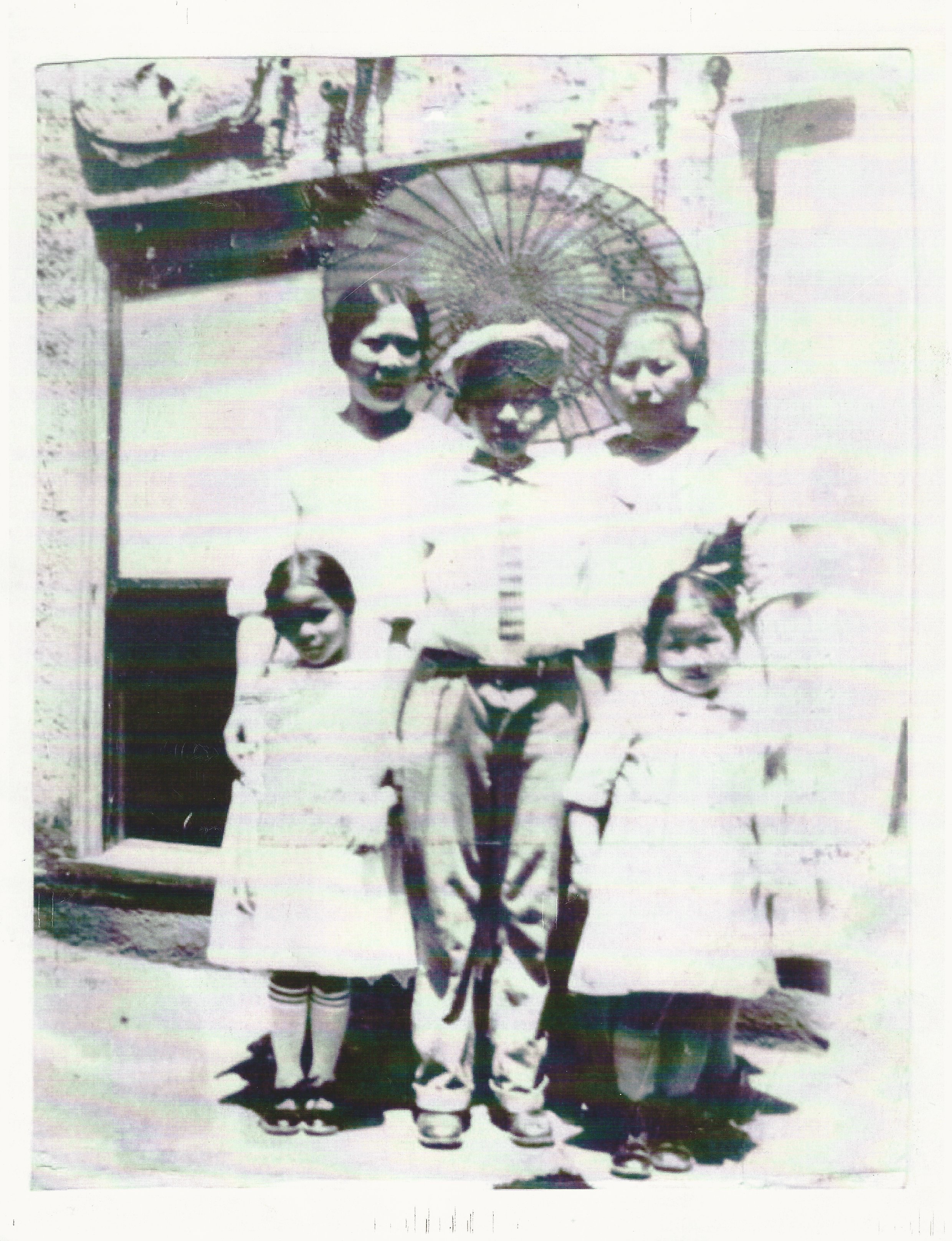
My Hakka Chinese family from Caribbean pose in Los Angeles on way back to Harlem.
New York, NY (February 1, 2013) Narrative Network and LS3 Studios are winners of the AVA Digital-Gold Awards, for co-producing documentary trailer “From Shanghai to Harlem,” in the category of Creativity Video Production/Editing, it was announced on February 1, 2013. AVA recognizes outstanding achievement by creative professionals involved in the concept, direction, design and production of media that is part of the evolution of digital communication. Work ranges from audio and video productions to websites and social media sites that present interactive components such as video, animation, blogs, and podcasts to other user-generated digital communication.
There were 2,000 entries from throughout the United States, Canada and several other countries in the 2013 competition. Entrants included digital professionals from audio, video and film production companies; web developers; advertising agencies; PR firms; corporate and government communication departments; and independent creative professionals such as designers, producers, directors, editors and shooters.
AVA Digital Awards is sponsored and judged by theAssociation of Marketing and Communication Professionals (AMCP). The international organization consists of several thousand production, marketing, communication, advertising, public relations, and free-lance professionals. AMCP administers recognition programs; provides judges and rewards outstanding achievement and service to the profession. As part of its mission, AMCP fosters and supports the efforts of creative professionals who contribute their unique talents to public service and charitable organizations.
Judges are industry professionals who look for companies and individuals whose talent exceeds a high standard of excellence and whose work serves as a benchmark for the industry.
Winners, who will receive certificates and inscribed statuettes, were selected from over 200 categories in Audio, Video, and Web-based production. A list of Platinum and Gold Winners can be found on the AVA Digital Awards website at www.avaawards.com